 Join on WhatsApp
 Join on Telegram
More than 600 hospitality professionals, investors, developers, architects, hotel operators, and solution providers gathered in Rabat last month for the 6th Hospitality Innovation Summit (HIS), with discussions focusing on sustainable tourism development, investment opportunities, innovation, and preparations for the 2030 FIFA World Cup.
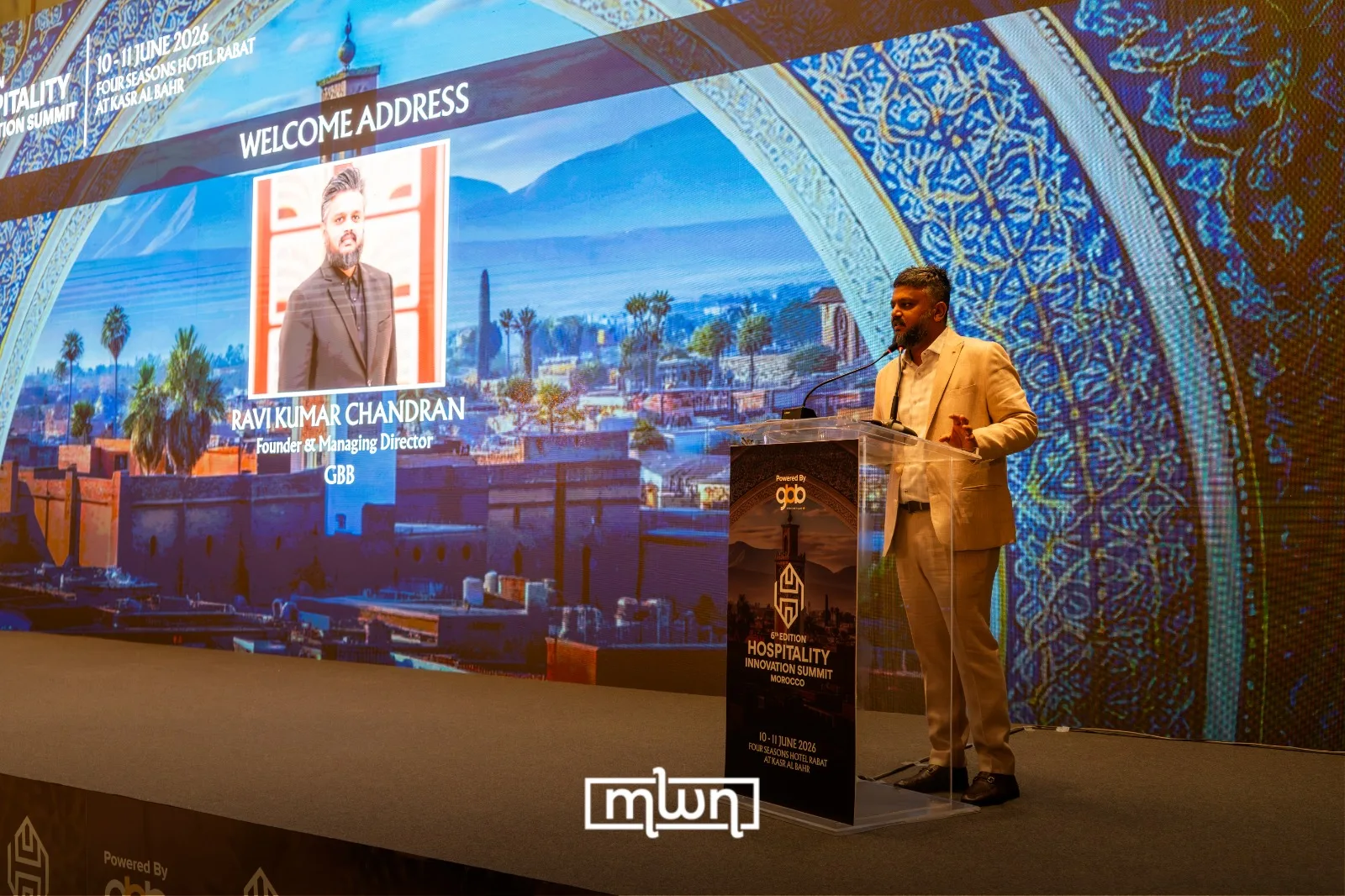
Held on June 10-11 at the Four Seasons Hotel Rabat at Kasr Al Bahr, the summit welcomed more than 600 participants from over 300 companies, including 150 summit partners, 78 solution providers, 23 speakers, and 25 media and supporting partners.
Organizers said the event facilitated more than 1,574 pre-scheduled business meetings alongside over 1,100 minutes of networking, creating opportunities for collaboration across Morocco’s hospitality ecosystem.
Opening the event, Ravi Kumar Chandran, founder and managing director of GBB, described the summit as a platform designed to encourage meaningful engagement, focused discussions, and business collaboration at a time when Morocco’s hospitality sector is experiencing rapid growth.
Preserving Morocco’s architectural identity
One of the opening sessions examined how Morocco can expand its tourism infrastructure while preserving its architectural identity. Chakib Benabdellah, president of the National Council of the Order of Architects of Morocco (CNOA), argued that Moroccan architects are not simply contributors to tourism projects but are central to their long-term success.
The summit also explored how design and creativity are reshaping hospitality. Justin Wells, CEO of Wells International, discussed how purposeful design can create memorable and commercially successful hospitality projects, while Osan Ghaddaf, founder and creative director of Artevo Consulting, argued that art and storytelling have become essential components of guest experiences rather than optional additions.
FIFA 2030 drives tourism investment
Looking ahead to Morocco’s preparations for the 2030 FIFA World Cup, Simon Ardonceau, CEO of AIRE, presented an overview of the country’s hotel industry, highlighting investment trends, geopolitical developments, and the tournament’s expected impact on hospitality demand.
At the core of the summit were its structured face-to-face meetings, which connected project developers, hotel operators, consultants, manufacturers, architects, and suppliers to discuss ongoing projects, procurement strategies, and future partnerships.
A key panel explored the question of what Morocco must deliver to ensure the next phase of hospitality growth combines efficiency, sustainability, technology, and authenticity.
Moderated by Alessandro Tedesco, chief operating officer of FEBC, the discussion featured Leila Haddaoui, deputy CEO of O Tower and director of the Tourism Division at O Capital Group; Nawale Saoud, president of the Morocco Green Building Council; Paco Briceno, managing partner at MAGESPRO; and Nour El Houda El Hamoumi, director of sustainable development at Société d’Aménagement Zenata.
Reflecting on the discussion, Haddaoui said that “this summit was really interesting. We were able to share our experiences as developers, owners, operators, designers, and other industry professionals. It was also a pleasure to share the story of the Mohammed VI Tower during the panel discussion and highlight the ambition behind this Moroccan project.”
One of the summit’s defining moments was the presentation of the HIS ICON award to Abdellatif Kabbaj, chairman, CEO, and founder of Kenzi Hotels Group, in recognition of his decades-long contribution to Morocco’s hospitality industry.
The session offered participants insights into his professional journey and the development of one of the country’s best-known hotel brands.
Beyond conference sessions, delegates were introduced to GBB Connect, an AI-powered networking platform designed to help participants identify potential partners and continue building business relationships after their scheduled meetings.

Building Morocco’s hospitality future
Summing up the event, Chandran said the summit reflected Morocco’s growing ambitions ahead of the 2030 FIFA World Cup.
“The 6th Hospitality Innovation Summit showed Morocco at an inflection point: the scale of a World Cup pipeline matched by the conviction to grow without losing its identity. What made these two days in Rabat matter was not the calibre of the room alone, it was what set the room in motion,”he argued. “Capital, design, development and supply stopped working in sequence and started building together, around real projects with real momentum. That is the work GBB exists to do, and Morocco proved it is ready to build, and ready to build well.”
As Morocco accelerates preparations for the 2030 FIFA World Cup and pursues its long-term tourism ambitions, the summit showcased the growing collaboration between developers, investors, architects, hotel operators, manufacturers, and policymakers working to shape the country’s next generation of hospitality projects.