 Join on WhatsApp
 Join on Telegram
Rabat – On June 25, Morocco’s Head of Government, Aziz Akhannouch, announced that Morocco will officially return to GMT (UTC+0) as its legal time from September 20, replacing the permanent GMT+1 system that has been in place since 2018.
The decision marks one of the country’s most significant policy reversals in recent years, affecting millions of residents, businesses, and international partners. More than just a change in the clock, the move reflects a broader government policy shift and could have far-reaching implications for daily life, the economy, and Morocco’s relations with its international partners.
What exactly is changing?
Starting on September 20, Morocco will permanently use GMT (UTC+0), joining places such as Dublin, Lisbon, and London, and bringing an end to the GMT+1 policy introduced in 2018. Although the change may appear simple, it marks the end of a system that has shaped daily life for nearly eight years.
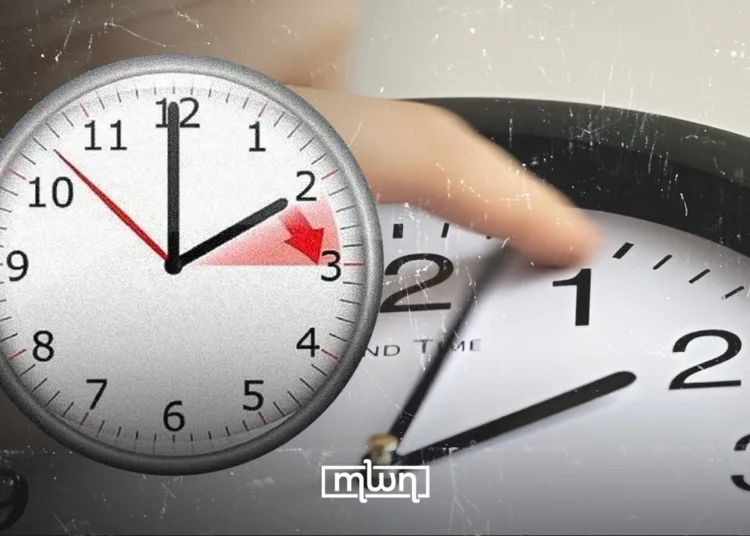
In practical terms, Moroccans will set their clocks back by one hour at 3 AM, meaning the time will return to 2 AM. Most smartphones, computers, and other connected devices are expected to update automatically, while manual clocks will need to be adjusted by their owners. The change will also affect flight schedules, train timetables, international meetings, and other services depending on time zones, all of which will have to update their schedules to reflect Morocco’s new official time.
Why was GMT +1 introduced?
Back in 2018, Morocco observed daylight saving time like many countries, including France, Spain, and Germany. Clocks were changed twice a year: moved forward in the spring and back in the autumn.
The government’s decision to adopt permanent GMT+1 in 2018 was mainly driven by economic considerations. The objective was to better align Morocco with European markets, facilitate trade with its main economic partners, improve the country’s competitiveness, and avoid the repeated disruption caused by changing the clocks twice a year.
Unlike most European countries, however, Morocco introduced a unique exception during Ramadan. Just before the beginning of the holy month, clocks were set back by one hour to return to GMT (UTC+0), before moving forward again to GMT+1 once Ramadan ended. The aim was to make fasting hours and daily routines more manageable during the month of Ramadan.
Although intended to make everyday life easier, this annual exception often created confusion. Tourists were not always sure of the correct local time, airlines and transport operators had to adjust their schedules, and international businesses had to recalculate time differences for meetings and operations.
At the same time, Morocco’s time difference with the United Kingdom and the rest of Europe regularly changed depending on when each country adjusted its clocks, making international coordination more complicated for several weeks each year.
From controversy to reform
According to official statements by Akhannouch and government spokesperson Mustapha Baitas, the justifications behind the decision are simpler than those given in 2018. Akhannouch said the decree (2.26.530) was adopted in response to citizens’ repeated requests after several years of debates and dissatisfaction surrounding the GMT+1 policy.
He added that the issue had been discussed within the governing coalition before the decree was approved. Baitas also explained that the government had responded positively to citizens’ concerns, acknowledging that many Moroccans viewed the permanent GMT+1 system as a burden on their daily lives.
Criticism of the policy has persisted since its introduction in 2018. Many people complained about dark winter mornings, children having to go to school before sunrise, road safety concerns, fatigue, disrupted sleep, and its impact on work-life balance. The debate never truly disappeared, as every seasonal clock adjustment revived the controversy.
Civil society groups, parents, and some experts repeatedly questioned whether the policy was still appropriate. Over time, the issue became one of Morocco’s most visible public policy debates. After years of criticism, the government has now decided to return to the country’s previous legal time.
The announcement has not been without political context. Morocco’s legislative elections are scheduled for September 23, three days after the time change takes effect, a timing that some observers have noted, even as many Moroccans have simply welcomed the decision on its own merits.
Beyond the time change
One of the arguments put forward when Morocco adopted permanent GMT+1 in 2018 was the potential reduction in electricity consumption by making better use of daylight. With the return to GMT, some specialists believe energy consumption could increase slightly in the evening, while others argue that there is no solid evidence that changing the clocks leads to significant energy savings. As a result, the issue remains open to debate.
From an economic perspective, GMT+1 allowed Morocco to better align its working hours with those of its main European trading partners, increasing the number of shared business hours. Returning to GMT will create a larger time difference with parts of Europe during certain periods of the year. Export-oriented companies, banks, call centers, and other internationally connected businesses may therefore have to adapt their schedules and operations.
The reform is also expected to have a social impact. Sunrise will occur earlier during the winter months, meaning children will no longer have to go to school before daylight. Some sleep specialists believe the change could improve sleep patterns and reduce fatigue, while supporters of the reform argue that it could contribute to a better quality of life overall.