 Join on WhatsApp
 Join on Telegram
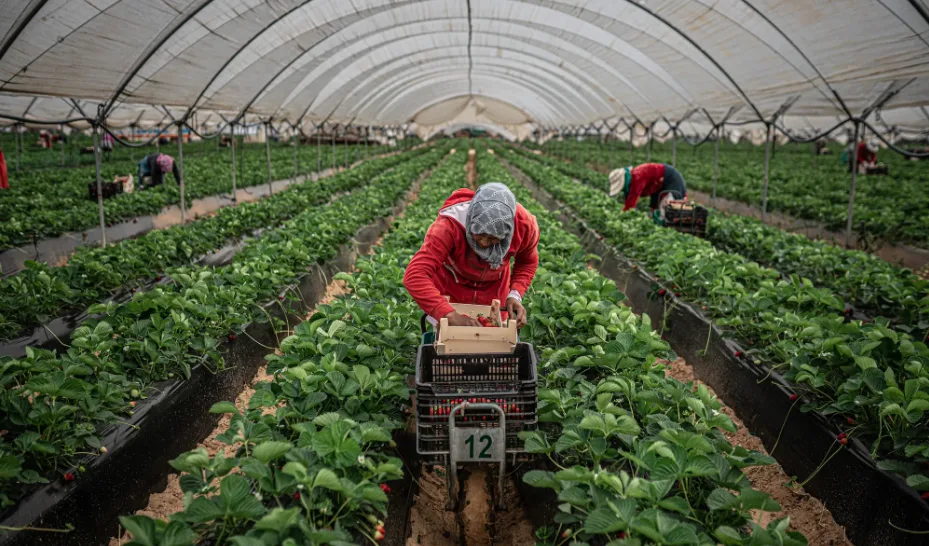
Rabat – Younes Sekkouri, Minister of Economic Inclusion, Small Business, Employment and Skills, announced on Monday a set of new measures to improve the working conditions of Moroccan women employed as seasonal agricultural workers in Spain, as part of ongoing labor mobility cooperation between the two countries.
Speaking at the House of Representatives, the minister said the initiatives were developed in coordination with Spanish authorities and the National Agency for the Promotion of Employment and Skills (ANAPEC). This collaboration aims to strengthen worker protection, improve recruitment procedures, and ensure better oversight of employment conditions throughout the seasonal program.
Sekkouri noted that the number of Moroccan women participating in the program has increased sharply over the past decade, rising from around 2000-3000 to approximately 15000 annually.
In response to this growth, the government decided to introduce four-year visas for eligible workers and implement a more precise worker selection mechanism intended to match employers’ needs.
These reforms follow the minister’s assessment of the workers’ living and labor conditions after conducting field visits and consultations with employers and recruitment agencies in Spain’s Huelva province, one of the country’s main agricultural regions, where around 90% of these women workers are employed.
The minister stressed that, despite the training and awareness workshops organized before and during employment, protecting workers’ rights remains a key challenge.
To address this, the government has expanded its efforts beyond workplace conditions to ensure the broader welfare of Moroccan seasonal workers during their stay in Spain.
In coordination with the Moroccan Embassy in Spain and the Consulate General of Morocco in Seville, the ministry is working to ensure respect for workers’ rights, facilitate their access to health coverage upon arrival in Spanish territory, and strengthen consular support.