
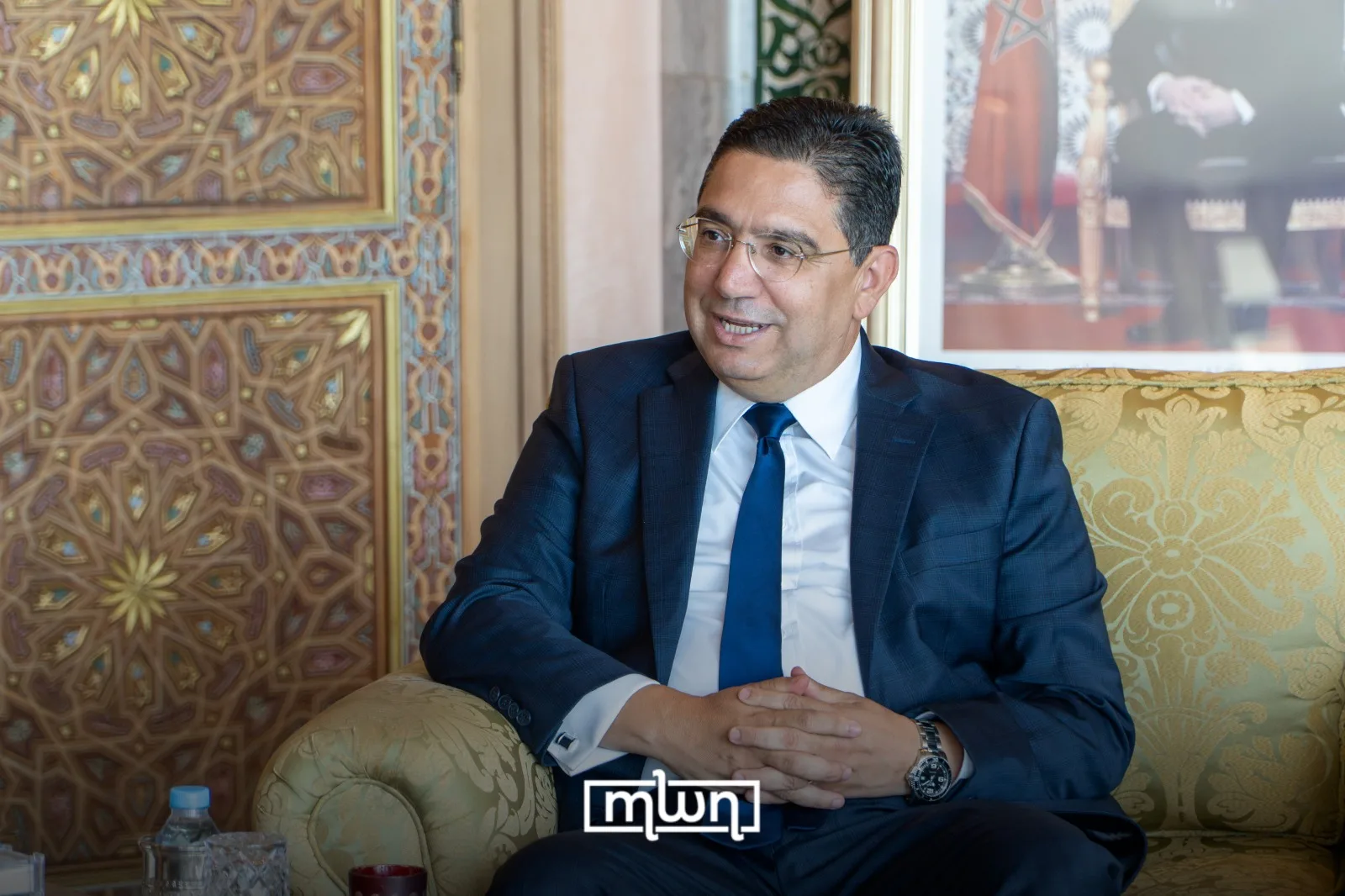
Agadir – Morocco’s House of Representatives approved on Monday draft law No. 76.19, adopting the Multilateral Competent Authority Agreement on the Exchange of Country-by-Country Reports.
The agreement, signed by Morocco on June 25, 2019, establishes a legal framework for the automatic exchange of tax information between the competent authorities of participating countries.
It is part of the Organisation for Economic Co-operation and Development’s (OECD) broader initiative to strengthen administrative cooperation in tax matters.
Presenting the bill before lawmakers, Minister of Foreign Affairs, Nasser Bourita, said the agreement is one of four multilateral OECD tax agreements signed by Morocco in 2019, noting that two have already been adopted, while two were still awaiting parliamentary approval.
Bourita explained that the agreement aims to establish “an advanced legal framework for the exchange of tax information between the competent authorities of the signatory countries,” enabling tax administrations to access data on the global allocation of profits, taxes paid, and key economic activity indicators of multinational enterprise groups.
He stressed that the agreement applies exclusively to large multinational companies and not to individuals.
“It is important to reiterate that this agreement does not apply to individuals or natural persons,” Bourita explained. “It is strictly limited to legal entities, specifically multinational corporations with annual revenues exceeding €750 million.”
The minister said the mechanism relies on the automatic exchange of information between the tax authority in the country where a multinational company is headquartered and the authorities in countries where it operates through subsidiaries or branches.
According to Bourita, the system is designed to detect harmful tax practices and ensure that multinational enterprises pay taxes in the jurisdictions where they conduct their economic activities.
Read Also: Morocco Offers Up to 30% Tax Incentives for Foreign Investors
Addressing concerns raised during committee discussions, Bourita emphasized that the agreement does not affect Moroccan citizens or the Moroccan diaspora.
“The scope of this agreement is clearly and precisely defined, leaving no room for misunderstanding,” he said. “It does not concern natural persons or ordinary citizens, nor does it affect the Moroccan diaspora. It also does not apply to small businesses or even medium-sized national companies.”
Bourita added that Morocco’s decision to join the agreement reflects its determination to remain engaged in international efforts to promote financial transparency.
“Signing this agreement reflects Morocco’s commitment to working within the international framework for financial and tax transparency, rather than remaining outside it,” he said.
The foreign minister also rejected suggestions that the agreement could undermine Morocco’s sovereignty, arguing instead that it strengthens the country’s international standing.
“This agreement does not affect the Moroccan diaspora, nor does it undermine our national sovereignty,” Bourita said. “On the contrary, it strengthens that sovereignty by placing Morocco at the heart of the global system for combating tax evasion, positioning our country as an active partner rather than a passive recipient of tax information.”
The legislation now moves to the next stages of the legislative process before entering into force.