 Join on WhatsApp
 Join on Telegram
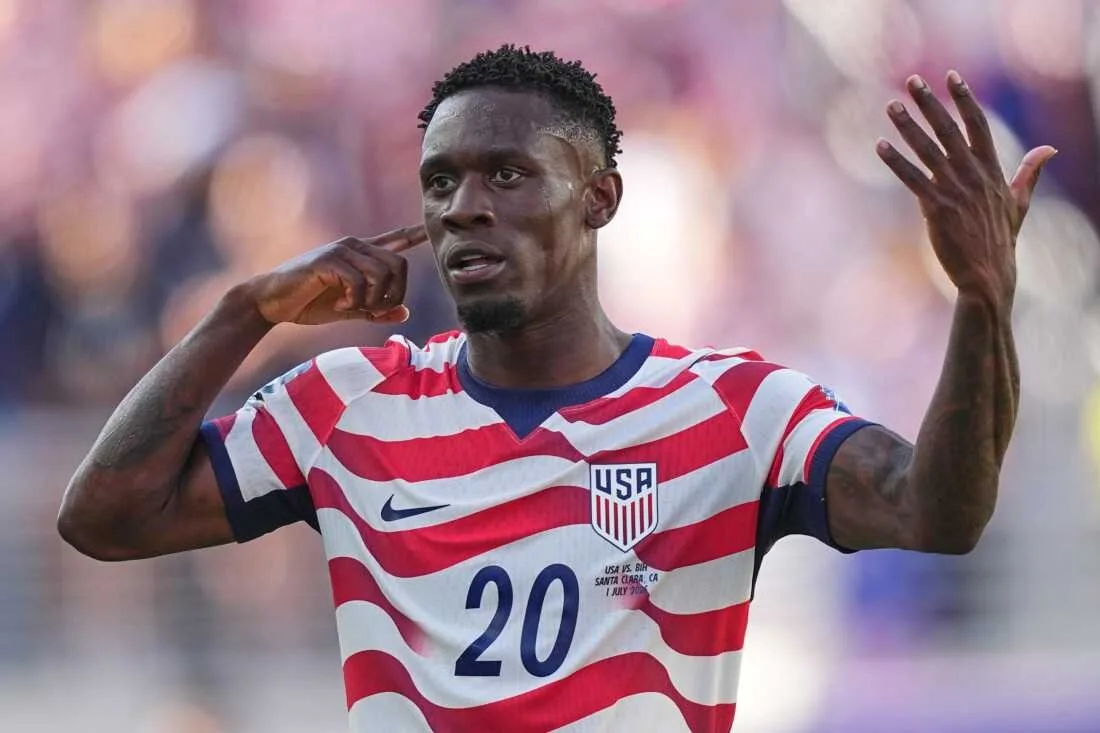
Rabat – A major controversy has erupted at the 2026 FIFA World Cup after FIFA overturned Folarin Balogun’s suspension, allowing the United States striker to play in the Round of 16 against Belgium despite receiving a red card in the previous match.
The decision has drawn strong criticism from UEFA, the Belgian Football Federation, and several coaches, who argue that it threatens the integrity of the tournament and creates an unprecedented exception to World Cup disciplinary rules.
FIFA overturns automatic suspension
Balogun was sent off during the United States’ Round of 32 victory over Bosnia after a VAR review judged his challenge to be serious foul play. Under FIFA regulations, a straight red card normally results in an automatic one-match suspension.
However, hours before the United States faced Belgium in the Round of 16, FIFA announced that it had cancelled the suspension under Article 27 of its Disciplinary Code.
The article allows disciplinary measures to be suspended or cancelled in exceptional circumstances. Yet FIFA did not publicly explain why Balogun’s case qualified for such an exception, fueling criticism from across the football world.
UEFA and Belgium react
UEFA released a strongly worded statement condemning the decision, saying it “crossed a red line” by violating the principle of equal treatment and potentially damaging confidence in the competition.
The Belgian Football Federation also protested the ruling, arguing that every team enters the tournament under the same disciplinary regulations and that changing a suspension after a match sets a dangerous precedent.
Belgium head coach Rudi Garcia mocked the decision, saying, “I didn’t know July 5 had become April Fool’s Day.” He added that Belgium was defending “football itself,” not only its own interests, insisting that rules must apply equally to every nation.
The Belgian federation is also considering legal and procedural options to challenge FIFA’s decision.
United States defends the decision
United States head coach Mauricio Pochettino welcomed the ruling, insisting that Balogun’s dismissal should never have happened.
Pochettino argued that his team had already paid the price by playing more than 30 minutes with ten men against Bosnia. He described FIFA’s decision as the correction of a refereeing mistake rather than special treatment.
He also rejected claims of political or external influence, saying the decision was made solely by FIFA’s disciplinary bodies.
Global debate over FIFA’s authority
The controversy quickly became one of the ongoing tournament’s biggest talking points.
Former France striker Thierry Henry described the case as one of the most remarkable incidents of the World Cup, while Ståle Solbakken, Norway’s national team coach, warned that overturning a World Cup suspension could place future disciplinary decisions under greater pressure.
Specialized reports have noted this is the first time in more than 60 years that a suspension resulting from a red card during a FIFA World Cup has been cancelled after the match, making Balogun’s case unprecedented in the modern era.
Media reports have also questioned whether political pressure influenced FIFA’s decision. Several outlets have claimed that President Donald Trump contacted FIFA president Gianni Infantino to request a review of the suspension. But those reports have not been independently confirmed, and FIFA has not commented on them.
The fact remains that this decision has reignited debate over the scope of FIFA’s disciplinary powers, the transparency of its decision-making process, and whether exceptional rulings should be allowed during football’s biggest tournament.