 Join on WhatsApp
 Join on Telegram
Rabat – Morocco’s 2026 FIFA World Cup journey ended in heartbreak after 2-0 quarterfinal defeat to France, but long after the final whistle, the conversation was no longer centered on the result itself.
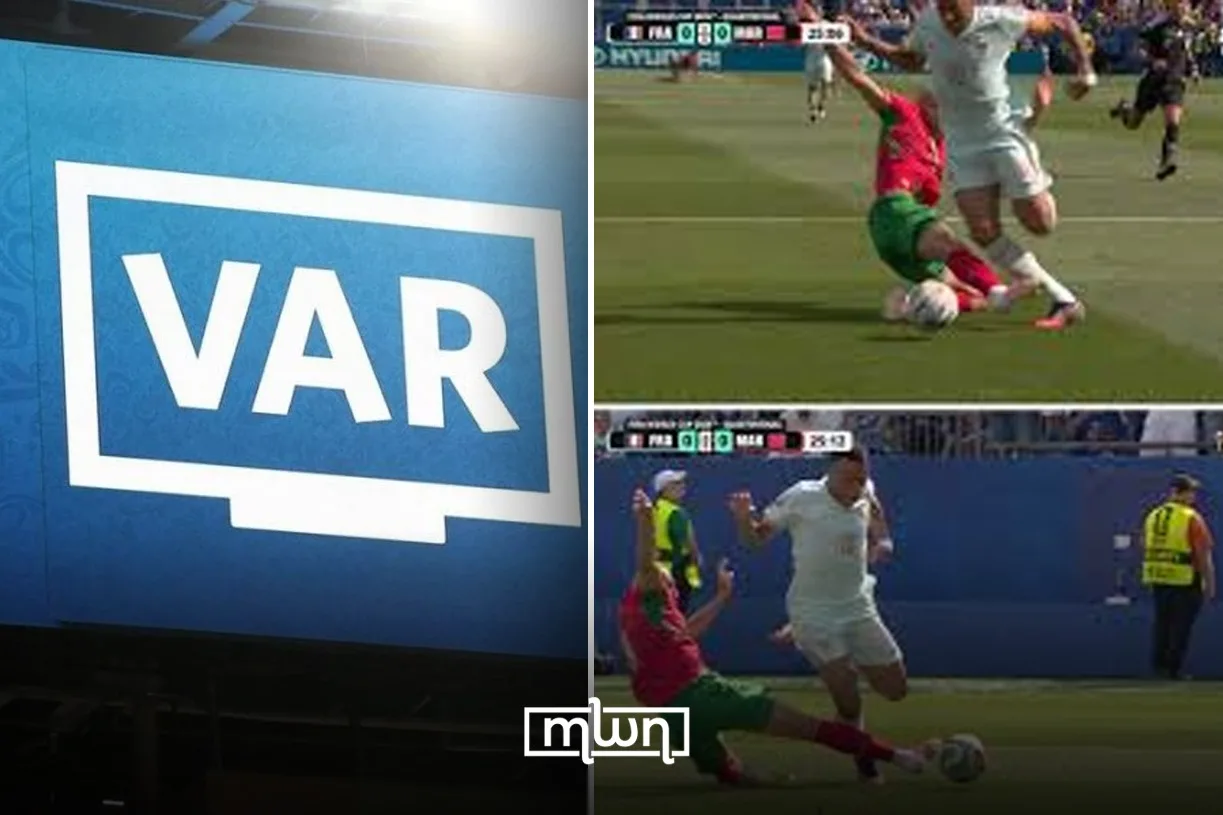
Instead, attention shifted to a controversial moment in the build-up to France’s opening goals, one that has reignited global concerns about FIFA’s use of the Video Assistant Referee (VAR) system and revived painful memories of Morocco’s controversial 2022 World Cup semifinal against the same opponent.
For many Moroccan supporters, the question was no longer simply whether France deserved to win, It became why technology designed to eliminate clear mistakes appeared to remain silent when it mattered most.
The handball that changed the game
The turning point came in the 60th minute with the score still level at 0-0.
French midfielder Adrien Rabiot appeared to control the ball with his hand before launching the move that ended with Kylian Mbappe scoring the opening goal.
Television replays quickly circulated across social media, with many arguing that the handball was clear enough to warrant review. Yet the referee never went to the pitch-side monitor, and VAR did not intervene,
Under FIFA’s Laws of the Game, handball offences that directly lead to goals are among incidents VAR is specifically designed to review.
Instead, play resumed immediately, the goal stood, and Morocco suddenly found themselves chasing the game.
For supporters already anxious about refereeing consistency, the silence from the VAR booth became the biggest talking point of the night.
FIFA’s promises under scrutiny
The controversy is particularly striking because FIFA entered this tournament promising improvements to officiating.
Following criticism during the group stage and early knockout rounds, FIFA introduced additional video officials to provide more oversight and reduce human error.
Those extra eyes were meant to strengthen confidence in the system.
Instead, critics argue the Morocco-France incident has produced the opposite effect.
Technology cannot improve fairness if officials choose not to use it.
VAR was introduced to remove obvious mistakes from football. When it remains inactive during moments that millions of viewers immediately question, confidence in the system inevitably suffers.
Morocco joins a growing list
Morocco is far from the first team to question officiating during this World Cup.
Only days earlier, Egypt exited the tournament after a dramatic 3-2 defeat to Argentina amid widespread controversy.
The Egyptian Football Association criticized several refereeing decisions, including a disallowed goal, an overturned penalty decision, and concerns surrounding the implementation of FIFA’s anti-racism protocol.
Head coach Hossam Hassan publicly questioned the officiating, while football figures around the world joined the debate.
Real Madrid manager José Mourinho described Egypt’s treatment as “theft” and “an absolute disgrace.”
Morocco’s experience has only intensified those concerns.
Echoes of Qatar 2022
For Moroccan supporters, the latest incident reopened wounds that never fully healed.
During the historic 2022 World Cup semifinal against France, the Atlas Lions believed they were denied at least two strong penalty appeals.
One challenge on Sofiane Boufal and another involving Selim Amallah generated intense debate after the match, with many former referees and analysts arguing Morocco had legitimate claims.
Neither incident resulted in a penalty.
Those decisions became part of one of the tournament’s biggest refereeing controversies and remain widely discussed nearly four years later.
Once again, Morocco’s World Cup campaign has ended against France.
Once again, a decisive refereeing decision, or lack of one, has become part of the post-match narrative.
Whether the two situations are directly comparable remains open for debate. The frustration among supporters, however, is unmistakable.
More questions than answers
None of this necessarily changes the broader picture.
France created numerous chances throughout the match and eventually finished them.
Morocco also struggled to convert their own opportunities despite another disciplined defensive performance and several outstanding saves from Yassine Bounou.
But acknowledging France’s quality does not erase questions surrounding the officiating. There are two separate discussions: one concerns football, the other concerns whether the rules are being applied consistently.
If FIFA expects supporters to trust VAR, transparency becomes essential. Why was Rabiot’s handball not reviewed? Did officials determine it was not an offence? Was communication between the referee and the VAR booth sufficient? Without clear explanations, speculation inevitably fills the silence.
Restoring confidence
VAR was introduced to make football fairer, not more controversial.
When major tournament matches continue to produce debates about incidents that technology was specifically designed to resolve, confidence in the system weakens.
For Morocco, the World Cup has ended.
For FIFA, however, the questions surrounding refereeing consistency are only growing louder.
Until football’s governing body provides greater transparency and demonstrates that every team is judged by the same standard, controversies like Morocco’s latest grievance will continue to overshadow the game itself.