 Join on WhatsApp
 Join on Telegram
Rabat — More than two weeks after twin earthquakes struck Venezuela, the country is facing many humanitarian challenges; survivors remain without homes and rescue teams continue operating in disaster zones shaken by constant aftershocks.
The official death toll has risen to nearly 4,000 people, while more than 16,700 others have been injured in what has become one of the deadliest natural disasters to hit South America in recent years.
The disaster has left entire communities displaced. Venezuelan authorities say nearly 18,000 people remain uprooted after losing their homes in the powerful quakes that struck on June 24.
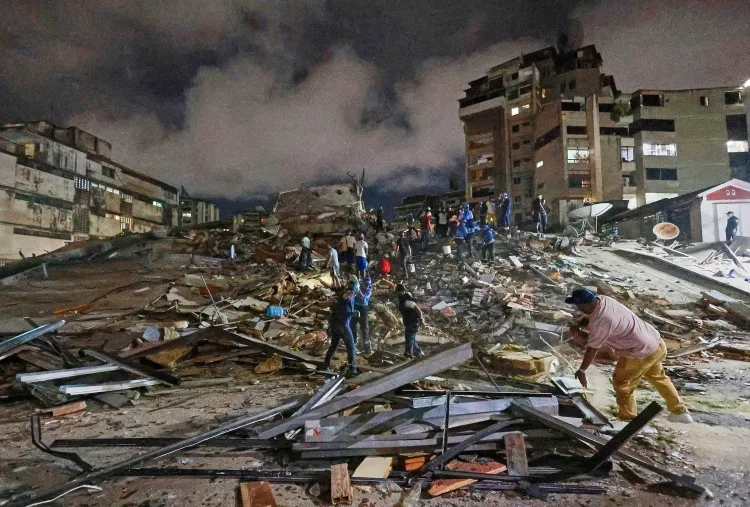
Rescue operations remain underway in some of the hardest-hit areas despite difficult conditions on the ground. More than 6,400 people have been pulled alive from collapsed buildings since emergency efforts began
The challenge facing emergency responders has been compounded by the persistence of seismic activity. Authorities have recorded more than 1,100 aftershocks since the initial earthquakes, raising fears of additional structural collapses and slowing efforts to clear debris and recover victims.
Officials report that 856 buildings suffered damage, including 190 structures that collapsed completely under the force of the earthquakes.
Authorities have established 87 temporary camps across affected regions, providing shelter for displaced families
The humanitarian response has mobilized an unprecedented national effort. More than 30,000 military personnel and nearly 29,000 volunteers remain deployed in rescue and recovery operations, working alongside international emergency teams.
Relief agencies and local authorities have already assisted approximately 86,000 families and delivered medical care to around 27,000 people affected by the disaster.
Emergency aid operations have also included the distribution of food and drinking water as officials attempt to prevent a second crisis linked to shortages and deteriorating sanitary conditions.
As search operations continue and aftershocks persist, attention is increasingly shifting from emergency rescue to long-term reconstruction. For thousands of Venezuelan families still living in temporary shelters, the challenge ahead is no longer surviving the earthquake itself, but rebuilding their lives after it.