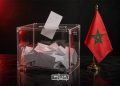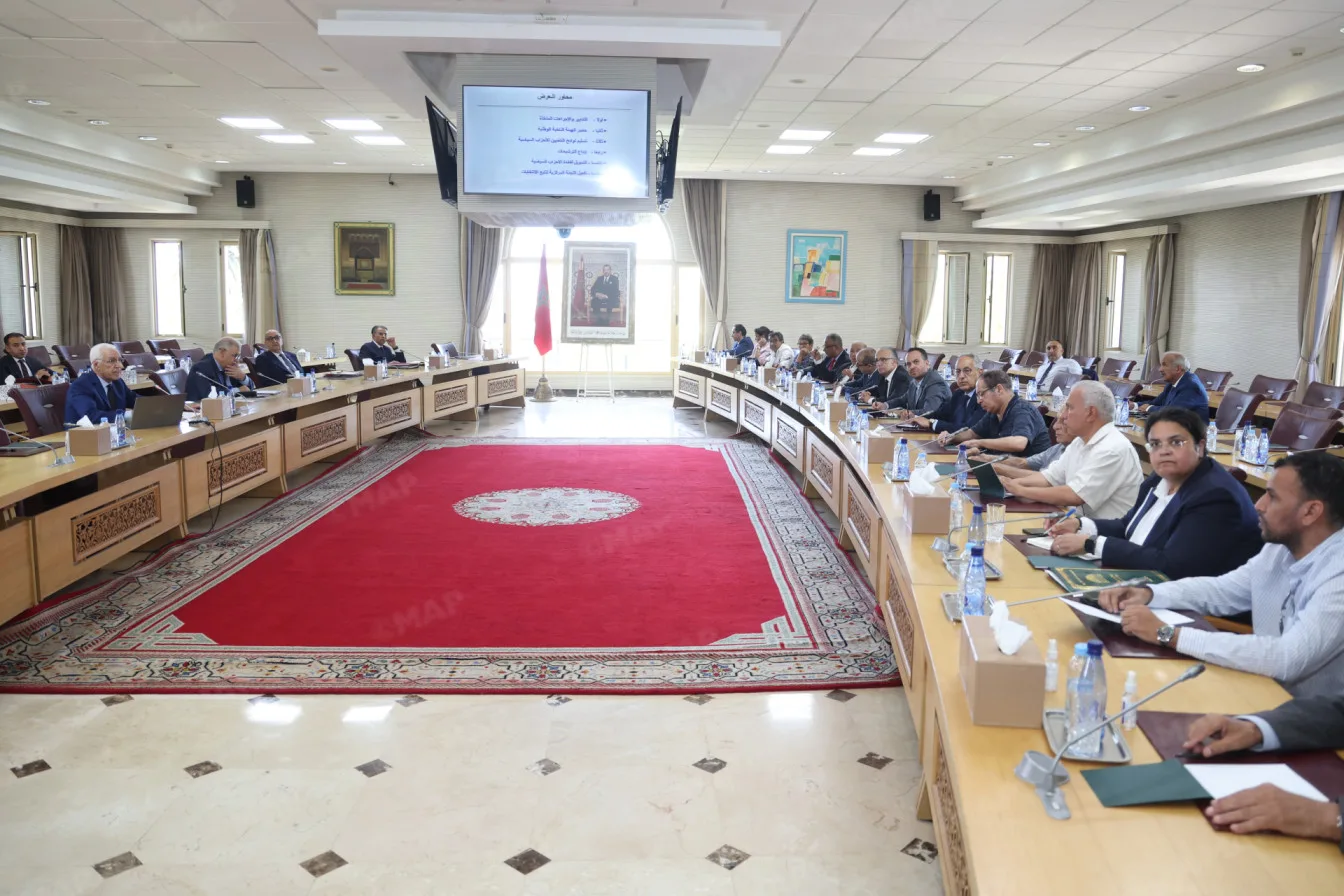
Marrakech – Interior Minister Abdelouafi Laftit held two meetings on Tuesday with leaders and officials of Morocco’s political parties. The sessions focused on preparations for the September 23 legislative elections, when voters will elect all 395 members of the House of Representatives.
The meetings covered a range of organizational and operational measures ahead of the vote. Laftit briefed party leaders on the results of the voter registration roll revision. That process was conducted between May 15 and July 10 under the supervision of administrative commissions chaired by magistrates.
Morocco’s electoral rolls currently include roughly 16.5 million registered voters out of an estimated 28 million eligible citizens. Men account for 54% of registered voters, while women make up 46%. Urban areas hold a slight majority at 55% versus 45% in rural zones.
Officials also presented a new electronic platform for filing candidacies. Candidates will submit their applications through the digital system and deposit original dossiers directly with the authority responsible for receiving declarations. The procedure marks a continued push to digitize the electoral process, building on the online voter registration portal already in use.
The discussions also addressed state financing of election campaigns. Morocco’s legal framework provides for public contributions to parties participating in general elections, and the two sessions reviewed the legislative and regulatory provisions governing those funds.
Ensuring the security and integrity of the electoral process
In late June, the government set total public funding for participating parties at MAD 450 million ($45 million). Of that amount, MAD 400 million goes to parties contesting the House of Representatives vote. A separate MAD 50 million targets electoral lists led by candidates aged 35 and under. The allocation marks a 181% increase over the MAD 160 million disbursed in the 2021 elections.
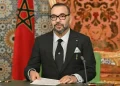
A central item on the agenda was King Mohammed VI’s instruction to activate a Central Election Monitoring Commission. The body is composed of the Interior Minister and the President of the Public Prosecution, and it will oversee the security and integrity of the electoral process at every stage.
It will operate through regional commissions pairing Walis with regional chief prosecutors, and provincial commissions pairing governors with local prosecutors. The structure extends institutional oversight from the national level down to the territorial level.
Party leaders, in turn, exchanged views on the organizational framework needed to ensure the vote proceeds under adequate conditions. According to Morocco’s state-owned agency MAP, the sessions took place in a positive climate marked by frank and responsible dialogue. Party officials expressed their readiness to mobilize alongside public authorities and other stakeholders to guarantee a successful vote.
The September 23 election will be the first general ballot since 2021, when a political earthquake reshaped Morocco’s parliamentary map. The National Rally of Independents (RNI) won 102 seats in that vote, followed by the Authenticity and Modernity Party (PAM) with 86 and the Istiqlal Party with 81.
The three formed the governing coalition under Aziz Akhannouch. The Justice and Development Party (PJD), which had led the government for a decade, collapsed from 125 seats to just 13.
The 395 seats are elected by proportional representation across two tiers. A total of 305 seats are contested in 92 local constituencies, while 90 are filled through 12 regional lists requiring at least one-third women representation. The official campaign will run from September 10 through midnight on September 22.