
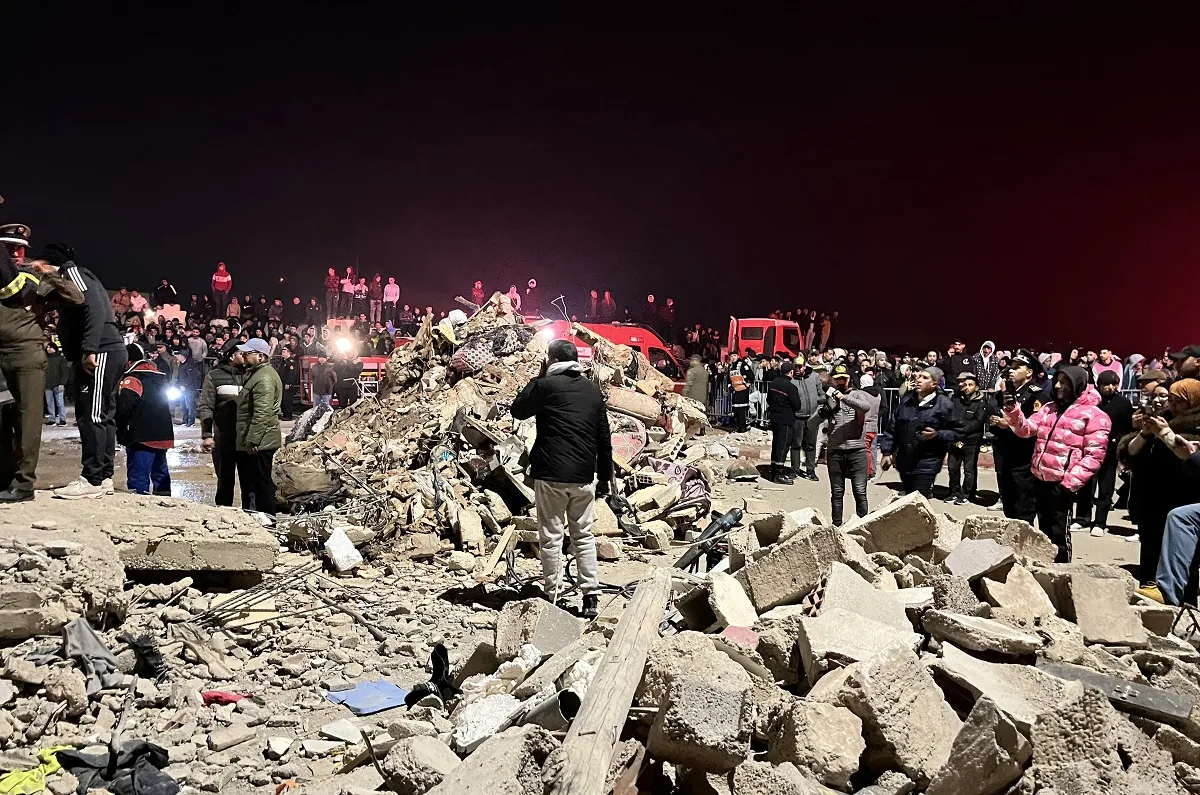
Rabat – A tragedy that shook Fez last winter is now moving into the courtroom. Next week, a court will begin hearing a case that seeks to assign responsibility for the collapse of two residential buildings that claimed 22 lives and left 16 people injured.
The first hearing is scheduled for Monday at the Court of Appeal in Fez. Twenty-one defendants will appear before the criminal chamber, marking the start of a trial that follows months of investigation into one of the city’s deadliest urban disasters in recent years.
The case does not point to a single failure, but exposes a network of decisions, omissions, and alleged abuses that, according to prosecutors, converged into catastrophe. Those charged include elected officials, civil servants, local authority agents, contractors, builders, and document clerks. Each stands accused of playing a role in a system that allowed unsafe structures to exist.
Prosecutors have filed a wide set of charges. These include involuntary manslaughter and injury, corruption and bribery, unlawful handling of property rights, and the issuance of administrative documents to people who had no legal claim to them.
The collapse has heightened concerns about the enforcement of construction laws
Some officials face accusations that they knowingly approved or delivered permits and certificates that should never have existed. Others must answer for negligence that, investigators argue, contributed directly to the loss of life.
The collapse took place in December in the Al Mostakbal neighborhood, within the Al-Massira district. What at first appeared to be a sudden structural failure soon revealed deeper problems.
The investigation uncovered illegal additions of extra floors, carried out without authorization. It also found the use of second-hand construction materials, along with questionable transactions tied to so-called air rights.
Authorities also identified property sales that bypassed legal procedures, as well as housing certificates granted in violation of regulatory standards. These findings have raised broader concerns about oversight, accountability, and the enforcement of construction laws.
Earlier in the process, an investigating judge ordered eight suspects into pre-trial detention. The remaining defendants have faced the investigation while out of custody.
For families of the victims, the trial represents more than a legal step. It is a test of whether responsibility will reach beyond the immediate scene of collapse and extend to the administrative and professional chains that made it possible.
The hearings will likely draw close public scrutiny, as many see the case as emblematic of deeper structural issues within urban governance and construction practices in Morocco.