Rabat – Heatwaves, drought, and more climate-change-related repercussions are challenges facing farmers worldwide, and Morocco is no exception.
Rising temperatures and growing water scarcity, alongside persistent threats such as pests and crop diseases, continue to place mounting pressure on agricultural producers. These conditions demand more than technical fixes and call for innovation and adaptive strategies that can sustain daily operations while securing long-term viability.
The goal is simple: It’s the quest for not only troubleshooting, but also for resilience and sustainability.
In Morocco, some of these challenges have been mitigated by the decent rainfall recorded across the North African kingdom during the past season, replenishing water reserves and providing much-needed nourishment for crops after years of water stress.
However, the heavy rainfall was not without its challenges, with floods and intense downpours causing damage in some areas and disrupting agricultural activities. Ongoing rising temperatures are also adding insult to injury for crops after a brief relief.
This reality shows how understanding and anticipating climate conditions is not only necessary, but increasingly key to making informed decisions in the field.
As weather patterns become more difficult to predict, having access to the right knowledge, expertise, and locally adapted recommendations can be just as important as having access to new technologies.
While technology is key due to the emergence of many tools like AI, innovation cannot, however, be measured by cutting-edge tools alone.
Innovation is only meaningful, especially for farmers, when it makes sense and is tested and adopted effectively.
Bringing expertise closer serves as a key priority over emphasizing the importance of innovation itself, as local producers are more in need of training and know-how solutions in real local conditions.
Efforts led by the government and other stakeholders are ongoing to help local producers and farmers understand how innovation works through field demonstrations and technical exchanges.
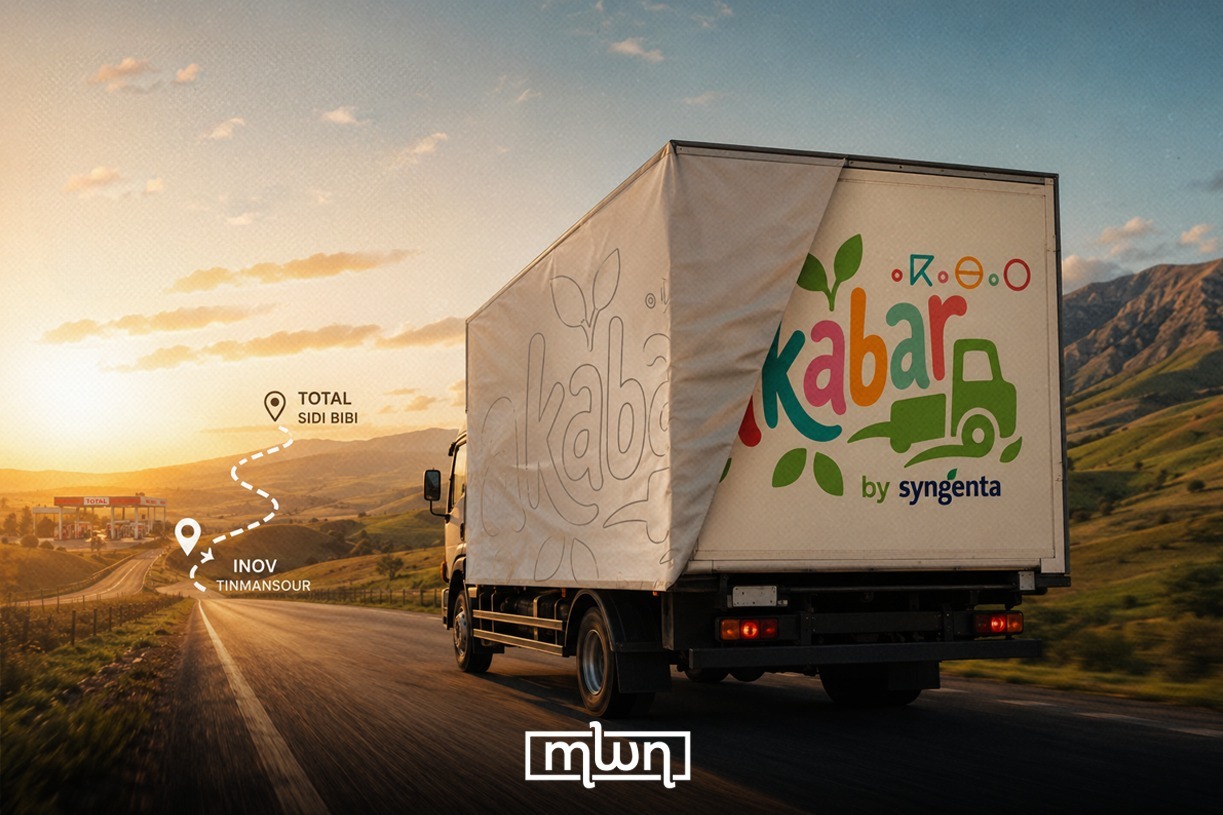
AKABAR Caravan by Syngenta, an agricultural company that is marking 80 years in Morocco, is coming up with this purpose: to bring the benefits of and the importance of innovation to farmers and to help them understand why adopting innovation matters.
The traveling initiative seeks to bring Syngenta experts and knowledge directly to producers across several production areas. The caravan’s first tour is coming up on September 7-11, covering the southern region. It will be followed by two additional sequences in October 2026 and February 2027.
The caravan is not a commercial roadshow, but rather a commitment from the company to also share its expertise and create a space for farmers and partners to engage in meaningful exchanges, demonstrations, and knowledge sharing.
Beyond theory, the sessions with farmers will also combine practical demonstrations. The AKABAR caravan will be based for three days at Syngenta’s CPD Knowledge Center in the Agadir region. For the remaining two days, it will move to nearby agricultural areas, which will include dedicated stations to provide farmers with know-how and allow them to meet the company directly.
Commenting on the initiative, Hassan El Amri, Syngenta’s Country Head Morocco & Mauritania, said the company’s goal through AKABAR’s caravan is to bring “knowledge closer to the field because sustainable agriculture begins with informed decisions made alongside farmers.”
“Every field tells a different story, and every farmer faces unique challenges. Our role is not only to bring innovation, but to ensure that innovation is practical, locally validated, and accessible,” El Amri explained.
The caravan forms part of Syngenta’s long-standing commitment to Morocco, where the company marks 80 years of presence. Beyond Morocco’s presence, the company operates in more than 90 countries and employs over 30,000 people worldwide, with a strong focus on sustainable agriculture, innovation, and proximity to producers.
The initiative is also part of the company’s commitment to ensure that innovation is not only developed but also understood and tested. The significance of the initiative is to show how tomorrow’s agriculture is not and will not be the fruit of meetings but rather the fruit of fieldwork, accompanying farmers in every step to success and sustainability.