
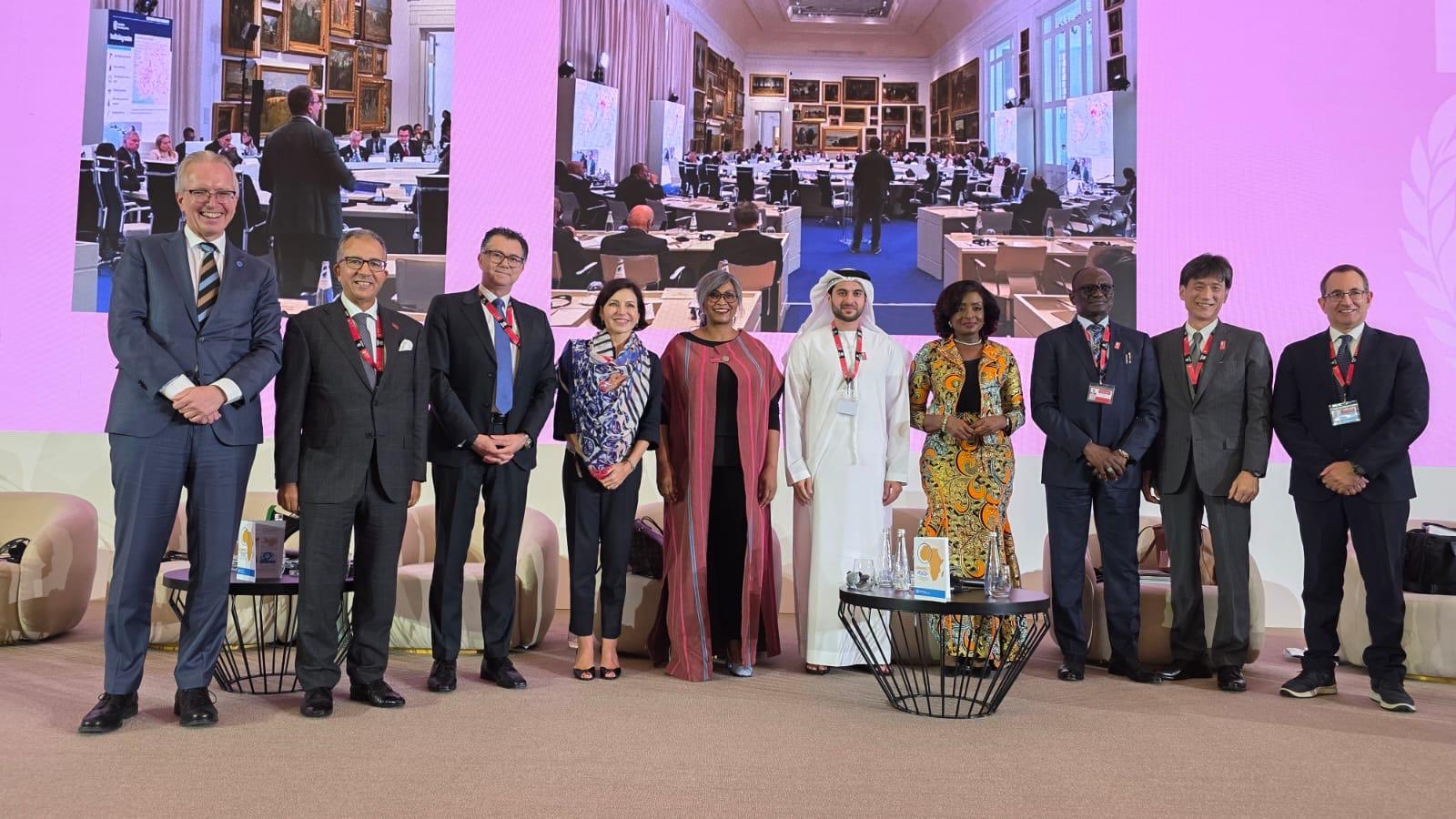
Agadir – Morocco has called for stronger African-led cooperation to address the growing links between terrorism, separatist movements, and transnational organized crime in the Sahel and Sahara, stressing the need to turn political commitments into concrete action.
Speaking at a high-level meeting on the sidelines of the 15th United Nations Congress on Crime Prevention and Criminal Justice in Abu Dhabi, Morocco’s Permanent Representative to the UN Office and International Organizations in Vienna, Azzeddine Farhane, emphasized the importance of African ownership, solidarity, and shared responsibility in addressing cross-border security challenges.
Held under the theme “Towards the Activation of the CONNECT Initiative: Strengthening Operational Coordination Under African Command to Combat the Links Between Crime and Terrorism,” the meeting brought together African and international partners to discuss ways to strengthen operational cooperation.
Farhane said that Morocco has made South-South cooperation a cornerstone of its foreign policy, emphasizing the need for African countries to develop their own solutions to regional security challenges.
“Security cannot be imported, it must be nationally owned and African-led,” Farhane said in a post on X following the meeting.
Morocco’s Permanent Representative outlined three priorities for the CONNECT initiative: ownership, partnership, and cooperation, calling for a shift from national commitments to collective action, from assistance to co-construction, and from coordination to operational trust.
“I highlighted 3 imperatives for CONNECT: Ownership: from national commitment to collective strength. Partnership: from assistance to co-construction. Cooperation: from coordination to operational trust,” Farhane explained.
Read also: Morocco 2030 Will Need Functional Crime Prevention, Not Effective Reaction
The ambassador also stressed that the initiative should serve as a link between existing mechanisms, institutions, and security practitioners, rather than create additional structures without tangible outcomes.
In this regard, he called for adapting the initiative to national and African priorities through partnerships based on shared responsibility and the needs identified by African countries themselves.
Farhane further emphasized that sustainable security requires more than traditional security measures, advocating a comprehensive approach that places people at the center of policies and prioritizes prevention, institutional capacity building, and international cooperation.
He also called for stronger information-sharing, exchanges of expertise, and coordination among national, regional, and international institutions to improve their ability to anticipate, prevent, and respond to cross-border threats.
“The success of the West Africa and Sahel component of the United Nations Office on Drugs and Crime (UNODC) CONNECT initiative will ultimately depend on our ability to translate political commitment into operational confidence, operational confidence into cooperation, and cooperation into concrete results on the ground,” Farhane concluded.