Rabat – Morocco’s Minister of Energy Transition and Sustainable Development Leila Benali has joined the growing chorus warning that Africa, for all its enormous mineral resources, continues to capture a limited share of mineral value chains.
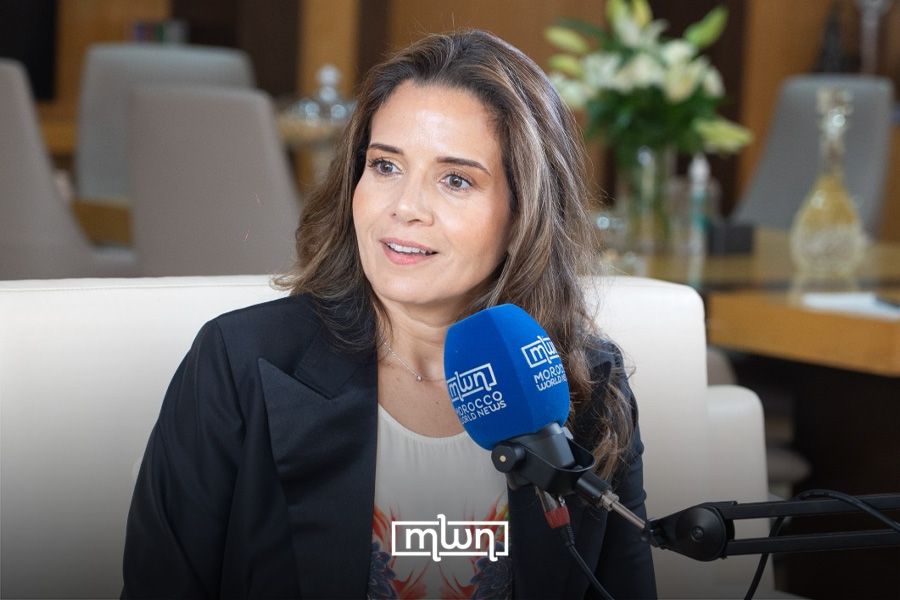
Speaking to Morocco World News on Thursday, the minister said the Rabat International Mining Congress, which took place from October 6 to 8, could be the place where Africa’s potential can be channeled to shape global discussions around the future of the mining sector.
The congress brought together African and international officials and industry representatives to discuss how the continent can make greater use of its mineral wealth, particularly at a time when the global energy and digital transitions are driving demand for critical and strategic minerals.
Yet despite the continent’s wealth and great geological potential, “many countries are still left behind in terms of development,” Benali argued, stressing the need for courage from both governments and investors to ensure that mining generates tangible benefits for the communities where resources are extracted.
“Unless we have brave leaders, courageous leaders at the central and local levels, but also brave and courageous international and national investors,” Benali said, stating that without this, the extraction of resources will not necessarily generate the economic and social returns of which mining regions across the continent are in dire need.
For the minister, the issue is increasingly urgent as the energy and digital transitions now drive demand for lithium, cobalt and other strategic minerals.
“The world is moving fast, the energy transition is moving fast, the digital transition is also moving very, very fast,” Benali told MWN.
Morocco’s mining potential
Morocco has a long mining tradition, making the sector an important part of the country’s socio-economic fabric for centuries.
The sector plays a significant role in Morocco’s economy and directly contributes to the country’s trade balance, while also supporting socio-economic development in some of the Kingdom’s most isolated regions.
According to the Ministry of Energy Transition and Sustainable Development, the mining industry represents between 8% and 10% of Morocco’s GDP, while mining exports account for around 30% of total exports depending on international prices.
The ministry estimates Morocco’s exports to have reached MAD 57 billion over the past year, with the latest figures meanwhile indicating that the sector employs nearly 40,000 people, generates between MAD 10 billion and MAD 20 billion in annual investments, and contributes between MAD 3 billion and MAD 3.5 billion in tax revenues.
The sector further accounts for around 70% of the tonnage transported by sea or rail in Morocco, while supporting regional infrastructure and stimulating economic activity through road construction, electrification, and improved access to water, especially in remote areas.
Emphasizing the need for greater investment in infrastructure, particularly railways, roads, and training centers, the minister argued that such investment should be integrated into mining development plans from the outset.
She cited Morocco’s high-speed rail line between Tangier and Casablanca as a striking example of infrastructure whose long-term value can extend beyond its initial purpose.
For Benali, investments surrounding mining and mineral processing should not be treated as secondary projects, but as integral to the broader development of mining regions.
Morocco’s role in global value chains
The minister also outlined Morocco’s potential in the sector, highlighting several competitive advantages that could position the country as a key link between Africa and global value chains. The unique assets include its logistical position, regulatory framework, and access to green energy and certification mechanisms.
“Some countries have great access to international markets, others have skills, others have access to finance and others, of course, have access to green energy,” Benali said.
She described Morocco as playing a “definitely key role” in defining Africa’s role in future international value chains. However, she warned that greater African integration should not come at the expense of genuine and deep engagement with global markets.
“Sovereignty does not mean being totally isolated from the international markets,” she said, emphasizing that African countries should pool their respective competitive advantages and integrate regional markets into global value chains.
The minister also recalled the ESG framework recently launched by Morocco and African partners, which is intended to reflect the specific needs and circumstances of mining projects on the continent.
“Our frameworks to finance our projects, to ensure that those metals and minerals are being processed in Africa… cannot be written in Geneva or New York or other places,” she said.
For Benali, the story of Africa “has to be written in Africa.”
Jerada’s post-mining challenge
Recalling the specific attention devoted to Jerada, a former coal-mining region in eastern Morocco, Benali cited the humanitarian and socio-economic challenges that the population of the region has endured since the closure of its mine.
Jerada has been known as the “coal capital” of Morocco, but its story shifted from being an economic hub into a landscape marked by exploitation and tragic loss.
For decades, mining was the region’s economic lifeline, employing thousands of workers.
Since mining activities shut down in 1998 due to high extraction costs, a dangerous underground shadow economy emerged, with boys and men engaged in illegal activities to extract leftover coal and anthracite. Some of these activities resulted in tragedies, including the deaths of miners from carbon dioxide poisoning or the collapse of abandoned coal mines.
Benali said the experience had influenced her department’s approach, especially after her appointment in 2021.
“When I had the privilege and the great honor of being nominated by His Majesty back in 2021 to lead this sector, I couldn’t stay blind to the suffering in that region. So with the help of the local authorities, with the help of exceptional people in the region and beyond, we were able to transform what used to be a curse into hopefully positive opportunities,” Benali said.
Citing achievements in the region, Benali said more than 60 cooperatives in Jerada had been transformed into 12 companies as part of efforts to diversify economic activity beyond the declining coal sector. She said the experience demonstrated that the closure of a mine should not necessarily mean the decline of the surrounding region.
“The miners are becoming entrepreneurs themselves,” Benali said.
She added that the experience had also changed the ministry’s approach to other mining regions, demonstrating that post-mining development can create new opportunities for local communities.
‘Mission accomplished’
Answering MWN questions on her ministry’s achievements since her appointment, Benali said the department made several reforms in the energy, mining, and environmental sectors, pointing to the introduction of an electricity efficiency bonus.
She said it took two years to implement the mechanism, which represented a shift in the way subsidies can be directed toward consumers.
She said her ministry also doubled the number of environmental police officers from around 40 to over 80, while equipping them with technologies such as drones to fulfill their duties. She described the measures as part of a broader transformation in the ministry’s capacity to address environmental issues.
Benali also recalled achievements involving Morocco’s energy supply and infrastructure, including savings she attributed to the gas-price formula included in a long-term gas contract and the use of idle refinery storage.
Her comments come as global energy markets continue to face significant pressure from geopolitical tensions and disruptions around major energy routes. The current crisis has pushed global oil and refined fuel prices higher, while concerns over supply and transport remain elevated.
Against this backdrop, Morocco has sought to maintain sufficient energy supplies despite external pressures. Meanwhile, high fuel prices, particularly gasoline and diesel costs, have continued to draw criticism from consumers and remain a wider cost-of-living concern.
While Benali declared her ministry’s “mission accomplished,” the next phase should focus on consolidating the reforms implemented during the past five years and maintaining the pace of Morocco’s social and economic transition.
Benali said the ministry reached several important turning points in investment and expressed hope that another “inflection point” could be reached in 2028.
“I can tell you, without blinking my eyes, mission accomplished,” Benali told MWN, reflecting on her work since her appointment in 2021.
Next government position?
Beyond her role as minister, Benali has built an academic and professional career focused on energy, economics, and industrial policy. She graduated from Morocco’s École Mohammadia d’Ingénieurs (EMI) and École Centrale Paris, and holds a DEA in political science and a doctorate in energy economics from Sciences Po Paris. She also worked with international energy institutions and companies before joining the government.
Asked whether she would remain in the next government and maintain the same position, Benali did not confirm whether she would continue as minister.
Benali is affiliated with the Authenticity and Modernity Party (PAM), which emerged as the leading party in Morocco’s September 23 legislative elections, winning 97 seats in the House of Representatives, according to the final results announced by the Interior Ministry.
In her interview with MWN, she recalled the priorities political parties put forward during the legislative elections, saying the next government’s agenda should focus more on the cost of living, inflation, intermediaries in value chains, targeted subsidies, healthcare, and education.
Although she did not confirm whether she would remain in the next government, Benali reiterated her assessment of her tenure, telling MWN, “without blinking my eyes, mission accomplished,” stressing that the next generation of leaders would need to consolidate the reforms already undertaken to ensure the country continues to accelerate its economic and social transition.