
 Join on WhatsApp
 Join on Telegram
Rabat – The Moroccan government has officially launched the April round of its ongoing social dialogue, reaffirming its commitment to improving the socio-economic conditions of workers and enhancing cooperation with social and economic partners.
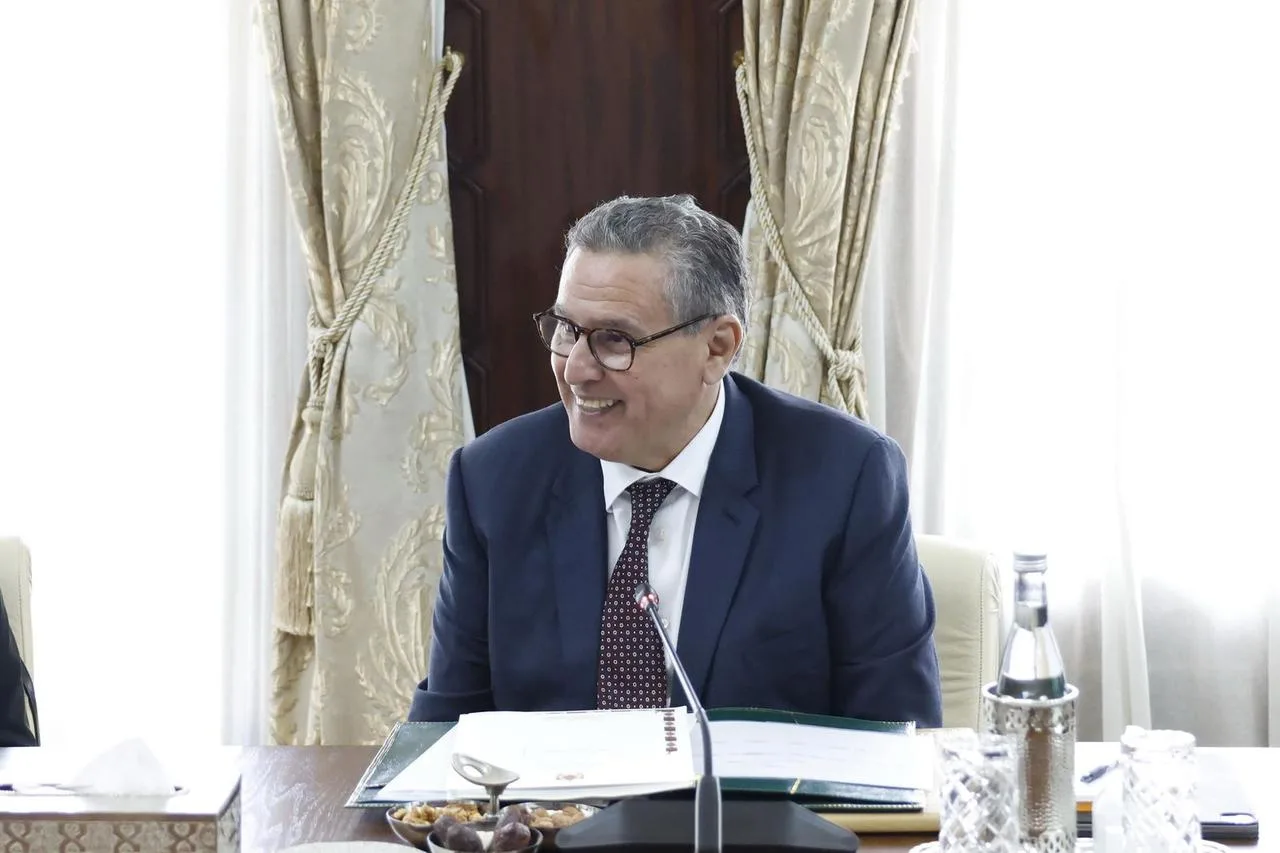
The meetings took place on Tuesday in Rabat under the leadership of Head of Government Aziz Akhannouch and brought together key government ministers and representatives from major labor unions and the private sector.
The session was attended by several senior officials, including Minister of Economy Nadia Fettah Alaoui, Minister of Employment Younes Sekkouri, Minister Delegate in charge of the Budget Fouzi Lekjaa, Minister Delegate in charge of Relations with Parliament and government spokesperson, Mustapha Baitas, and Minister Delegate for Digital Transition Amal El Fallah.
In this event, Akhannouch held separate meetings with representatives of Morocco’s largest trade unions, including the Moroccan Labor Union (UMT), led by Miloudi Moukharik; the General Union of Moroccan Workers (UGTM), headed by Naama Miyara; and the Democratic Confederation of Labor (CDT), represented by Khalid Houir Alami. The government also engaged in talks with the General Confederation of Moroccan Enterprises (CGEM), led by its president Chakib Alj.
These constructive discussions covered a broad range of topics related to previously signed agreements as well as new initiatives. Akhannouch pointed out that the government had fulfilled several key commitments made during the April 2024 round of dialogue.
The commitments notably involve a general wage increase of MAD 1,000 (approximately $108) for public sector employees, paid in two phases, with the second installment benefiting nearly one million workers scheduled for July 2025.
Other commitments fulfilled by the government concern income tax reductions for all employees, with middle-income earners seeing savings of up to 400 dirhams and a 10% increase in the minimum wage for workers in both the industrial, commercial, and liberal professions sectors (SMIG) and the agricultural sector (SMAG).
Akhannouch announced that the government has achieved two landmark social agreements within just half of the current government’s term, adding that his administration is committed to improving purchasing power and advancing Morocco’s social and economic agenda.
The meetings also addressed the implementation of outstanding social reforms and the resolution of sector-specific issues. The government pledged to continue institutionalizing social dialogue and announced that it would include local government staff concerns on the current round’s agenda, with the goal of reaching timely solutions.
One of the key reform areas discussed was the overhaul of Morocco’s pension system. Officials reaffirmed their commitment to a participatory approach, citing the April 2022 agreement that outlines guiding principles for pension reform. A national committee dedicated to overseeing the reform process is now active.
Additionally, the government discussed amendments to the Labor Code, reflecting responsiveness to labor union demands and ongoing economic developments.
In his closing remarks, Akhannouch commended the strength and continuity of cooperation between the government and its social partners, reiterating that social dialogue is not a seasonal event, but a strategic priority rooted in the vision of King Mohammed VI.
While social dialogue has existed in Morocco in various forms for decades, their current institutionalized form began in April 2022, following the signing of a landmark agreement between the government, labor unions, and employers under the leadership of Akhannouch— marking the beginning of a new phase in labor relations.