
 Join on WhatsApp
 Join on Telegram
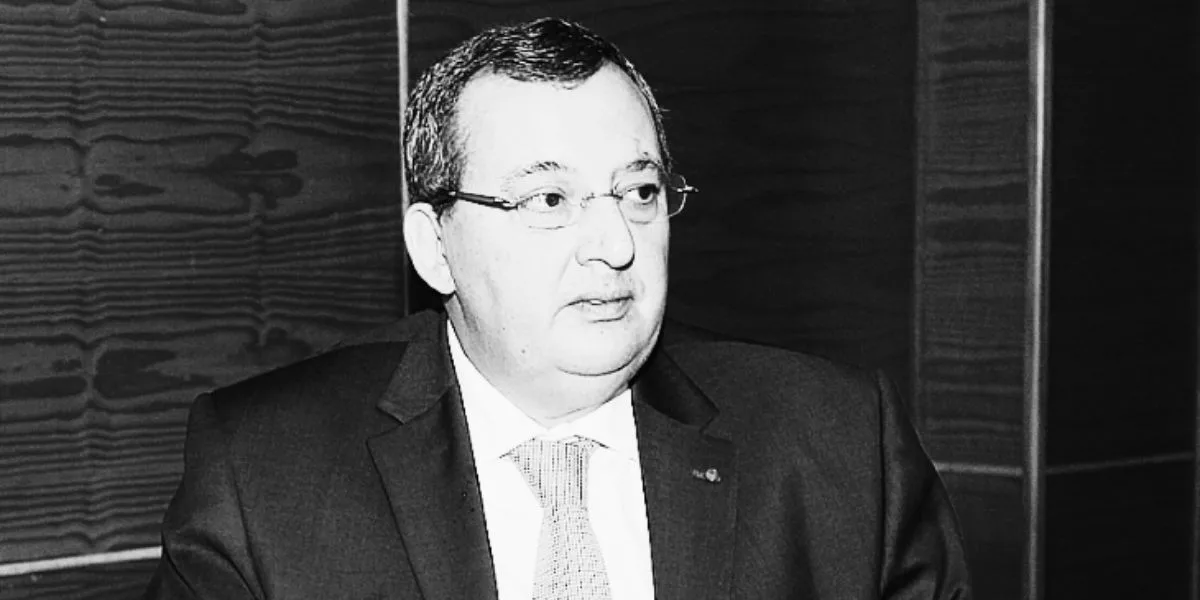
The story of Moroccan football is often told through its legendary players, iconic victories, and passionate supporters. Yet behind every sporting renaissance stands a generation of decision-makers who reshape institutions long before trophies arrive. Among those figures, Ali Fassi Fihri occupies a singular place.
With the passing of Ali Fassi Fihri at the age of 71 following a long illness, Morocco lost one of the men who helped guide Moroccan football through one of the most delicate transitions in its history, namely the passage from traditional administration to professional governance.
Reserved, methodical, and deeply shaped by scientific thinking, Fassi Fihri was never the loudest voice in Moroccan football. But his influence would prove lasting.
From engineering to national leadership
Born into one of Morocco’s prominent public-service families, Ali Fassi Fihri built his own reputation through competence rather than visibility. Holder of a doctorate in energetics from the University of Paris VII-Jussieu, he first worked as a teacher at the School of Mines in Rabat before moving into engineering, renewable energy, and later the leadership of some of Morocco’s most strategic public institutions.
He led the National Office of Electricity (ONE), then the National Office of Drinking Water (ONEP), before becoming one of the central figures behind the creation of the Office National Office of Electricity and Drinking Water (ONEE). His career intersected with some of Morocco’s defining national projects including rural electrification, access to drinking water, renewable energy expansion, and territorial development.
That same culture of planning, structure, and institutional reform would later shape his approach to football.
The FUS Rabat laboratory
Before arriving at the Royal Moroccan Football Federation in 2009, Ali Fassi Fihri had already become one of the key figures behind the transformation of Fath Union Sport.
Under the leadership of Mohamed Mounir El Majidi, the president of the Fath Union Sport (FUS) Omnisport steering committee that appointed Ali Fassi Fihri as a manager to the club’s prominent football section, the Rabat club became a testing ground for a new model of Moroccan sports management.
Beyond simply winning matches, his leadership helped shape the club’s broader identity and vision by building a sustainable sporting institution founded on good governance, financial stability, long-term planning, and professional management.
As part of that transformation, football at FUS began to be managed with the logic of an enterprise rather than the improvisation that often characterized Moroccan clubs at the time.
The club’s later success, including its Botola title in 2016, was widely seen as the confirmation that the project initiated years earlier had anticipated the direction Moroccan football itself would eventually follow.
Leading Moroccan Football through transition
When talking about the period of Ali Fassi Fihri as the head of the Royal Football Academy (2009-2013), it is important to mention the era that preceded him.
The former president of FUS was the first truly non-military leader after an era dominated by three colonels and two generals, which made his appointment particularly remarkable. Entrusting Fassi Fihri with the position represented not only the confidence of the members of the Royal Moroccan Football Federation but also the trust of the country’s core institutions.
When Ali Fassi Fihri succeeded General Housni Benslimane as president of the FRMF in 2009, Moroccan football stood at a crossroads.
The national team struggled for consistency, especially after the loss against Gabon 2-1 at World Cup qualifier March 28, 2009, governance structures were fragile, and the professionalization of the game remained incomplete despite growing demands for reform. Morocco possessed talent and ambition, but lacked a coherent institutional framework capable of sustaining progress.
Fassi Fihri arrived at a moment when Moroccan football needed as much courage as management.
Using the pragmatism and analytical mindset that defined his public-service career, he worked to implement the legal and structural foundations of professionalism in Moroccan football. His presidency coincided with the application of the updated physical education and sports law 30-09, which accelerated the transition toward a professional league system.
The process was far from easy. Resistance emerged from different corners of Moroccan football, where traditional structures and personal interests often collided with the demands of modernization. But Ali Fassi Fihri persisted in pushing reforms designed to give Moroccan football a clearer legal framework, stronger governance, and more sustainable institutional foundations.
For many observers, this remains his greatest contribution, establishing the regulatory and structural basis of professionalism in Moroccan football.
The birth of Botola Pro
One of Ali Fassi Fihri’s most important contributions to Moroccan football was the launch of the Botola Pro in 2011-2012, a reform that officially introduced professionalism into the national championship.
At a time when many clubs still operated with fragile administrative and financial structures, the federation pushed for a new model based on professional contracts, stronger governance, and clearer organizational standards. The objective was to modernize Moroccan football and bring it closer to international professional norms.
The transition was complex and sometimes resisted by clubs unprepared for such structural changes. Yet the creation of the Botola Pro marked a decisive turning point in Moroccan football history and laid part of the institutional foundation upon which later successes would be built.
Domestic clubs shining during his era
During his era, Moroccan clubs became increasingly competitive in CAF tournaments. FUS Rabat won the 2010 CAF Confederation Cup, securing one of the most significant continental titles in the club’s history and symbolizing the success of the modern management model emerging in Moroccan football.
At the same time, Maghreb de Fès captured the 2011 CAF Confederation Cup before adding the CAF Super Cup in 2012. Raja Club Athletic also reached the semi-finals of the 2011 CAF Champions League, confirming the continued presence of Moroccan clubs in Africa’s top competition.
Beyond results
Ali Fassi Fihri’s years at the federation did not produce immediate sporting glory for the Atlas Lions. The national team’s performances remained inconsistent, and supporters often demanded faster progress.
Yet judging his legacy solely through results would overlook the deeper transformation taking place beneath the surface.
His presidency represented a foundational phase, a period during which Moroccan football began moving away from improvised management toward a system centered on infrastructure, training, governance, and institutional continuity.
Even critics acknowledged that his era helped prepare the terrain for the major advances that would later flourish under the presidency of Fouzi Lekjaa. If Lekjaa accelerated the train, many believe Ali Fassi Fihri helped place it on the right tracks.
During his mandate, Morocco also qualified for the men’s football tournament at the 2012 Summer Olympics, one of the few major sporting highlights of that period.
A man of listening and reflection
Those who worked closely with Ali Fassi Fihri often describe a leader defined by calmness, listening, and reflection rather than confrontation. He was known for his patience in discussions, his attention to different viewpoints, and his refusal to govern through emotion or spectacle.
He belonged to a generation of Moroccan state officials who viewed institutions not as personal platforms, but as long-term national projects.
In football, as in infrastructure and energy, he approached reform with the belief that durable success requires systems, not improvisation.
The legacy of a builder
Ali Fassi Fihri’s later years were marked by illness and gradual withdrawal from public life. But his name remains attached to a decisive era in Morocco’s modern development, an era in which the kingdom strengthened its infrastructure, expanded its strategic ambitions, and quietly laid the foundations for future achievements.
In football, his legacy is not necessarily written in trophies. It is written in structures, governance, and professional standards.
As Moroccan football enjoys unprecedented continental and global recognition, the contribution of Ali Fassi Fihri appears more visible with time. He was one of the bridge-builders of Moroccan football; he helped guide the game through uncertainty and toward modernity. While others now reap the rewards on the pitch, Ali Fassi Fihri remains among those who helped shape the road that led there.