
































































Rabat – Spanish sports newspaper Sport has called on the Court of Arbitration for Sport (CAS) to uphold Morocco’s 2025 Africa Cup of Nations title, arguing that Senegal’s controversial walk-off during the final should not go unpunished.
The Spanish outlet raised the issue following similar scenes during Tuesday’s 2027 AFCON qualifier between Tunisia and Libya, when Tunisian players temporarily left the pitch to protest a penalty decision.
In an opinion piece titled “First Senegal and Now Tunisia: Enough Walking Off the Pitch,” journalist Albert Masnou warned that allowing teams to abandon matches in protest could encourage similar incidents across African football.
The publication argued that the issue goes beyond a single match or disputed refereeing decision, raising broader concerns about respect for competition regulations and the authority of match officials.
Tunisia incident revives Morocco-Senegal controversy
Tunisia’s players briefly left the pitch during their encounter with Libya after the referee awarded a penalty to the hosts shortly before halftime.
The Carthage Eagles were leading 1-0 at the time but eventually returned to continue the match, which ended in a 1-1 draw.
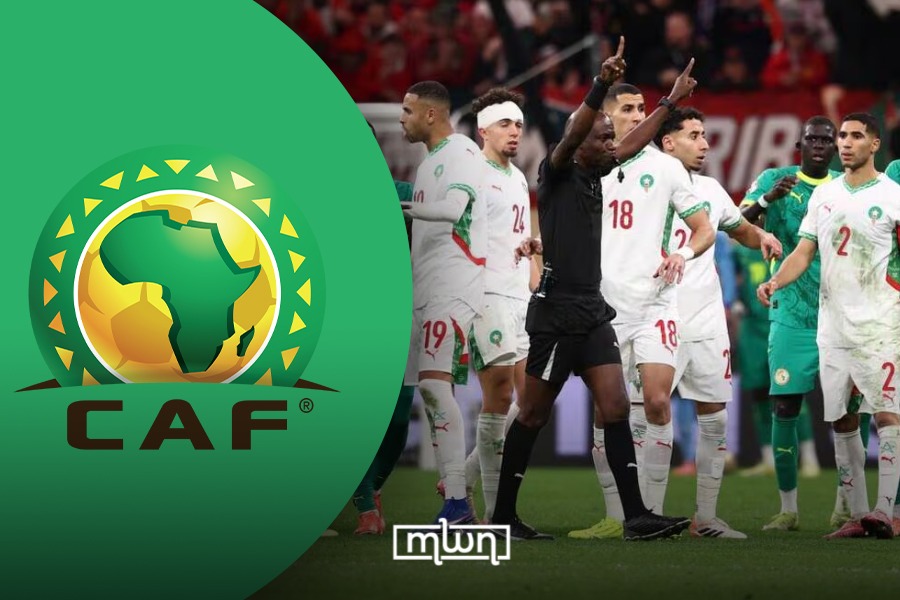
The incident drew comparisons with the AFCON final in Rabat, when Senegal’s players walked off following a late penalty awarded to Morocco.
Senegal eventually returned, and the match continued into extra time, with the visitors securing a 1-0 result on the field.
However, CAF’s Appeal Board subsequently overturned the result on March 17, declaring Senegal to have forfeited the match and awarding Morocco a 3-0 win under Article 84 of the competition regulations.
Sport defended the disciplinary ruling, arguing that football cannot allow teams to leave the field whenever they disagree with refereeing decisions.
The newspaper warned that allowing players to return without meaningful consequences risks encouraging protests designed to pressure officials into reconsidering their decisions.
It also questioned whether referees should be permitted to negotiate with teams that refuse to continue playing, stressing the importance of maintaining their authority throughout matches.
Spanish newspaper urges CAS to uphold CAF ruling
Sport argued that the upcoming CAS decision represents an opportunity to establish a clear precedent against walk-offs during competitive fixtures.
The newspaper called for CAF’s March ruling in Morocco’s favor to be upheld, arguing that financial penalties alone may not be enough to discourage similar conduct.
Its position supports Morocco’s case that the controversy surrounding the AFCON final must be examined through the competition’s regulations, rather than simply the result recorded after Senegal returned to the pitch.
That distinction is central to the dispute.
Morocco’s claim rests on the application of CAF’s rules concerning teams that leave the field or refuse to continue a match, while Senegal is challenging the Appeal Board’s decision through the international sports arbitration process.
Although the Tunisia incident involved a much shorter interruption, Sport considers it another warning about the potential consequences of allowing teams to use walk-offs to contest refereeing decisions.
The newspaper maintained that football already provides formal channels for challenging decisions, including disciplinary proceedings and appeals.
Morocco awaits decisive CAS ruling
The Court of Arbitration for Sport has confirmed that its ruling on Senegal’s appeal is expected by the end of November.
The case was heard in Lausanne on October 8, with representatives of Senegal, Morocco, and CAF presenting their arguments.
CAS must now determine whether CAF’s decision to award Morocco a 3-0 result should stand.
For the Atlas Lions, the outcome will settle the legal dispute surrounding a final that remains one of the most controversial in the competition’s history.
Sport’s intervention brings a notable European perspective to the debate, supporting the argument that protecting the integrity of African football requires consistent enforcement of its rules, even when the consequences involve a continental title.
The final decision, however, rests with CAS.