



















































Rabat – Conscious of the importance of preserving marine and coastal biodiversity, the OCP Foundation continues to pay significant attention to restoring environmental and ecological problems in Senegal.
Speaking to Morocco World News, the OCP Foundation’s Head of International Portfolio Nawfel Roudies reaffirmed the institution’s commitment to create a truly sustainable future for local communities in Senegal through the “Joal-Fadiouth project.”
He also noted that OCP owes a sizable part of the success of its sustainability-driven initiatives in Senegal to active support from the West African country’s Ministry of Environment and Sustainable Development. The ministry keenly joined the OCP Group’s efforts to implement many of the project’s initiatives, Roudies pointed out.
Launched in October 2021 in partnership with the Senegalese Ministry of Environment and Sustainable Development, the community development initiative seeks to meet the needs of the Joal-Fadiouth marine protected area (MPA), located 144 km from Dakar.
Roudies stressed that the initiative, which spans a period of three years, “aims to contribute to the promotion of an inclusive economic and social development of local communities.”
The project seeks to improve marine and coastal biodiversity conservation in and around the MPA, while contributing to the various development initiatives the region is currently undergoing.
Senegal has an efficient fishing industry, as the marine waters off the country are rich with seafood, allowing the sector to make a substantial contribution to the national economy.
OCP Foundation, alongside the Senegalese Ministry of Environment, are making significant efforts to preserve the country’s natural heritage, a mission that aligns with the recommendations of the Fifth World Parks Congress of the International Union for Conservation of Nature (IUCN) held in 2003.
Roudies explained that the ecological region that includes the ecological lagoon of Joal-Fadiouth covers an area of more than 430 hectares and plays a considerable role in the conservation of fisheries and water birds.
“Thus, the mangrove represents a space of protection for migratory species such as the marine turtle and shelters numerous sites of shell middens,” he added. He emphasized that due to climate change, “these resources have been globally overexploited for at least two decades.”
Amid the emerging problems that threaten the coastal ecosystems in the West African country, Nawfel Roudies insisted that “mangroves play a very important role not only in the effective protection against coastal erosion, but [they] also constitute prime habitats for many species of fauna, both marine and terrestrial.”
Resilience to climate change and preservation of biodiversity
With a goal of protecting marine and coastal ecosystems, OCP Foundation’s efforts in the Fadiouth project are focused on the UN Sustainable Development Goals (SDGs) 13, 14, and 15, that cover climate action, life below water, and life on land.
The Foundation, however, also tackles other SDGs, including SDG3 – which promotes good health and well being – through the promotion of the “One health” approach.
The approach focuses on improving “the health of humans, animals, plants and their shared environment.”
“One Health” is perceived as a catalyst for sustainable development, as it recognizes the interdependence of the above-mentioned elements, seeking to strengthen disease management by bringing together medical and policy specialists with environmental scientists.
Speaking on the Foundation’s strategies to boost social inclusion and develop marine and coastal biodiversity, Roudies highlighted that such efforts can be accomplished by empowerment of local communities through capacity building and implementing educational and training programs for women and youth in Joal Fadiouth, as well as through promoting reforestation and the restoration of the mangrove.
“Fadiouth project follows a first successful experience of partnership with Senegal’s Ministry of Environment, where the OCP Foundation contributes to implement similar initiatives in the Niokolo Koba National Park,” he said.
Roudies considers Joal Fadiouth MPA to be an evolving example that can lead to the empowerment of not only local communities, but also women, who are a key element in the ecosystem.
The Foundation’s stakeholder-oriented community development approach seeks to maintain a resilient environment across Senegal while helping communities diversify their production and boost women’s social inclusion, Roudies emphasized.
Pointing to the several projects OCP Foundation has already conducted in Senegal, Roudies reaffirmed the importance of implementing concrete action for the benefit of communities across Africa.
With a growing population set to reach 2.5 billion by 2050, Africa is facing unprecedented challenges that require the implementation of unique and adaptive models.
OCP Foundation’s areas of intervention are outlined by Morocco’s New Development Model (NDM) and the SDGs, with an ambition of mitigating the effects of the COVID-19 crisis, as well as the consequences of climate change on food security and biological and economic ecosystems.
Women, digitalization, and innovation in ensuring biodiversity management
For decades, women have played a critical role in Senegal’s fishing and agricultural industry.
With a mission of empowering them and boosting their social inclusion, Roudies recalled the training and capacity-building sessions OCP Foundation organized for the benefit of five women’s cooperatives and members from the MPA’s community.
The training, held within the framework of the Fadiouth project, relies on the expertise of Mohammed VI Polytechnic University (UM6P) and Senegalese one and tackles topics such as mangrove reforestation and its techniques, carbon monitoring of plantations, as well as oyster farming, beekeeping, accounting, and financial management.
“Through the capacity building of women, we ensure that they learn and have the necessary tools to optimize the use of mangrove resources and master the financial management of their projects, in full autonomy,” he added.
Empowering women and highlighting their role as agents of change, while increasing their resilience to changes that could occur in the ecosystem in which they live, is among the project’s main priorities.
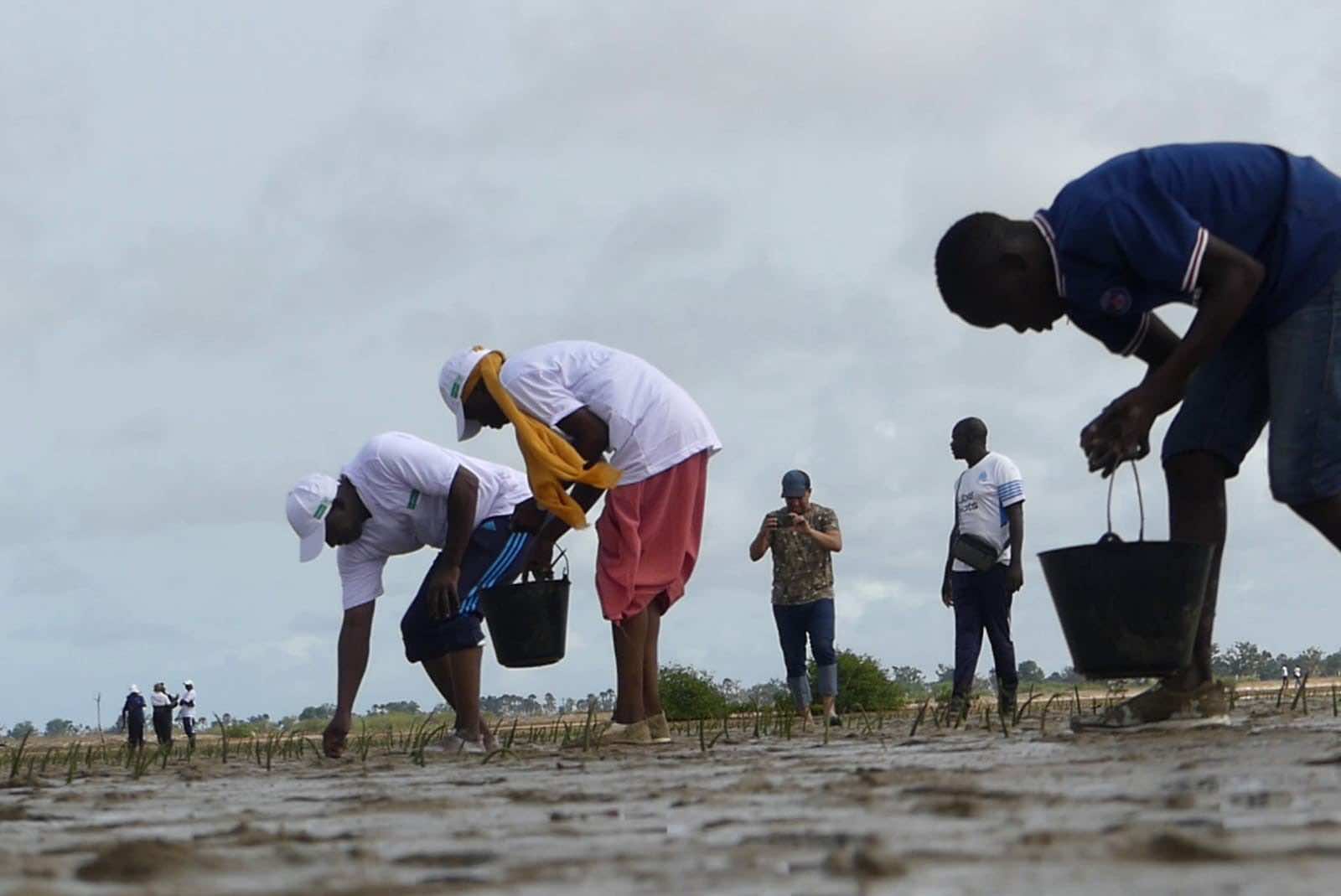
Roudies further spoke about plans to establish a major mangrove through a reforestation program that covers an area of 100 hectares to ensure its sustainability and preserve biodiversity.
“So far, we have already covered 30 hectares,” he said, adding that the project will also provide local partners with Mobil equipment to facilitate site monitoring, ornithological monitoring equipment, electric boats, and oyster farming and beekeeping equipment.
The COVID-19 pandemic has pushed many to reexamine what they once considered as “global norms.” Coupled with emerging technologies, several companies and institutions have experienced a profound shift in an increasingly digital world.
Aware of the importance of digitalization in today’s world, OCP Foundation has adopted new technologies in the development of its projects with stakeholders “to accelerate the digital transformation of the continent.”
It has become an essential element in our work, said Nawfel, outlining that the foundation equipped local communities with computers and provided equipment for training rooms so that people can benefit from the workshops remotely.
He stressed that “OCP Foundation has adapted its operational model, in line with the evolution of its environment, for greater agility and flexibility while establishing itself as an open and learning organization.”
Research and development is also an integral part of building a resilient and connected ecosystem, Nawfel Roudies added. He concluded that this aspect, coupled with innovation and training, is likely to provide sustainable solutions to Senegal and strengthen the exchange of expertise with Morocco.