 Join on WhatsApp
 Join on Telegram
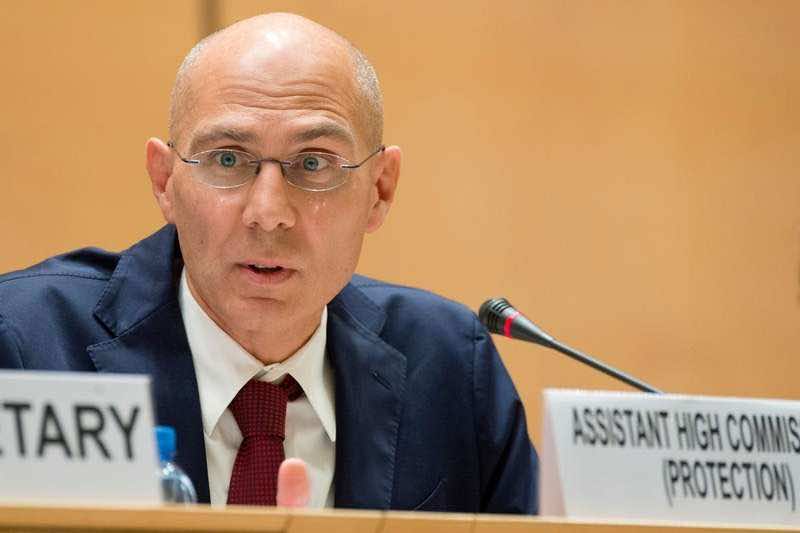
Rabat – For years now, sub-Saharan and Arab refugees and migrants have been seeing Morocco as a transit country to Europe. However, Volker Turk, UNHCR’s Assistant High Commissioner for Protection, says that Morocco is now establishing itself as a destination for refugees and migrants.
On October 22, Volker paid an official visit to Morocco, where he met with refugees and migrants. During the meeting, which took place in Rabat’s Orient-Occident Foundation on Tuesday, the refugees and migrants in attendance discussed the daily challenges they face in the transit country. Some of them talked about the issues of identity documents, while others referred to health care access and education issues.
In a post-conference talk, Volker discussed Morocco’s vital role in promoting the situation of refugees and migrants.
Volker told Morocco World News that “there is a very strong legal framework for refugees at the international level.” He added that “148 countries signed the 1951 Refugee Convention, “which outlines their rights as well as the legal obligations of States to protect them. Volker added that Morocco was the first African country having signed the 1951 Geneva Refugee Convention, which is very interesting.”
While “Morocco remains a transit country for refugees and migrants, it is also fast becoming a country of destination,” said Volker, noting that the country is working to offer protection to refugees under its National Policy on Immigration and Asylum (NPIA), which was launched in September 2013 under the instructions of King Mohammed VI.
The High Commissioner Assistant did not deny that there are still countries that violate the refugee convention rules across the world.
“You will always have challenges violations. Some countries are still violating the convention around the world. We always react quite strongly when we see this.”
Volker added that the UNHCR have “faced many issues in different parts of the world, especially the issue of sending back refugees forcibly to their countries,” explaining that this issue is the worst possible fate a refugee.
The UN official added that there is always the potential to negotiate and solve these issues through dialogue and cooperation.
Volker brought up the 2018 Global Compact on Refugees initiative launched by the UN. The compact will focus on four key points: easing pressures on countries that welcome and host refugees, build self-reliance of refugees, expand access to resettlement in third countries and other complementary pathways and foster conditions that enable refugees voluntarily to return to their home countries.
During his visit to Morocco, Volker also met Abdelouafi Laftit, Morocco’s Minister of Interior. After their meeting, Volker told media, “It is clear that Morocco made huge progress not only in the management of migration issues but also in terms of addressing the question of refugees.”
Laftit continued that the meeting with the Moroccan official was an opportunity to show “our great admiration for the Moroccan migration policy since 2013, which also includes refugee protection.”
Volker added that Morocco has established “good practices in that area,” welcoming the “very close” collaboration with he Moroccan government as well as with Moroccan civil society.