 Join on WhatsApp
 Join on Telegram
Rabat – Morocco’s first reconnaissance satellite, due to be launched on November 8, will bear the name of King Mohammed VI, reports Maghreb Arab Press (MAP).
The launch will make Morocco the third African country with a reconnaissance satellite after Egypt and South Africa.
According to the state-run press agency, the images collected by the satellite will help Morocco polish its green policies, in line with kingdom’s repeated affirmations that is committed to environmental protection.
Agriculture, as one of Morocco’s key economy sectors, will greatly benefit from the satellite.
At the same time, the device will ensure a better management of Morocco’s forestry and silvopasture resources.
The satellite also offers Morocco an opportunity to improve management of its territories, to better plan housing expansion, and to closely monitor slum eradication operations.
“Empowered with this equipment, Morocco will certainly take the lead in terms of water resources management and underground water prospection,” writes MAP.
Morocco’s neighbors are reported to be closely watching this development. Radio France Internationale (RFI) reported that the Moroccan satellite will make Algeria “go crazy.”
While Morocco has not officially announced state security as a goal, international media have reported that the kingdom will be able to surveil the activities of the Algerian army and the separatist organization of the Polisario Front, backed by Algiers.
Spain, with which Morocco now enjoys the best relations in decades, is nonetheless worried.
The country’s leading newspaper El Pais cited local military sources who called for caution in advance of the launch, despite the close security cooperation between the two kingdoms in fighting terrorism and illegal immigration.
A Spanish military strategist said his country’s officials should “not to lower their guard.”
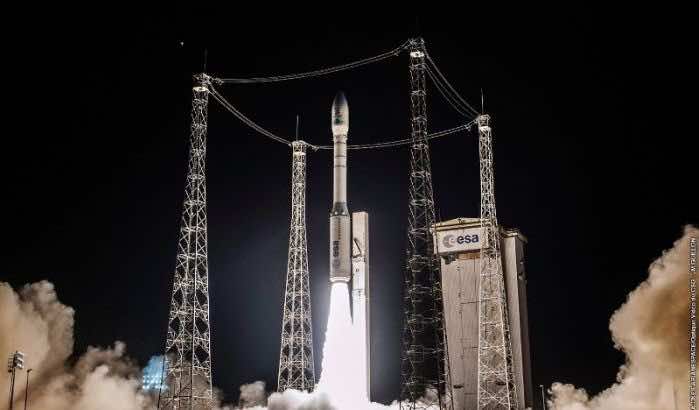
Due to be launched from French Guyana, the Mohammed VI satellite came into being after Morocco concluded a contract with Airbus Defense & Space and Thales Alenia Space in April 2013.
The satellite will be controlled by the Moroccan Ministry of Defense in a control base not far from Salé’s airport, which will be overseen by the Royal Centre for Remote Sensing (CRTS) in Rabat.