


 Join on WhatsApp
  Join on Telegram
 Rabat – A Moroccan Ambassador has said in a statement that terrorism has little to do with religion and a lot more with the social system.
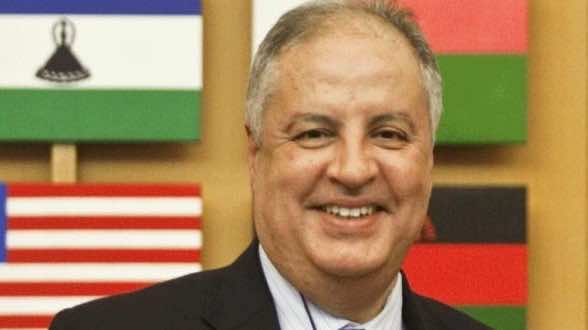
The Moroccan Ambassador to Italy, Hassan Abou Ayoub, has stated that Morocco combats radicalism and terrorism through an integrated approach of security and education that has borne fruits beyond Moroccan borders.
Speaking at a seminar on “the future of extremism in the countries of the Maghreb,” Ayoub said that the success story of Morocco’s “unique efforts” to curb extremism lies in its attempt to promote an alternative religious rhetoric at mosques.
Religious Reforms as a counter-terrorism strategy
“This is achieved through training Imams, Morchidines, and Morchidates (religious guides) in countries that are victims of extremism, notbaly Africa, Sahel and, Europe,” the ambassador noted, referring to the multiple reforms that Rabat has initiated in recent years to emerge as its region’s bulwark of counter-extremism.
Morocco’s counter-terrorism strategy has been deployed on targets three main fronts: stepping up internal security, eradicating poverty, and spearheading religious reforms.
On the religious front, Morocco has especially invested in promoting values of moderation and tolerance both domestically and abroad through education programs, community building, and religious training.
Read Also: Committee Elects Morocco to Co-Chair Counterterrorism Forum for 3rd Time
In 2015, King Mohammed VI inaugurated the Mohammed VI Institute for the Training of Imams, Morchidines, and Morchidates. The institute has since been dedicated to the training of Imams from the African continent and Europe.
It has been touted for cultivating values of tolerance and coexistence. The institute is part of a broader Moroccan plan to stand up to all forms of religious extremism. But the institution also seeks to preserve the spiritual identity of Moroccans.
According to Ambassador Hassan Abou Ayoub, “Morocco intends to to propagate moderate values of Islam to combat the proliferation of radical ideologies.”
Since the terrorist attack in Casablanca on May 16, 2003, the deadliest terrorist attack in Morocco’s history, Morocco has undertaken to implement vigilant security measures to combat Islamic radicalism.
The approach, Ayoub elaborated, has proved effective l and has had tangible impacts beyond Morocco. “Many countries like England, Belgium, and Germany, have benefited from it.”
Vision and effective social policies
King Mohammed VI’s “clear vision” has anticipated events differently from the usual approach of “ emergency treatment, which is inappropriate,” he continued.
Pointing out that the proliferation of extremism is mostly due to the social system, the Moroccan ambassador said that “Europe has made mistakes by failing to give priority to Africa in the face of problems relating to development … Poverty drives people to turn to extremisms.”
But Ayoub regretted that European countries still lack a unified counter-terrorism strategy because of big political differences.”
Meanwhile, he concluded, Morocco has been an invaluable EU ally on security and extremism related issues. “Morocco’s outstanding counter-terrorism policy have benefitted many European countries like Germany, England, and Belgium.”
The ambassador’s comments tune with King Mohammed VI’s repeated insistence on enlightened and responsible leadership to meet the challenges facing Morocco and the world today.
In his welcoming speech on the occasion of Pope Francis’ ongoing visit to Morocco, the King reiterated his belief that right leaders and good religious education can prevail as the world pains to come to terms with the instrumentalization of religions.
“As Commander of the Faithful, and just like Your Holiness, I am against all forms of indifference and I wish, in this respect, to salute the courage of the Leaders who do not shy away from the defining questions of our time,” the King said.


