









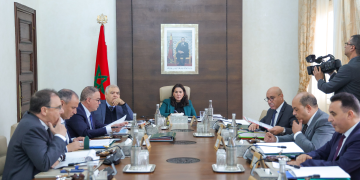











































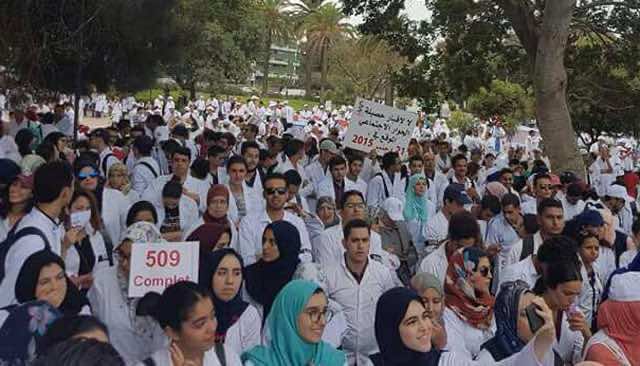
Rabat – The Independent Union of Moroccan Public Doctor (SIMSP) organized a protest in Rabat for Monday morning. The body called for a 48-hour strike to demand better wages and work conditions for medical professionals in the public sector.
SIMSP has called for doctors, pharmacists, and dental surgeons in the public sector to gather outside the Ministry of Health and Parliament in Rabat today for a “fifth phase” of protests.
Doctors in public institutions, excluding emergency services, will also be on strike for 48 hours Monday, Tuesday, Thursday, and Friday.
SIMSP has organized a number of protests in the last months. Following protests in December last year, the Ministry of Health agreed to address SIMSP’s requests for improved work conditions.
According to SIMSP, however, nothing has changed since.
“We have not yet seen any positive response from the Ministry and the Moroccan government to our file,” said SIMSP. The organization added that the government continues “to ignore the causes of our protests, and we are therefore determined to continue our struggle.”
Doctors want an increase in wages. They want their wages to be calculated in accordance with public service Index 509, which recognizes the eight-plus years of study required to become a doctor.
Read also: 305 Doctors Resign in Morocco Amid Medical Students’ Protests Thursday
Doctors are currently paid under Index 336, which recognizes only five years of study.
Doctors are also protesting poor work conditions and “anarchic surgery,” surgical operations that do not comply with medical standards and safety requirements due to limited resources. They want a review of equipment sterilization procedures in hospitals and emergency vehicles.
They also want an inquiry into the “collective resignations.” Doctors have been resigning en masse to protest work conditions.
Last week, 120 doctors in the Beni Mellal region in central Morocco resigned due to “catastrophic and off-putting conditions that affect the public health sector.”
Two weeks ago, more than 300 doctors in the northern Tangier-Tetouan-Al Hoceima region resigned, citing “the deterioration of the health system in the Tangier region and the absence of [proper] work conditions in public hospitals.”
In October 2018, more than 130 doctors left the health sector in the Casablanca-Settat region, 40 doctors resigned in the Western region, and 30 doctors resigned in Ouarzazate province.
The Moroccan government is under pressure from public employees. Thousands of teachers have also been protesting this month in Rabat, demanding stable employment contracts.