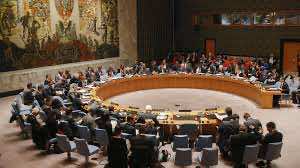
Washington, D.C. – While the UN Security Council’s new Resolution 2468 does not bring any major breakthrough that might suggest that the Security Council is moving decisively towards pressuring the parties to reach a mutually acceptable political solution, the new language it included gives a glimpse into the direction of the political process.
For the most part, resolution 2468 has maintained the same language and the same parameters of the UN-led political process as previous resolutions on Western Sahara, with an emphasis on “realism” and on the need for the parties to the conflict to cooperate in good faith with the United Nations Secretary-General’s personal envoy, Horst Kohler.
The preamble of the resolution has once again given prominence to the Moroccan autonomy proposal in that it welcomes the “serious and credible Moroccan efforts to move the process forward towards resolution.”
Meanwhile, the resolution has simply taken note of the counterproposal submitted by Polisario without giving it any credit for advancing the political process. But this language should not be regarded as a victory for Morocco, since it simply uses the same language in all but one resolution on the conflict since the start of the political process in April 2007.
Read Also: Western Sahara: UN Resolution 2468 Calls for Compromise, Realism
The only exception to this practice was in Resolution 2285 of 2016, when the Security Council settled for taking note of Morocco’s autonomy proposal and the Polisario’s counterproposal without praising Morocco’s efforts to advance the political process.
Algeria no longer a ‘neighboring’ country
That being said, the Security Council has once more included Algeria on quasi-equal footing with Morocco.
The main significant change that the new resolution brings is the fact that it mentions Algeria five times in the resolution, three times in the preamble and twice in the operative paragraphs. Mentioning Algeria five times in the resolution carries political weight and suggests that the Security Council is moving progressively towards considering it as a full-fledged party in the conflict.
Since the start of the political process until October 2018, Algeria had never been mentioned in any Security Council resolution on the conflict. It took Morocco a sustained diplomatic effort to convince the Security Council to come to terms with the obvious reality that Polisario would not exist without Algeria’s military, financial, diplomatic, and logistical support.
The first time the Security Council included Algeria in a resolution on the conflict was in Resolution 2440 of last October. That resolution mentioned Algeria three times. That the Security Council mentions Algeria five time in its new resolution is a significant change that plays in Morocco’s favor.
In addition, while in paragraph seven of Resolution 2440’s preamble the Security Council described Morocco and Polisario as “the parties” and Algeria and Mauritania as “neighboring states,” this time around that distinction has disappeared. The resolution has named the four parties on equal footing.
New emphasis on compromise
The other significant change lies in paragraph six of the preamble. In Resolution 2440, the council reaffirmed its commitment to assist the parties to “achieve a just, lasting, and mutually acceptable political solution, which will provide for the self-determination of the people of Western Sahara.”
The new resolution has the same language but adds the phrase “based on compromise.”
Read Also: Making Sense of Security Council Resolution 2440 on Western Sahara
The Security Council reaffirmed “its commitment to assist the parties to achieve a just, lasting, and mutually acceptable political solution, based on compromise, which will provide for the self-determination of the people of Western Sahara” in paragraph six of Resolution 2468.
The new language indicates that the Security Council is stressing more than ever before that any resolution has to be reached “based on compromise.” The new resolution, in fact, emphasizes the need for compromise five times.
To gauge the political weight of the new language, one has to compare it with the previous resolutions, especially the resolutions adopted between April 2007 and April 2017. During this period, with the exception of Resolutions 1754 and 1783 which made no mention of such term, the need for the parties to be guided with the spirit of compromise was mentioned as little as one time in all the resolutions.
But the trend changed with Resolution 2414, which called for the need for compromise three times, and Resolution 2440, which mentioned that principle four times. While there has been an incremental call on the parties to be guided by the spirit of compromise, there has also been an incremental emphasis on the need for the parties to be guided by “realism” and a realistic approach.
While in each of the resolutions adopted between April 2008 and October 2018, the need to show “realism” was mentioned only one time, this emphasis was strengthened since the adoption of Resolution 2440, which mentioned the principle twice.
In addition, that resolution added new language that emphasized the need for the parties to “achieve a realistic, practicable and enduring political solution based on compromise.” This language has been confirmed in Resolution 2468.
Realism might mean no referendum
To Algeria and Polisario’s dismay, the text indicates that the option of a referendum of self-determination and the approach of “winner-take-all” are off the table.
This explains why Russia, which abstained from the vote, has expressed its displeasure with the language of the new resolution. In his explanation of the vote after the adoption of Resolution 2468, the Russian representative said that his country rejects “attempts to prejudge the course of negotiations or alter already agreed parameters.”
The Russian representative voiced his concerns that the amendments in the new resolution “undermine the Council’s neutral role.” He added that all his attempts to restore “previously agreed language were ignored.”
The same level of frustration was expressed by South Africa’s representative. While explaining why his country abstained, he said the new language gives “little clarity on the use of such terms as ‘realistic’ and ‘realism,’ as well as ‘compromise,’” and regretted that the new resolution attempts to “unduly influence the direction of the political process nor pre-empt any final status of the negotiations.”
The South African diplomat further regretted that Resolution 2468 makes no distinction “between the parties to the conflict – namely, Morocco and the Frente Polisario – and the neighboring States, Algeria and Mauritania.”
Handling John Bolton effectively
This new development suggests that Morocco has adapted well to the presence of John Bolton in the Trump administration and has succeeded in thwarting all attempts to undo the diplomatic achievement Morocco has made in the past few years.
A few days after the adoption of Resolution 2440 last October, Algeria signed a lobbying deal with Keene Consulting, owned by David Keene, Bolton’s friend and long-time Polisario supporter. Algeria has sought to use Keene’s friendship with Bolton to shape the new US policy on Western Sahara to its advantage.
Read Also: Morocco Should Stay Alert to John Bolton’s Influence with Trump
But in light of the language introduced in the new resolution, Algeria has so far lost this battle. Not only Keene Consulting and Foley Hoag—Algeria’s main lobbying firm—have failed to change the language of Resolution 2440 and remove any mention of Algeria in the new resolution. Instead, the Security Council has moved further to considering Algeria a full-fledged party to the conflict.
This also suggests that despite appearances and the unpredictability of the Trump administration, Morocco can still rely on career diplomats and officials in the Pentagon and in the national security apparatus to speak on Morocco’s behalf, make the case for its strategic interests, and prevent any decision that might put the US-Morocco strategic alliance in jeopardy.
What Russia’s abstentions mean
Despite Morocco’s successful efforts to preserve its achievements, a final political solution to the conflict in line with Morocco’s approach is still out of reach. Yesterday’s vote on Resolution 2468 suggests that even if the US were to adopt a position clearly in favor of Morocco’s Autonomy Plan, Russia would not let that happen.
That Russia has abstained in the past four resolutions that have been perceived as slightly in favor of Morocco indicates that if push comes to shove and the US tried to impose the Moroccan Autonomy Plan as the only basis for negotiations, Russia might use its veto power.
What reduces the chances of a solution any time soon is that even in the US government there has been no unanimity on its Western Sahara position.
More than two decades after the US urged Morocco to present an autonomy proposal and committed to supporting it as the only basis for a future solution, it has failed to honor its engagement.
Because of the impact of lobbyists and interest groups in swaying US decision-makers and shaping their views on foreign policy and the existence of opposing views even within the State Department, the US position on the conflict has evolved from considering Morocco’s Autonomy Plan as the only feasible solution to the conflict to considering it as simply “a solution” that could help solve the conflict.
With John Bolton in the Trump administration and his desire to leave his stamp on the conflict, the chances of American support for Morocco’s position on the conflict are nonexistent. Algerians are aware of that and will work harder than ever before to undo the progress that Morocco has achieved in recent years.
Samir Bennis is the co-founder of Morocco World News. You can follow him on Twitter @SamirBennis.