









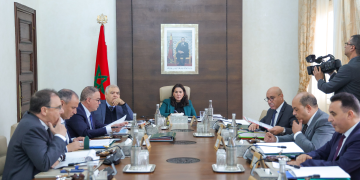





































Rabat – Morocco’s Head of Government Saad Eddine El Othmani has renewed his country’s commitment to mitigating the global climate crisis, citing Morocco’s domestic “ambitions” and international “solidarity.”
Increasingly assertive on both global and regional platforms, Morocco misses no opportunity to brand itself as a rule-abiding player in world affairs and a pertinent voice on a wide range of issues of regional and worldwide significance.
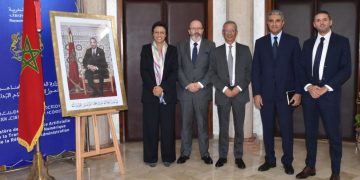
El Othmani said as much as he headed an important Moroccan delegation at COP25, the two-week climate summit that officially kicked off Monday, December 2, in Spain.
The Madrid meeting is taking place in a global climate of environmental urgency and anxiety, especially given the dire warnings from the scientific community. Just last month, 10 Moroccan scientists joined a large community of 11,000 scientists from 153 countries in urging for global and immediate action to tackle what they described as a “climate emergency.”
Central to the growing worry over the practical significance of events such as COP25 is the fact that few countries have actually implemented sustainable policies, in spite of the recent series of “global dialogues” and discussions on the issue.
In most instances, countries are seen as eager to participate in global, emergency-themed events, where on-paper commitments are made and a series of documents signed.
But when it comes to actually implementing the policies that their “global commitments” entail, most governments are dragging their feet, leading many critics and activists to question the sincerity and effectiveness of commitments made at international conferences like COP25.
El Othmani’s speech in Madrid on Monday, December 2, while not a decisive rebuttal to critics’ and activists’ doubts, was a reassurance that Morocco is at least among the still insignificant number of governments doing their best to integrate environmental concerns in their policy choices.
Conscious of the “worrying impact” of environmental degradation, Morocco, El Othmani argued, has espoused an “ambitious and solidarity-driven” attitude to tackling the global climate emergency.
In the Moroccan head of government’s reckoning, while Rabat has grown distinctly “ambitious” in how it deals with climate and environment-related policies—from sustainable agriculture to renewable energy and the Zero-Mika ambition—the fact remains that “global solidarity” is required to successfully come to terms with an issue of global reach and ramifications.
As El Othmani sees it, Morocco is already on track, “shouldering its regional responsibilities.” But, he stressed, for the sake of efficiency and more palpable impact, Rabat is ready to engage further by embracing and implementing all global decisions and commitments on mitigating the devastating impact of the human-caused climate crisis.
It all boils down to “responsibility” and “ambition” at the domestic level and “solidarity” on the global front. “Under the leadership and the personal involvement of King Mohammed VI, Morocco has opted for an ambitious and solidarity-driven approach in its actions and interventions at the national, regional, and worldwide levels,” he said.
The Moroccan head of government’s statements come at a time when the North African country has been lauded by international observers for its “ambitious” environment-friendly policies and its commitment to regional and multilateral platforms on the issue.
“Electricity demand has doubled since 2010 and by 2030 we want Morocco to be one of the first countries in the world for renewable to exceed share of fossil energy,” Yassir Badih, senior project manager at the Moroccan Agency for Solar Energy (MASEN), told CNN for a report the American outlet did in early 2019.
While the ambition to achieve worldwide leadership on renewable energy is bold and still far away, recent reports suggests that Morocco is on track, that its sustainability policies are effective and encouraging. A recent ranking showed Morocco comes 13th for energy efficiency, suggesting the country is among the world leaders—and by far Africa’s leader—on sustainability and renewable energy.