Rabat – During a recent visit to Nigeria, Algeria’s Minister of Foreign Affairs had to come to terms with the new normal in Morocco-Nigeria relations. Sabri Boukadoum, Algeria’s top diplomat, visited Abuja on Friday to talk business, and to shore up support for Polisario, its proxy militia.
With Polisario becoming increasingly isolated in the diplomatic sphere, Algeria fears becoming the only backer of the Sahrawi militia that it hosts, feeds and arms. A dialogue between Boukadoum and his Nigerian counterpart Geoffrey Onyeama had likely aimed to garner Nigeria’s support for Polisario’s ending of the 1991 ceasefire in Western Sahara.
Yet, the Algerian delegation left Nigeria empty-handed as regards Algiers’ Western Sahara endeavor.
Even more dismaying for Algeria was the fact that Nigeria’s Foreign Minister did not mention the issue at all in his tweets following the meeting.
No statement of support for Polisario followed Boukadoum’s visit to the West African giant, confronting Algeria with a new normal in Nigeria’s growing relationship with Morocco.
Changing history
Nigeria has long been a vocal supporter of the Algerian-backed Polisario. Alongside other major African countries, most notably South Africa and Algeria, the West African country saw tensions in Western Sahara as a way to limit Morocco’s influence on the continent. But half a decade of effective win-win diplomacy with Morocco seems to have changed Nigeria’s understandable geopolitical stance.
During Morocco’s absence from the African Union (AU), countries such as Algeria, Ethiopia, South Africa and Nigeria were the major players in African geopolitics. Morocco’s readmission to the AU in 2017 changed this balance of power, however.
The story of Morocco’s renewed influence in Africa started in June 2016, when King Mohammed VI invited Rwandan President Paul Kagame to Rabat, a month ahead of the 27th AU summit in Rwanda’s capital Kigali. The diplomatic visit signalled the reemergence of Morocco on the continent.
Not long after President Kagame’s visit to Rabat, King Mohammed VI embarked on a continental tour, visiting dozens of countries across Africa. For example, the Moroccan King visited Ethiopia, Tanzania and Rwanda—and returned home with dozens of new economic agreements.
The King had commenced a national mission to leverage Morocco’s economic power to build new economic and diplomatic ties with its “African brothers.”
Genuine partnership
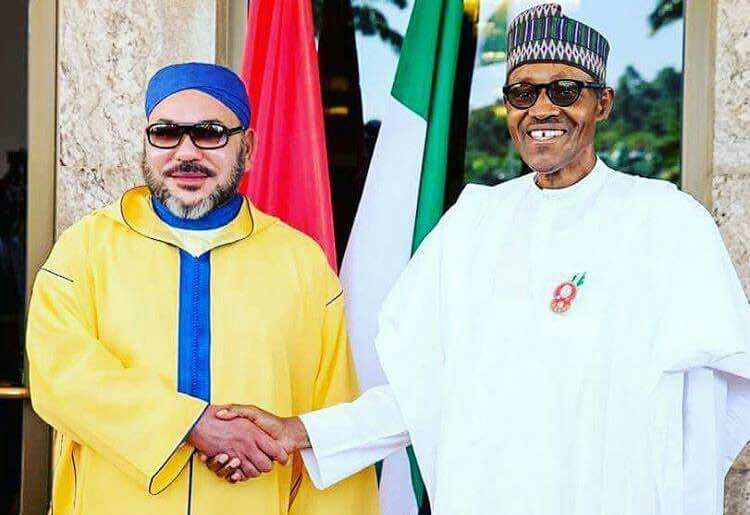
Underscoring this new diplomatic path was King Mohammed VI’s visit to Nigeria’s capital Abuja in December 2016. Each of the King’s visits in Africa strengthened mutually beneficial economic ties while unravelling support for Polisario’s cause.
Morocco provided a clear strategy of a win-win form of south-south cooperation based on shared economic goals which changed the future of international relations on the continent.
If anything, Morocco’s Phosphate giant OCP’s commitment to building a fertilizer plant in Nigeria to alleviate local food security seems to have edged Morocco-Nigeria relations from mere rapprochement to strategic, strong friendship.
But the cherry on top of this win-win cake has been the much-heralded Morocco-Nigeria gas pipeline project.
Nigeria has long been dependent on Western oil companies such as Royal Dutch Shell, Chevron, Total and Texaco. But these agreements have proven to be less of a win-win than initially promised. As a result, Nigeria has faced environmental disasters exacerbated by international oil companies’ irresponsible, highly toxic practices.
Where Western countries came to exploit Nigeria’s oil riches, Morocco came to help the country profit from its resources in a genuine economic collaboration between equal partners. While Moroccan fertilizer now helps increase Nigeria’s agricultural yields, the planned 5,660 km gas pipeline will help Nigeria export its petroleum products to North Africa and Europe on its own terms.
New dynamics
The mutually beneficial economic relations between Nigeria and Morocco started to change Abuja’s stance on Polisario’s claims.
Prior to 2016, Nigeria was among the most vocal supporters for the group, creating a powerful bloc with Algeria and South Africa. Like other Polisario champions, Nigeria had even likened the militant group’s cause to that of the Palestians. And this was as late as 2015.
Yet, in the five years since, as economic cooperation with Morocco grew, support for Polisario has waned in Nigeria, as well as in Botswana, Tanzania, Rwanda, and Ethiopia.
Much to the frustration of Algeria and South Africa, which remained fearful of Morocco’s growing influence, Nigeria was among the countries that supported Morocco’s decision to rejoin the AU. In many ways, 2016 has proven to be a turning point for both Morocco and Polisario’s backers—at least on the continental stage.
Since 2016, Nigeria no longer includes references to Western Sahara in its UN statements. Even more poignant, the country now considers any lasting solution preferable to demands for an independence referendum championed by Algeria and its proxy Polisario.
A new normal?
Nominally, Nigeria still recognizes Polisario’s self-styled republic, but in practice Abuja no longer calls for an exclusive independence referendum. Instead, the West African giant is supporting efforts by the AU and UN to find a lasting solution to realize peace in Western Sahara. For most observers, this means the dye has largely been cast in favor of Morocco.
The reality of the new normal in Nigeria’s relationship with Morocco must have disappointed Algeria foreign minister as he visited Abuja yesterday. As Algeria’s top diplomat left Nigeria without a strong statement in support of Polisario, he must have realized that the momentum in the Western Sahara now belongs to Morocco and its proposed path towards lasting peace.
Morocco’s OCP is set to help ensure vital food security across much of the continent, and Moroccan diplomats are rapidly growing in reputation and effectiveness. Meanwhile, as Morocco’s influence on the continent grows, it is likely we will see more cooperation and less futile divisions that have dominated post-colonial Africa.