 Join on WhatsApp
 Join on Telegram
The Special Representative of the Secretary-General of the Council of Europe (CoE) for Migration and Refugees, Drahoslav Stefanek, said on Wednesday that Morocco’s King Mohammed VI displays “visionary and humanist leadership” in the field of migration.
During a meeting with Driss El Kaissi, Morocco’s consul general in Strasbourg, France, Stefanek reviewed Morocco’s initiatives in the field of migration on the national and continental levels.
El Kaissi described to the CoE representative King Mohammed VI’s National Immigration and Asylum Strategy, according to Morocco’s state media. The consul general said the policy has a “global and humanist character” and aims to prioritize respect for human rights.
The Moroccan representative added that Morocco’s migration strategy is a regional model for a responsible and united approach to migration.
King Mohammed VI’s vision is rooted in his desire for fundamental change in Morocco, El Kaissi continued. Morocco has gone from a land of emigration and a transit country to “a territory of reception of migrants” under King Mohammed VI, he said.
Morocco’s successful efforts in the field of migration earned King Mohammed VI the title of “Leader on the Issue of Migration” within the African Union. The AU appointed King Mohammed VI to the title during the 28th AU Summit, in 2017.
Morocco is also home to an African Migration Observatory in Rabat, which aims to demystify stereotypes about African migrants. The observatory, announced in January during the 33rd AU Summit, is set to become operational before the end of the year.
Morocco’s experience in migrant regularization
Morocco has experience in promoting the integration, protection, and regularization of migrants and refugees, El Kaissi said. The North African country is prepared to share its experience and actions with the CoE.
Namely, Morocco takes pride in its facilitation of migrants’ and refugees’ access to basic services, such as education, health, housing, vocational training, and employment; as well as its exceptional operations ensuring increased migrant regularization.
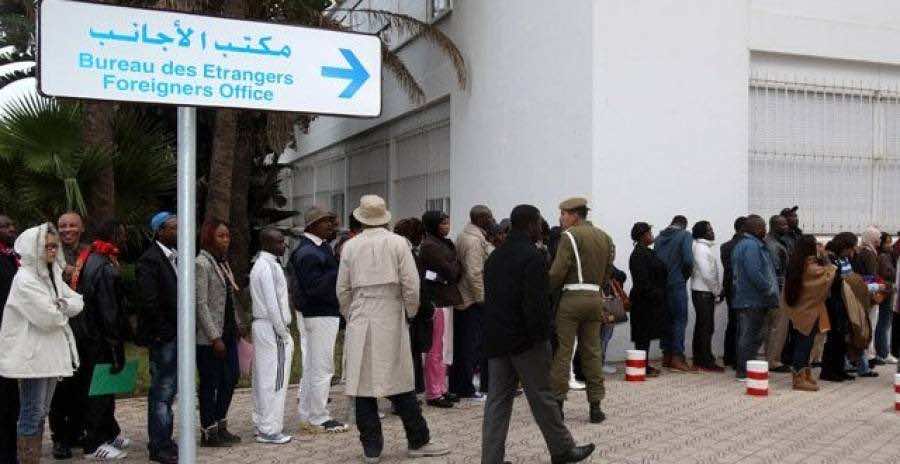
Morocco launched the first phase of its migrant regularization strategy in December 2014. In the first phase, Morocco regularized 23,096 migrants out of 27,649 applicants.
The King ordered a second phase after the success of the first. From December 2016 to the end of 2017, Morocco approved more than 20,000 regularization requests out of 28,400.
Morocco’s migration framework
Morocco has improved its migration approach by adopting a law on human trafficking, which “gives new life” to Morocco’s various migration policy actions and measures, El Kaissi continued. He added that two other in-process bills — Bill 17.71 on the entry and stay of foreigners and Bill 17.66 on refugees — will only advance Morocco’s progress.
Morocco’s National Council of Human Rights supports King Mohammed VI’s migration approach. The independent constitutional body devotes resources to boosting foreigners’ access to rights, such as the right to education, schooling, and healthcare.
The CoE migration specialist welcomed the aspects of Morocco’s National Immigration and Asylum Strategy that the consul general laid out.
Stefanek said King Mohammed VI’s “visionary and humanist leadership” is essential in building a more positive narrative on the issues of migration and migratory flows, nationally and internationally.
After El Kaissi invited Stefanek to pay an official visit to Morocco, the CoE representative said he was very enthusiastic about the idea of “getting to know Morocco’s policy on migration and asylum more closely.”
Over the past couple of decades, Morocco has turned from a gateway into Europe for sub-Saharan migrants to a destination. A 2019 study revealed that around 700,000 sub-Saharan migrants live in Morocco.