 Join on WhatsApp
 Join on Telegram
“We saw people starving on the streets and knew we had to act,” says Khaoula El Haidi, the project’s 24-year-old manager, referring to Moroccan NGO Pikala Bikes’ proactive COVID-19 response.
The team normally runs bike tours, repairs, and classes, but had to swiftly change gear as the pandemic struck. To mitigate hunger, Pikala has delivered 250 food packages to families in need, each week since September last year.
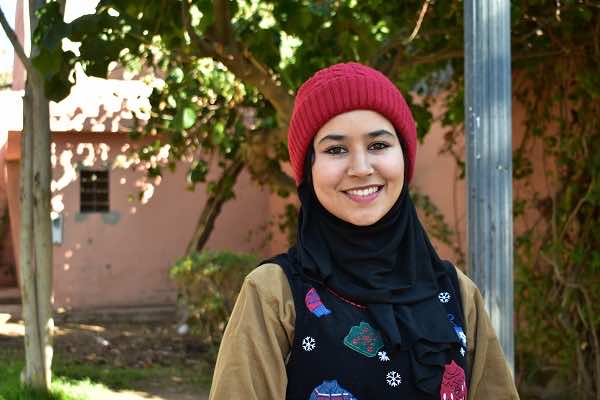
Khaoula El Haidi, the project’s 24-year-old manager
The initiative is a collaboration between local cafes, funded by independent donors, and Pikala’s long-standing partner Tui Care Foundation—an independent entity focusing on the “sustainable development of holiday destinations.”
Henna Cafe — a local non-profit organization normally providing free education programs, but currently operating as a soup kitchen — is one such collaborator. Sara Shaygani, lead manager at Henna, says that, for many, this parcel contains the only food they’ll eat that day: “The joy and appreciation in people’s faces when they receive a package says it all – there’s widespread hunger in our community and we’re doing our part to decrease it.”
Morocco’s tourism sector is the fourth most impacted in the world by the pandemic, according to an International Monetary Fund’s report published in August 2020. This has created a surge in youth unemployment, with rates in the country reaching 31%, according to Trading Economics, an online platform that provides historical data, economic forecasts, and trading news.
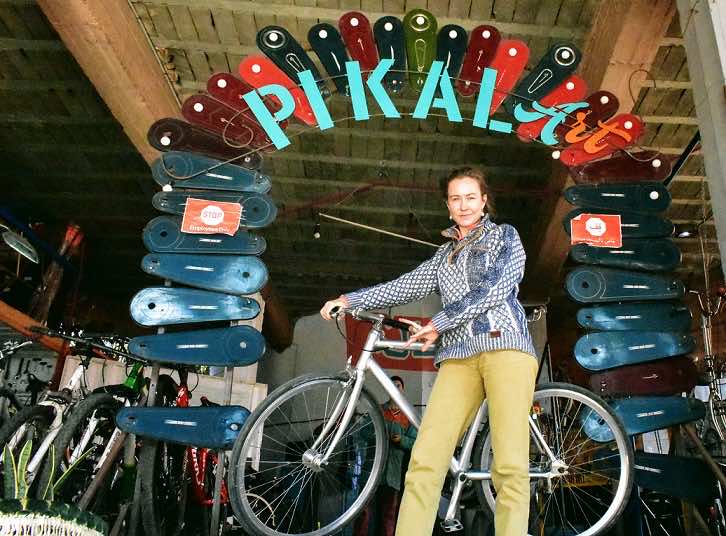
When Cantal Bakker, big-time bike-enthusiast and founder of Pikala Bikes, arrived in Marrakech six years ago, these numbers were not as bad—but in her eyes were, “still alarmingly high.”
This realization, paired with a transformational bike-ride through the traffic-heavy city and a passion for sustainability, ignited her idea of a youth-run NPO centered on bicycles. At the time, there were no bike tour operators in Marrakech. Cantal saw the market gap and decided to fill it.
“I was 24 and had everything going for me — my health, no house or kids, healthy parents — so I decided to go for it. If I failed, my worst case scenario was to head back to Holland.”
Five years on, what started as a bike mechanic shop run from the back of an abandoned freight container has grown into an exciting project employing 33 locals.
“It’s a true pleasure working with Pikala,” says Anna Lena Strehl, head of external affairs at Tui Care Foundation. “There is such a team spirit among them, and the young people onboard are really growing into their roles.”
“The aim is for Pikala to act as a bridge,” explains Cantal, “a way into the work environment.”
Such spaces are still rare in a country where the risk of facing unemployment rises along with your level of education. To keep up with the growing number of educated youth, Morocco would need to double its current pace of new job creation.
As Cantal negotiates an expansion of the bike tour concept to Casablanca and Rabat, she is determined to keep the focus on youth leadership.
“From the start, the idea was to train the young people and then gradually leave them to run things independently. Responsibility is the best teacher,” she says.
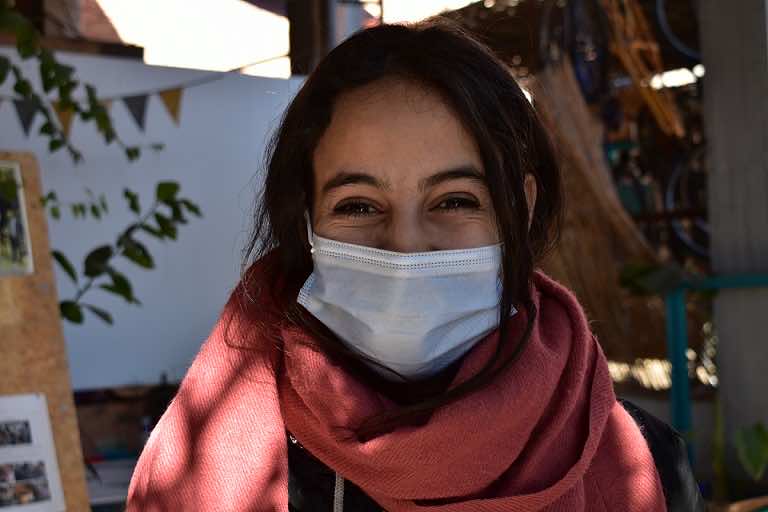
Pikala has given Soukaina Rhafiri the opportunity to try many different job-roles: right now, social media marketing attracts her attention.
Soukaina Rhafiri, communication manager at Pikala Bikes, joined the initiative two years ago and explains how Pikala has transformed her way of thinking: “After graduating, I had no clue what I wanted to do—I only hoped to make a lot of money. Now I understand that investing in yourself whilst helping others is the way forward.”
This marriage, between self-care and caring for others, is what makes Pikala such a success. The inviting atmosphere of the project attracts driven young people ready to work, and curious customers ready to pay.
Yasminah Mamouchi, who describes her first meeting with Pikala Bikes as a “heartwarming discovery,” can testify for both—she went from customer to volunteer within the space of a month.
Winning concepts do so for a reason: Pikala is booming in a time of societal despair, through utilizing the laws of supply and demand. The demand for food, education, and job opportunities is met, in turn attracting a motivated workforce ready to supply more for those in need.
Listening to your inner voice and keeping your mind open and receptive to ideas is Cantal’s recipe to success. Because sometimes, the best advice will come when you least expect it:
“The name, Pikala, which is Moroccan street-language for bike, came from my first bike-ride through Marrakech. People were laughing at me, pointing and shouting: ‘pikala, pikala’ as I went past them. It was so amazing, and I was all ecstatic afterwards. Then Pikala was born.”