Severe Acute Malnutrition (SAM) has continued to ravage children in conflict settings such as in Borno state, North-East Nigeria and Hajjah and Hodeida governorates in Yemen.
In some cases, children under five who have been treated and discharged from outpatient and inpatient treatment programmes relapse and return for the same treatment again.
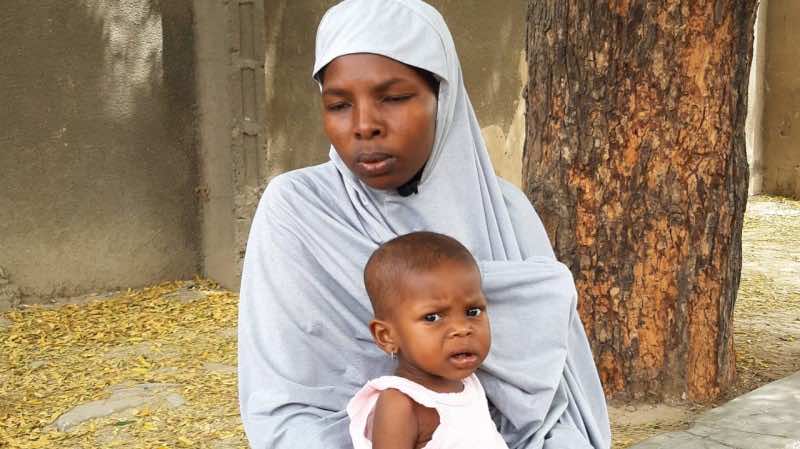
Umar Modu, 3, was discharged as cured of Severe Acute Malnutrition (SAM) six months ago. But he relapsed and is back at the Shuwari Outpatient Therapeutic Programme (OTP) in Jere in Nigeria’s north eastern state of Borno where he was earlier treated.
The facility is run by the International Medical Corps (IMC), Nigeria, a USAID funded programme.
“He fully recovered and was discharged last year,” his mother Falmata said in the Shuwa Arab language. “After six months, he began to suffer from diarrhoea and other symptoms again. We went to the hospital and he was given some medications but he didn’t get better. We returned to the Shuwari OTP centre and he was diagnosed with SAM. He is now undergoing treatment.”
She said there was no disease outbreak in her neigbhourhood during the time her child relapsed and he had so far not been diagnosed with any other disease aside SAM.
Falmata has been living at the Shuwari Police Station internally displaced persons (IDP) camp since insurgents attacked her community six years ago.
Both Falmata and her husband were smallholder farmers in Dala before they were uprooted from their home by the violence. They have not been earning income since then and depend on food occasionally distributed by Save the Children International at her camp.
But such a handout barely meets the nutritional upkeep of her family. “I just cook whatever food I get and everyone in the household eats,” Falmata said.
Her household diet remained the same, in addition to poor water and sanitation facilities in the camp. A few months after Umar’s treatment, he relapsed.
Relapse means to fall back into illness after a period of improvement or recovery. Someone is said to be experiencing SAM relapse if the disease returns or the person suffers an onset of symptoms again after improvement.
Many children who have been cured of SAM in Nigeria and Yemen have been in the cycle of returning to the same treatment all over again as the conditions that caused their illness never changed.
This predisposes the children to death. Those that survive face life-long disabilities as they may never realise their full potential.
The right thing to do is to never let the children be malnourished, according to early childhood development experts.
And if they are ever acutely malnourished, they should be treated and prevented from relapsing. But their conditions in north-eastern Nigeria and Yemen are dire due to protracted violence that has killed thousands of people and displaced millions of others.
In Nigeria’s North East where Islamic militants have waged a war against government forces since 2009, there is no comprehensive data on SAM relapse.
A 2020 study on the incidence of SAM relapse in Nigeria’s north-western state of Sokoto shows that about 24 percent of children cured of SAM in health facilities relapse within six months. The study was led by a team of researchers at Oxford Policy Management and Valid International in collaboration with UNICEF Nigeria.
So far, no survey has been conducted on cases of SAM relapse in Borno state, the epicentre of the insurgency, according to multiple health workers in the state who were interviewed.
“Out of about 100 children cured of SAM, about two of them suffer relapse, ”said Dr Olusegun Ojetola, the Nutrition Programme Coordinator, International Medical Corps, who oversees the Shuwari and Jabbamari OTP centres and others in Borno.
He has observed that most of the relapse cases occur in female children and households headed by women. “The mother does not have enough source of income to procure nutritious foods to prevent her child from returning as a malnourished child to the facility,” he said.
In Yemen, data obtained from the Taybah Foundation for Development which has been implementing its nutritional programmes under the UNICEF fund in the Hodeida governorate of Yemen shows show that 62 children relapsed after SAM treatment in 2017, while 56 children relapsed in 2018.
Akram Alhalaly who treats the children with SAM in Abs hospital in Hajjah governorate, said that two out of ten children who have been treated for SAM return to the hospital with the same condition after three to six months of treatment.
A debilitating disease of poverty and deprivation
In recent years, programs have been put in place to treat SAM in both Nigeria and Yemen. In Nigeria for example, children with SAM are usually treated through an outpatient therapeutic program of the Community‐based Management of Acute Malnutrition (CMAM). But some of the children who have been treated still face the risk of relapse.
Four-year-old Fatima Haroun, was treated for SAM and discharged four months ago at the Jabbamari OTP camp in Borno’s capital Maiduguri, run by the International Medical Corps. She suffered a relapse and is now on another treatment at the facility.
Her mother Bintu Muhammad said Fatima has never been diagnosed with any co-morbidities or an underlying illness.
Muhammad said she is no longer working as a cleaner in a private school and her husband earns very little from his job as a labourer.
“Her condition refused to go because we are not getting enough food. We need financial support and capital to start a means of livelihood so that we can provide for her and treat her once and for all,” she said.
At the home of Hauwa Muhammad, a widowed mother of 17-month-old Fatima Ali, in the Ngomari area of Maiduguri, a case of SAM relapse has been daunting.
Muhammad, said her daughter had faced a nine-month ordeal battling SAM and tuberculosis.
She said that Fatima was diagnosed with SAM at a hospital and subsequently referred to a therapeutic feeding stabilization center.
However, sometime after the child was discharged, she was diagnosed with tuberculosis at the Umaru Shehu Hospital in Maiduguri.
“She added weight and got better after the SAM treatment but relapsed after she developed TB and we had to go back to the health centre for treatment a second time,” she said.
Fatima’s treatment involved ready-to-use therapeutic food (RUTF), a peanut-based paste in a plastic wrapper, which her mother used to feed her at home.
After the health workers confirmed Fatima’s cure, she was no longer qualified to get the RUTF. But without access to nutritious meals, she starved and relapsed.
“Since my husband died, we have been struggling to eat,” Muhammad said. “Even when he was alive, we barely ate a day. So, his demise aggravated our plight. Sometimes we get something to feed on and sometimes we go to bed hungry.”
Other areas across the state are also recording a high rate of SAM relapse for those in camps.
“You will hardly go to any IDP camp like this without seeing SAM and relapse cases, particularly with the stoppage of food distribution by the government and non-governmental organizations,” said Alhaji Musa Ajere, chairman of Doro IDP camp in Maiduguri.
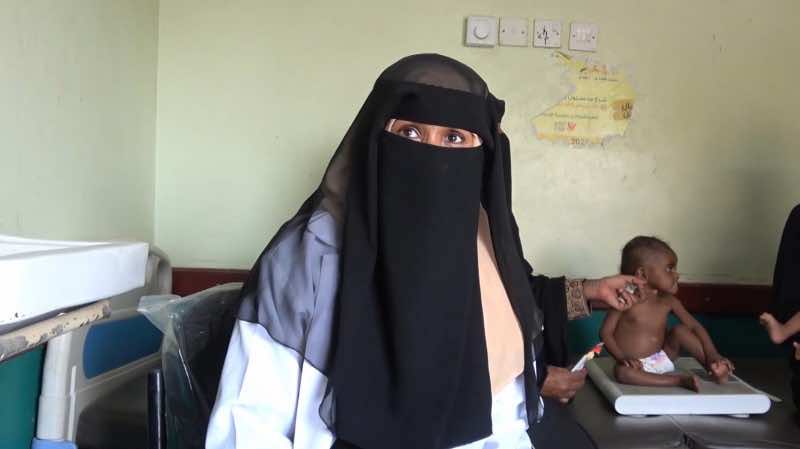
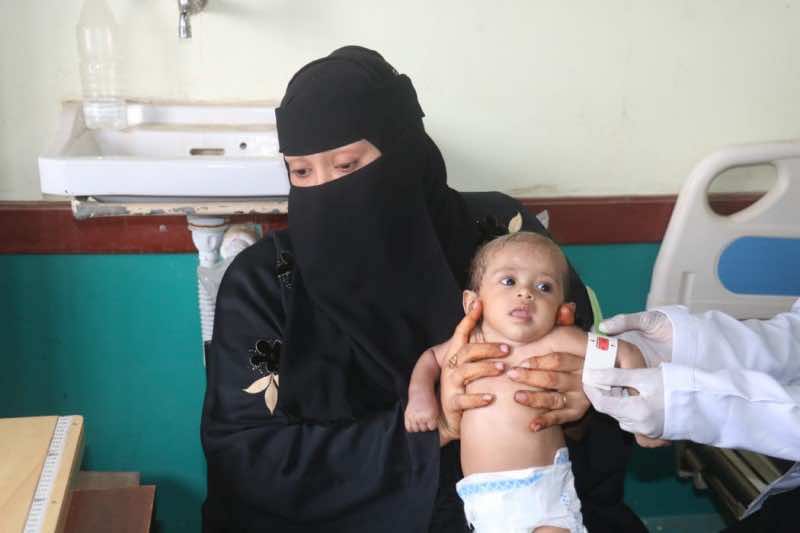
In Yemen, an increasing number of children are also facing relapse. Waleed whose parents did not want to be fully identified had been suffering from fever, diarrhoea, and anorexia when he was taken to the hospital.
In Abs Hospital in Hajjah governorate, he was diagnosed with SAM. But two months after his successful treatment, he relapsed and returned to the hospital for another round of treatment.
“My son began to suffer from diarrhoea and became skinnier, and his bones were too visible because he was vomiting many times,” Waleed’s mother said, “I borrowed money from my relatives to take him back to the hospital because I could not endure seeing him in so much pain”.
Apart from household food insecurity, their village Beni Hassan in Hajjah governorate lacks access to clean drinking water and sanitation.
“We don’t have any other sources of water except the well,” she said. “We used to receive chlorine tablets for water purification in the well, but now we no longer receive those tablets.”
Salah, another child under five, has relapsed three times after SAM treatment. He has been underweight since birth and was diagnosed with SAM at Althawarh Hospital in Hodeida governorate, a nine kilometers journey from their home.
His mother said as a result of his condition, she plans to sell some of her home appliances to pay for his medical bills at the closest private hospital.
“My husband stopped receiving salary for the past five years, leaving us with inadequate food daily,” she said.
Burden of Severe Acute Malnutrition in Nigeria, Yemen
Millions of children in Nigeria and Yemen suffer from SAM.
In Nigeria, about 2.5 million children below five years have SAM, according to the United Nations Children’s Fund (UNICEF), with about 420,000 deaths recorded.
A December 2020 UNICEF report predicted a surge in cases in northeast Nigeria, and across Yemen. Also, last December, Doctors without Borders/Medecins Sans Frontieres (MSF) had treated exceptionally high numbers of children with SAM in Borno, than the previous year.
Yemen has some of the highest malnutrition rates in the world.
The war in the country has left about 23. 7 million people in need of urgent humanitarian assistance with more than two million children malnourished.
UNICEF said across Yemen, over two million children under five years of age suffer from acute malnutrition, including nearly 358,000 with severe malnutrition – a number that is expected to rise. Seventy -five percent of the children in the country were chronically malnourished as of last November, according to the World Health Organisation (WHO).
In north-eastern Nigeria, United Nations agencies estimated that about 3.2 million children would face malnutrition this year. In Borno alone, the acute malnutrition rate for Borno state is above 20 percent and it is considered an emergency.
Dr. Khawla Jabr who treats severely malnourished children in Althwarah Hospital in Hodeida governorate said if the conflict in Yemen continues, a large number of children will be malnourished in many areas.
“The economic situation is bad, and people cannot afford to get treated in private hospitals. Therefore, Al-Thawrah Hospital is overcrowded with severely malnourished children”, Dr. Jabr said.
She said that malnutrition is complicated by failure to receive basic vaccines in early childhood, adding that “malnourished children have weak immunity. So they are susceptible to many other diseases, and many other infections.”
Yemen is also facing regular outbreaks of measles, diphtheria, and other vaccine-preventable diseases. Immunization coverage has stagnated at the national level, with 37 percent of children under one year of age missing routine vaccinations according to UNICEF.
Reasons for relapse in children after SAM treatment
Safiya Yunus, a nutrition officer at the Shuwari OTP site treating Umar Modu said about two relapse cases are recorded in six months in the facility. She said children that relapsed so far did not have comorbidities, that is the existence of more than one disease or condition in an individual at the same time.
Yunus said poverty and food insecurity have been the dominant factors in most of the cases they have seen.
“The insurgency is contributing to relapse because most of our beneficiaries are in IDP camps and have no sources of livelihood,” she said.
“They just depend on whatever food non-governmental organisations give them and because they may be so many persons in their households, the quantity of food would not be enough for the family for a whole month. So, they have to manage within that month.”
Yunus said the facility also observed relapse in children from homes and areas with poor hygiene and in children with poor immunization.
Ifeanyi Bartholomew Ojiaku, a Nutrition Assistant, and team lead, Jabbamari OTP where Fatima Haroun is being treated said the prevalence of relapse in the facility is between two to three cases in six months.
He said children that have relapsed so far in the facility had no co-morbidities or underlying illnesses. However, he said poor personal hygiene and food insecurity contributed to cases they had seen.
He said they follow up on the children after discharge and have volunteers that do the bi-weekly follow-ups for beneficiaries that had already been discharged.
“We do one on one counselling at the time of discharge, via the infant and young child section, and give them advice on how to protect their children from relapse,” Ojiaku said.
Olive Muthamia, humanitarian nutrition advisor, Save the Children International, Maiduguri, said about one percent of beneficiaries come back with relapses after SAM treatment in the organisation’s treatment sites.
While pointing out that food insecurity is a contributory factor to the relapses cases, she said when the children are in the SAM treatment program, they have access to therapeutic foods, but when they are out of it, that source of food is no longer there.
She added that another contributory factor to relapse is caregivers taking their children to traditional medicine practitioners for treatment.
“There are some children that come back to our programmes after every two months. At that point, you have to refer them to the stabilization center for further investigation to establish if it is just food or if there is another underlying medical condition that is making them relapse every other time.”
Muthamia said they have seen comorbidities in some of the affected children, adding that sometimes during the rainy season, diarrhea , malaria, and pneumonia are co-morbidities they witness.
At the Medecins Sans Frontieres (MSF)-Belgium therapeutic feeding centre for malnourished children in Maiduguri, there was no relapsed child on treatment during a recent visit.
The 120-bed facility called Nilefa Keji (NKH) meaning health is wealth in Kanuri language is the largest hospital single provider of hospital care for malnutrition in Borno State.
Musa Tanko, Data Analyst Activity Manager at MSF said in 2021, the facility recorded less than one percent relapse rate in the inpatient therapeutic feeding centre while 0.3 percent of relapse rate was recorded in the ambulatory therapeutic feeding centre.
However, he said that in 2018, the facility had a higher relapse rate of more than one percent, adding that most of the relapse cases in the facility had underlying illnesses such as tuberculosis and retroviral diseases.
Sangita Jacob Duggal, Nutrition Manager, UNICEF Nigeria Maiduguri Field Office said the rate of relapse is small and below one percent.
She said once the children are treated and cured, they go into the next phase which is moderate acute malnutrition before becoming finally cured.
She said it is a problem when the child is cured of SAM and discharged, and does not get the basic minimum required care and the treatment protocol for home care.
Duggal explained that if the child doesn’t go through that process, and has an episode of diarrhea or any sickness, and the mother is not able to feed the child properly, “the child comes back to the SAM category and that is where the challenge is.”
She said families have to understand that after discharge, the children require support like more feeding, active care for the baby including drinking water, and handwashing among others.
Akram Alhalaly, the health worker at Abs Hospital in Hajjah governorate in Yemen which is supported by MSF pointed out that malnourished children are exposed to an unhealthy environment after they had been cured which often resulted in relapse.
Dr. Basma Al-Qadasi , a clinical nutrition and dietetics specialist in Alwaha Medical Center said many children relapse after SAM treatment because they have many diseases like celiac disease, a defect in the intestines or frequent diarrhoea.
“Unfortunately, some nutritionists do not give full instructions to the mother about nutrition and do not practice optimal nutritional advice,” he said.
Preventing relapse after SAM treatment in children
Dr. Sangita Jacob Duggal of UNICEF said one very important way is empowering families of children who are admitted to stabilization centres.
“We are trying to introduce a mother corner or a caregiver corner in the stabilization centre, where we also give some kind of education or know-how skills, on how to prepare energy-dense food items, using locally available food at home,” she said.
She said it is also important for health workers to keep track of discharged children so that they do not fall back into the SAM category again.
On the alleged diversion of RUTF meant for the children, she said across the world, wherever there is food insecurity, misuse and intra family distribution of the therapeutic food is rampant.
She said UNICEF is trying its best to resolve it at the community level by training stabilization facility workers and doctors to give some kind of guidance to the mothers who are staying there for 10 days or more to make use of all the products they get for the child alone.
She said UNICEF’s intervention when children under five relapse is to treat them again, adding that the target is to prevent any kind of malnutrition.
“If we have so many children suffering from severe acute malnutrition, it means we are failing in preventing malnutrition, and prevention of malnutrition is very much under the control of the family,” she said.
Ifeanyi Bartholomew Ojiaku, the Nutrition Assistant and Team lead, Jabbamari OTP said sensitization on personal hygiene, and proper immunization would help to prevent relapse after SAM treatment.
“The issue of food insecurity should be reduced so that after discharge, that beneficiary can also have access to food, in case it is not available in the house,” Ojiaku said.
He said some of the organisation’s programmes designed to prevent malnutrition and relapse, include the social behavioral change programme , which addresses the use of preventive feeding, teaching mothers how to prepare nutritious meals like tombrown, and counselling them on maternal and infant young child feeding practices including breastfeeding.
Dr Ojetola, the IMC nutrition coordinator said, “At policy level, I call on government to ensure integration of Food Security and Livelihood (FSL) programs, and WASH programs, into the existing health structure, to ensure that in every nook and cranny the rate of food insecurity is reduced. Because all these programs are interlinked, and they all contribute to the success of the child’s health management.”
Olive Muthamia, of Save the Children International, Borno state said the main way of preventing relapse in children under five is to look at resilience projects by improving the food security of people in the communities, and also by integrating nutrition interventions with other interventions.
Seeking health care on time reduces the chances of SAM relapse, according to Joshua Ayuba Mpato, Health Promoter, and IEC Manager, MSF-Belgium in Maiduguri.
He said working on people’s health seeking behaviour helped reduced the relapse rate in the facility.
He said the facility also engaged in home visits, particularly to TB, HIV and sickle cell anemia patients because more SAM relapse cases is seen amongst them.
“We also follow up on the patients after discharge to ensure they are taking the plumpy nuts afterwards,” he said.
During a recent visit to Borno state, the reporter found that some women sell the plumpy nuts given to their malnourished children.
To get more plumpy nuts to sell, they register their malnourished children in different treatment centres under different names.
Findings show that the Kasuwan Shanu junction and Kasuwan Biladiwu at Custom roundabout Maiduguri are popular places for buying and selling diverted plumpy nuts.
A nurse at a treatment center in Ngomari in Maiduguri who spoke on condition of anonymity said the facility has developed a tracking system that includes asking mothers to keep the children in the center for staff to administer the plumpy nuts.
“Whenever I receive the RUTF for my child, I share it into two and sell the other half,” said Saadatu Mohammed, a displaced mother of nine children from Baga. “I give the remaining half to my child because of poverty. I use the money I get from selling it to feed myself, my husband and my other children. If I have a source of livelihood, I would stop selling the RUTF.”
Fatima, a widow, has a daughter who has been treated for SAM several times. “When I go back to the treatment centre again, and I am given RUTF, I still sell part of it to raise money for other pressing needs. I have no alternative source of income to feed my other children,” she said.
A leader of the RUTF retailers at the Kasuwan Shanu junction said health workers usually give the mothers 18 pieces of RUTF. Then, they sell eight to the retailers and go home with the remaining 10 for their babies.
She said that men who buy the RUTF from them eat it with bread.
This story was supported by the Global Nutrition and Food Security Reporting Fellowship of the International Centre for Journalists (ICFJ) and the Eleanor Crook Foundation
Read Also: FAO Warns of Rapidly Deteriorating Food Security in Yemen