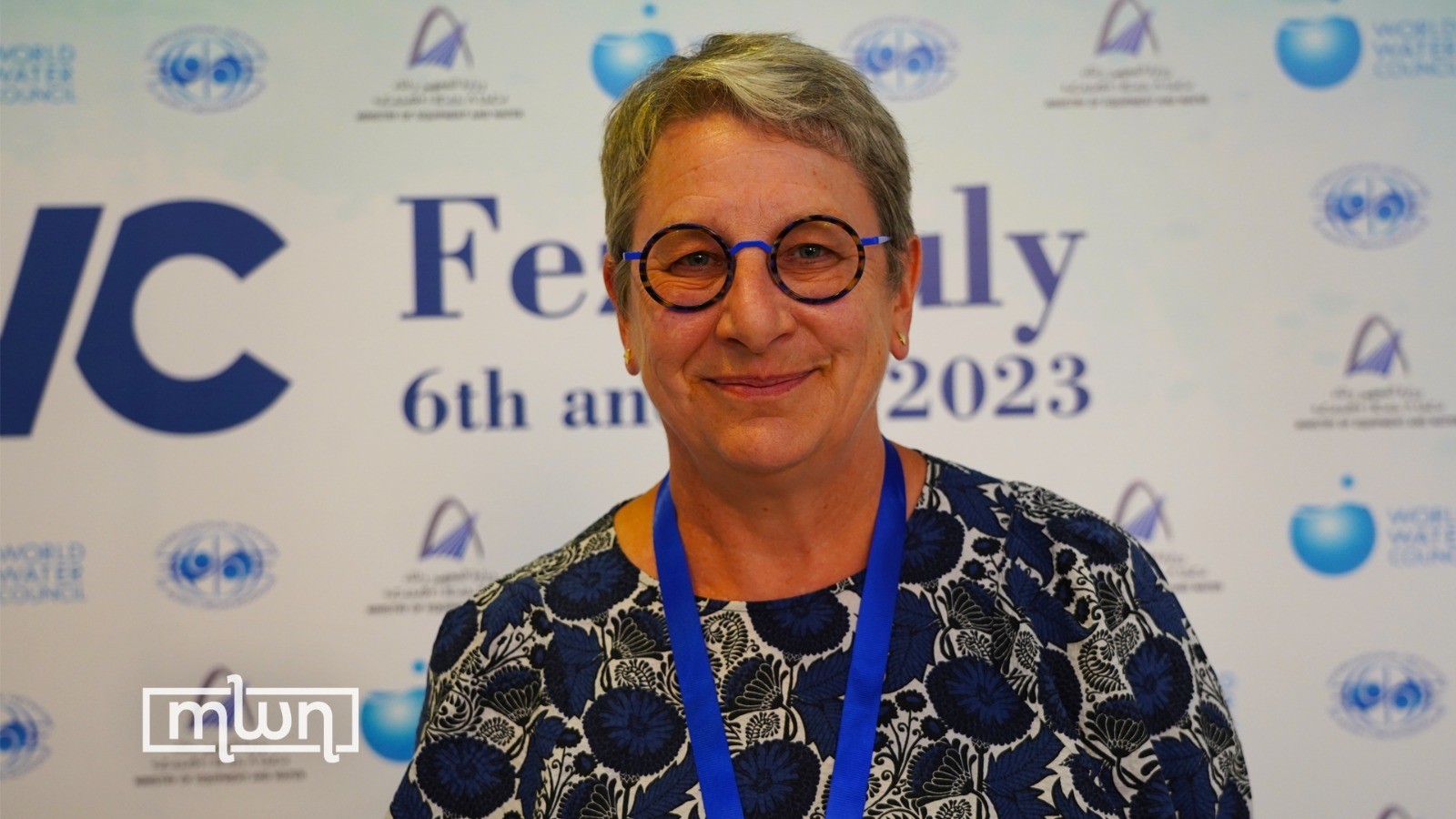
Fez – Nathalie Dorfliger, director of Watershed Sciences and Stewardship at France-based world food company Danone, believes addressing the social aspects of how we use water in the agricultural sector will determine long-term sustainability. She says this week’s water sustainability conference in Fes has offered valuable insight into the issues that local stakeholders in Morocco are facing.
“I think it’s the responsibility of everyone. We are all facing climate change. So what is important is to find some solutions,” said Dorfliger. “We cannot just say it’s just a matter of finding new resources of water, but it’s also how we use the water.”
Danone is one of the world’s largest global manufacturers and producers of dairy, plant-based, early-life, and nutritional products including well-known brands like Evian, Silk, Activia, and Actimel. The company earned over $29 Billion in 2022, which is an increase of 1.45% from 2021.
“What is important for us is to drive this change with the local stakeholders and to build this in the long term, and not just a one-shot project,” said Dorfliger. “If we are still having intensive agriculture, we know the impact of the quality of water will have an impact on the ecosystem as well…how can we drive some changes to use less water, but to also respect the soil?”
Dorfliger believes responsible resource management is essential to the sustained growth of the company. She has been assisting the company in implementing projects that foster the integration of sustainability into Danone’s business practices in recent years, particularly in the field of agriculture, water consumption, and reusable clean energy.
“The benefit is for the long term, and for the license to operate and secure the business, so it’s kind of a long term investment,” said Dorfliger.
According to Global Data, Danone consumed 38.6 million cubic meters of water in 2021, with 73% of it returned as clean wastewater by the company in the same year. The company hopes to achieve a 100% return by 2030.
Dorfliger works with Danone affiliates around the world, focusing on watersheds that operate in highly stressed areas, meaning any region where the water demand is higher than the water available at a given time. The company has four production sites in Morocco, all of which are operating in highly stressed areas.
According to a report released by the World Bank, Morocco’s available water supply has seen a decline of 80% between the year 1960 to 2015, from 3500m3 to 645m3 which has placed it significantly below the “water poverty level” of 1,000m3 per person per year. A region is considered “under stress” if water capacity falls between 1700m3 per capita per year.
With its growing population and continued economic development, Morocco is projected to experience “extreme scarcity” of 500m3 in the next 20 years if major changes are not made in all sectors of land and water use management.
“We can understand how serious the stress is here, so I bring some support to set up some actions with the local stakeholders,” said Dorfliger.
Dorfliger spoke of agriculture, which consumes 70 percent of the world’s global fresh water supply when compared to other industries. She says that we need to look at both social and technical advancements in all sectors to reduce waste and put less strain on global water supply, meaning that beliefs and customs around water use are also important to the discussion.
“It’s a combination of the two. So what is important is to find some solutions,” said Dorfliger. “I mean there are many technical solutions, but what is more important for me it’s the social part as well.”
According to Danone’s 2022 annual report, the company’s H’lib Bladi initiative supported over 500 Moroccan farms in securing free access to water, and trained 1900 farmers (including 327 women) and 71 young people to develop self-employment last year. The project also piloted biodigesters (converting waste into usable energy), solar powered heaters and other sustainable farming practices.
In the wake of unprecedented drought in the region in 2022 which saw a 17.3% decline in agricultural output, Danone plans to scale up these practices significantly in the second phase and continue to focus on improving sustainable farming practices worldwide as indicated in their 2019 Materiality Matrix (a tool used to visualize and incorporate social responsibility strategies).
“So it’s not just addressing the climate issue,” says Dorfliger. “But it’s the global system of living in a world where there’s a lot of changes. We have to find a collective solution for that.”