
 Join on WhatsApp
 Join on Telegram
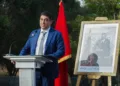
Rabat – At the close of an international conference on transitional justice at the Moroccan Parliament in Rabat on Friday, Amina Bouayach, chairperson of the National Human Rights Council (CNDH) and a leading voice in Morocco’s human rights landscape, signaled the country’s transformative two-decade journey.
“We have reached the end of a path that allowed all Moroccans, regardless of their opinions or affiliations, to take ownership of their history, their struggles for democracy and human rights, and their collective strength to confront grave violations,” she remarked.
This journey, shaped by the work of the Equity and Reconciliation Commission (IER), has become a globally recognized model for balancing accountability with societal healing.
“Our experience was a national, independent endeavor,” Bouayach stated. “It emerged from an unprecedented interaction between the will of the highest state authority and that of society in all its diversity.”
State responsibility and reparations
One of the boldest steps in Morocco’s transitional justice process was the state’s acknowledgment of responsibility for past human rights violations.
“This choice provided a framework,” Bouayach explained, “to create a clear and consistent vision for compensating victims and addressing harm.”
Over MAD 3 billion ($290 million) was allocated to individual and collective reparations, encompassing victims of state actions and political clashes, as well as those affected by the Sahara conflict.
Bouayach also pointed to the innovative approach to compensating victims of regional disputes. “We adopted an unprecedented method to address the harm suffered by civilians abducted during the regional armed conflict, including those detained and tortured by the Polisario Front.”
A commitment to memory preservation
Central to Morocco’s journey has been the preservation of memory, which Bouayach described as “a multi-dimensional philosophy, not confined to spaces or history.”
She said that memory initiatives included restoring sites like Tazmamart, where a notorious detention center once stood. “Some of these spaces will soon open as socio-economic hubs, offering opportunities for youth and women in neighboring rural areas.”
Bouayach also spoke on the cultural dimension of memory preservation. “Our strategy supported literary publications—prison memoirs, testimonies, and novels about the past—all written, printed, and published in Morocco without censorship or constraints.”
Upcoming projects, such as the Al Hoceima Museum, aim to further this effort by integrating memory preservation with socio-cultural development.
Results and ongoing challenges
Bouayach detailed key outcomes of the transitional justice process, including the resolution of 803 cases of enforced disappearance and the use of DNA testing on 75 sets of remains.
She also highlighted progress in human rights reforms, such as “the constitutional recognition of human rights protections, judicial independence, and the establishment of mechanisms to prevent torture, including over 164 unannounced visits to detention centers.”
Despite these achievements, she acknowledged the ongoing nature of the work. “Memory preservation remains an ongoing project,” she said, “focused on transforming spaces into places of life and collective learning.”
A collective achievement
Reflecting on the broader significance of Morocco’s journey, Bouayach underlined its participatory nature.
“This path reflects the maturity with which Moroccan society addresses its issues—a process rooted in consensus and shared responsibility.” She credited the collaboration between the state and society for the progress achieved.
Bouayach concluded with a poignant reflection on the public hearings held during the IER’s work.
“In those moments, men and women came forward to share their pain and truths. Today, I believe they can rest assured that their suffering is no longer part of Morocco’s reality. Their smiles are proof that we are moving forward, and their memories will remain preserved in our collective consciousness.”
Morocco’s journey, as articulated by Bouayach, is not just about resolving past injustices but about building a future where those injustices will never repeat.
“This commitment is a lasting one,” she affirmed, “to honor their memory and safeguard the progress we’ve achieved together.”
Read Also: King Mohammed VI: Transitional Justice Process in Morocco Led to Ground-Breaking Experience