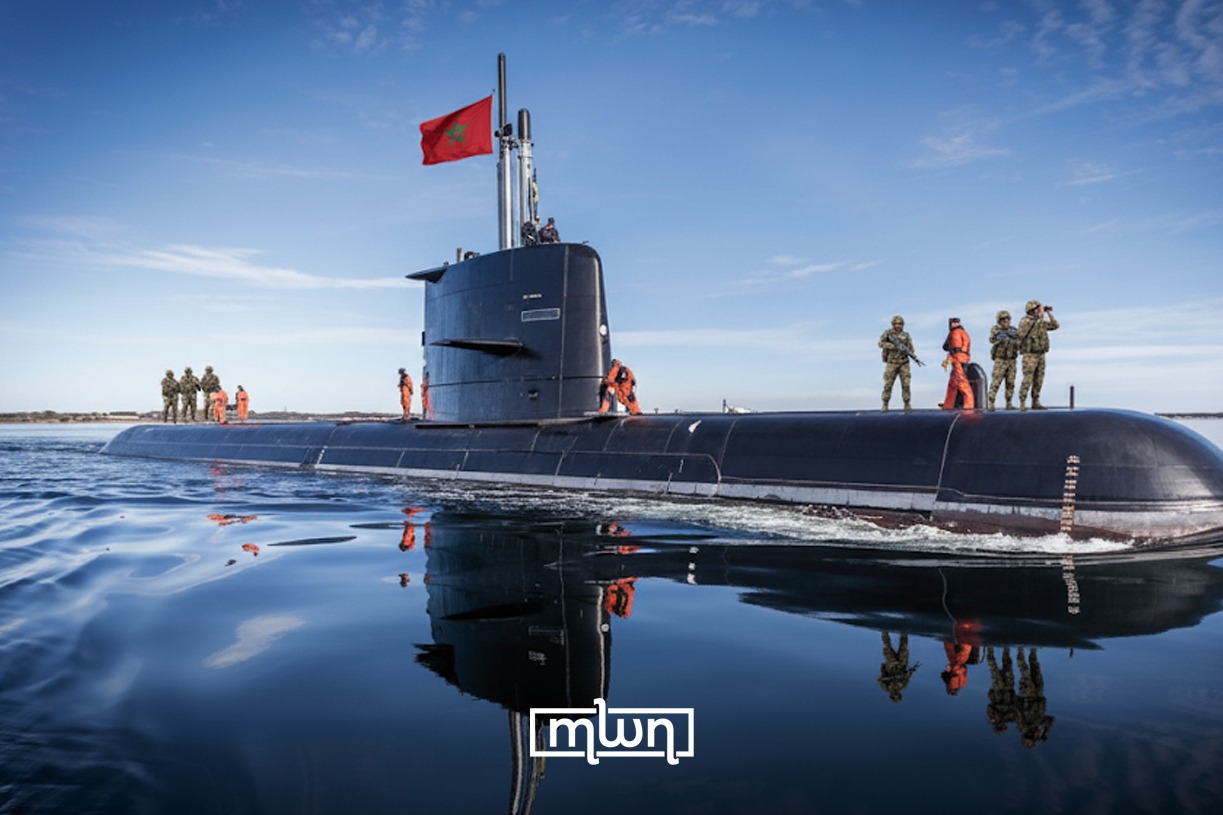
As Rabat weighs its first submarine purchase, the Swedish Gotland-class—pioneer of air-independent propulsion (AIP) using ultra-quiet Stirling engines—offers a precise fit for Morocco’s missions, waters, budget discipline, and diplomatic posture. With weeks-long submerged endurance, proven littoral stealth, modest crew and sustainment needs, and strong scope for tech transfer, Gotland gives the Royal Moroccan Navy (RMN) a credible, survivable undersea deterrent now while leaving a clean growth path to Sweden’s newer A26 family. Recent reporting indicates Morocco is in active talks to acquire submarines, with European yards vying for the deal. The timing makes a mature, low-risk AIP platform especially attractive.
Mission–water match: Morocco’s seas reward a quiet littoral hunter
From Tangier to Dakhla, Morocco’s operating environment blends busy chokepoints (Strait of Gibraltar), shallow and acoustically complex shelves, strong currents, and heavy commercial traffic—all conditions that favor small, extremely quiet boats optimized for littoral warfare and intelligence tasks. The Gotland was designed for clustered, shallow Baltic waters, where stealth against advanced anti-submarine warfare forces is the baseline. Its Stirling AIP lets the boat remain submerged for weeks without snorkeling, dramatically reducing exposure across patrol cycles. For a navy fielding its first subs, that means more time on task, less risk, and credible deterrence from day one.
Core advantages for RMN
∙ Proven AIP stealth: Stirling engines running on liquid oxygen and diesel deliver remarkably low acoustic signatures and long-endurance—capabilities previously reserved for nuclear subs.
∙ Littoral agility: X-rudder, fine maneuverability, shock-hardening, and automation support close-to-seabed operations near ports, cables, and shipping lanes relevant to Morocco’s Atlantic and Gibraltar missions.
∙ Right-sized crew & costs: A smaller complement and robust automation mean lower training and lifecycle costs—critical for a first-time undersea enterprise.
Strategic effects Morocco gets on day one
- Sea denial & chokepoint leverage. A pair of quiet AIP boats complicates any adversary’s planning in Gibraltar approaches and the Canary–Madeira–Azores arcs.
- ISR & special ops. Gotland’s design heritage emphasizes COMINT/ELINT collection, covert surveillance, and SOF insertion, giving Morocco a persistent “invisible sensor” along key maritime routes.
- ASW synergy with planned MPA. Morocco has been moving to strengthen ASW and maritime patrol aviation. A silent friendly sub is a training and tactics multiplier for those forces and an operational partner for cueing, deception, and exercises.
Regional balance
Perhaps most importantly, a Gotland fleet would signal to Algeria and Spain—both with significant naval ambitions—that Morocco possesses a stealthy and survivable deterrent few can counter. Only Sweden and a handful of partners operate boats of this class, making them relatively rare and unfamiliar to potential rivals. That exclusivity magnifies their psychological and operational effect; adversaries must assume a Gotland is always present, even when they cannot detect it. This uncertainty alone can help keep regional competitors in check and elevate Morocco’s standing as a credible undersea power.
Why Gotland over other contenders (Scorpène, Type 214/212, S-80, etc.)
∙ Lower program risk than “first-of-class” paths. Gotland is a mature, exported AIP technology with decades of refinement and shock testing in Sweden’s demanding regime. That is a safer on-ramp than bespoke new builds for a first fleet.
∙ Optimized for the waters Morocco actually patrols. Blue-water reach is useful, but Morocco’s priority value is stealthy endurance in congested littorals and near chokepoints—Gotland’s specialty.
∙ Industrial cooperation with headroom. Saab Kockums has a record of export collaboration and modular AIP retrofits; Sweden’s industry can stage a graduated transfer (training, maintenance, subsystem workshare) and later spiral to A26 without resetting doctrine.
Note: France’s Scorpène is a strong platform with an impressive export record; Germany’s Type 214/212 derivatives are also capable. But both come with different cost, offset, and doctrinal tradeoffs and may be optimized more for blue-water or different industrial arrangements than Morocco needs for its first undersea step. Recent press suggests French offers are in play; precisely because the competition is active, Gotland’s ready-now risk profile and littoral bias stand out.
Build a phased, low-risk Moroccan undersea roadmap
Phase 1 (Years 0–5):
∙ Acquire 2 Gotland-class (new-build or upgraded standard). Establish Submarine Squadron 1 at Ksar Sghir or Casablanca with a Swedish-assisted training pipeline and AIP/LOX logistics.
∙ Stand up sub school (nuclear-free AIP safety is simpler), crew exchange with Sweden, and embedded OEM team for availability.
∙ Pair with 2 MPAs/ASW turboprops and a towed array frigate training syllabus to develop joint ASW doctrine.
Phase 2 (Years 5–10):
∙ Spiral upgrades (batteries, sonar suite, periscope masts, comms).
∙ Consider A26 Pelagic/Oceanic as a growth path; common Saab lineage preserves tactics, training, and logistics while expanding range/payload.
Cost, sustainment, and training realities
∙ Acquisition & sustainment: AIP boats like Gotland avoid the nuclear-fleet overhead while delivering most of the operational endurance Morocco needs. Smaller crews and automation lower through-life costs and ease recruiting.
∙ Supply chain: Saab’s submarine line (Södermanland/Gotland/A26) provides a stable OEM ecosystem for spares, mid-life upgrades, and system refreshes.
∙ Political flexibility: Sweden’s defense exports have tended to be pragmatic with partners, offering room for technology cooperation without entangling Morocco in major-power rivalries—useful given Rabat’s diversified procurement strategy.
What success looks like for RMN
∙ Credible undersea deterrent visible in adversaries’ planning, not on the surface.
∙ Integrated MPA–frigate–sub triad able to police SLOCs, watch chokepoints, and quietly track high-value units.
∙ A trained cadre of Moroccan submariners, maintainers, and tacticians who can scale to a second pair of boats or transition to A26 with minimal disruption.
Bottom line
With Morocco now actively exploring submarine options, the Gotland-class offers the cleanest first step: a proven, ultra-quiet AIP design built for exactly the shallow, noisy, high-traffic waters Morocco must dominate—delivered with realistic costs, training footprints, and a smooth path to future Swedish A26 upgrades. In a crowded field, that combination of mission fit + low risk + growth makes Gotland the best choice to launch the RMN’s undersea era.
Recommendations
∙ Primary recommendation: Given Morocco’s current needs and strategic environment, Gotland class (or a Gotland variant/upgrade) provides excellent baseline stealth, submerged endurance, and relatively lower risk. Pairing it with strong industrial participation from Sweden would help reduce lifetime cost.
∙ Balanced approach: Consider ordering two submarines, one high-end (AIP/advanced sensors) and one more modest version, to test and build training and maintenance base while controlling costs.
∙ Negotiate aggressively: For whichever platform is chosen, push for:
- Local content (crew training, sensor manufacture, maintenance).
- Transfer or licensing of critical systems.
- Favorable finance (loans, phased payments).
- Warranty, spare parts, and overhaul agreements built in.
Sources
∙ Multiple outlets (Army Recognition, North Africa Post) report ongoing Moroccan talks to acquire submarines (September 2025).
∙ Gotland-class AIP/Stirling endurance and littoral design pedigree
∙ Saab/Kockums submarine family and shock-test culture; export lineage.
∙ A26 variants (Pelagic/Oceanic) as an evolution path.
∙ Context on competing designs (e.g., Scorpène’s export success).