
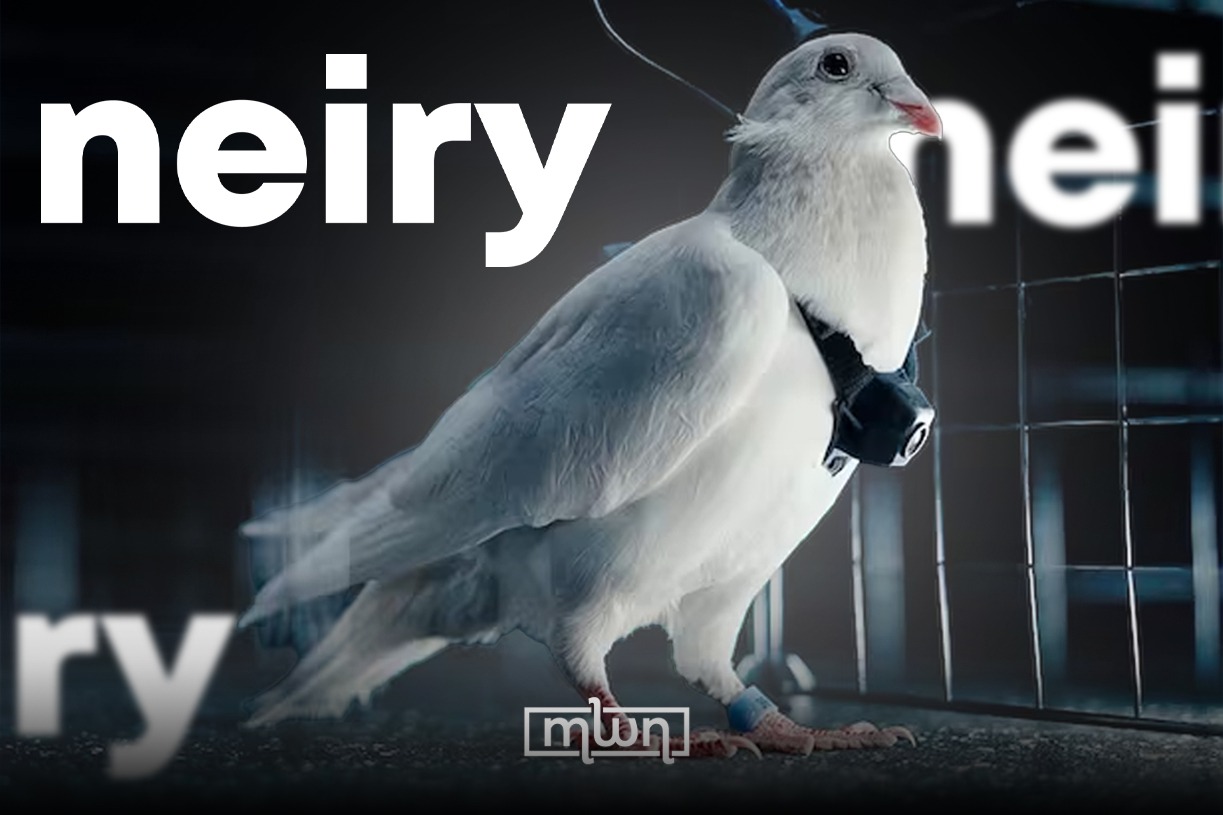
Casablanca – Russian neurotechnology company Neiry has announced the early real-world testing of what it calls “biodrones,” a platform that uses live birds equipped with implanted neural interfaces to carry out monitoring and imaging tasks.
The company, which has offices in Moscow and Dubai, says the system is designed for situations where conventional unmanned aerial vehicles face range, weight, or operational constraints.
The initial trials involve pigeons fitted with electrodes implanted in specific areas of the brain, connected to a small controller and stimulator unit mounted on the bird’s back. The system delivers mild electrical stimulation intended to prompt the bird to favor a particular direction during flight.
According to the company, the birds otherwise behave naturally and do not require prior training. A lightweight backpack-style module also includes solar panels and a compact camera comparable to those already used in public surveillance systems.
Neiry says the technology allows for longer continuous flight than many mechanical drones, citing distances of up to 400 kilometers per day without the need for battery swaps or frequent landings.
The birds’ natural flight patterns and low noise levels are presented as additional operational advantages, particularly in urban environments. When imaging is activated, the company states that identifiable details are filtered directly on the device to comply with local privacy regulations.
Limited test flights have been conducted in Russia and several Commonwealth of Independent States (CIS) countries to assess range, flight stability, and data transmission.
Between missions, the birds are kept under operator care and continue their normal routines outside of assigned routes, according to Neiry.
The company says potential civilian applications include infrastructure inspection, environmental and coastal monitoring, search-and-rescue support, agriculture, logistics, and emergency response.
While current testing focuses on pigeons, Neiry has indicated that other species could be considered depending on environmental conditions or payload requirements.
The biodrone initiative follows a series of earlier experiments by Neiry in collaboration with researchers at Moscow State University.
In one project, a mouse named Pythia was implanted with an invasive neural interface connected to an artificial intelligence system, enabling it to respond to yes-or-no questions by pressing corresponding buttons.
The company said the experiment demonstrated the practical integration of brain-computer interfaces with AI systems.
Neiry says its broader work focuses on advancing neurotechnology applications across sectors, including education, marketing, agriculture, and medicine, with the biodrone platform representing its latest step toward real-world deployment.