
 Join on WhatsApp
 Join on Telegram
Marrakech – Morocco’s decision to halt sardine exports to the European Union has triggered a political and industrial crisis in Spain, where the Galician parliament on Tuesday approved a motion demanding urgent diplomatic action to reverse the ban.
The prohibition took effect on February 1, barring the export of frozen sardine in any form to EU member states. Rabat cited dwindling catches and the need to secure domestic supply as justification for the move. The ban is expected to remain in place for at least one year.
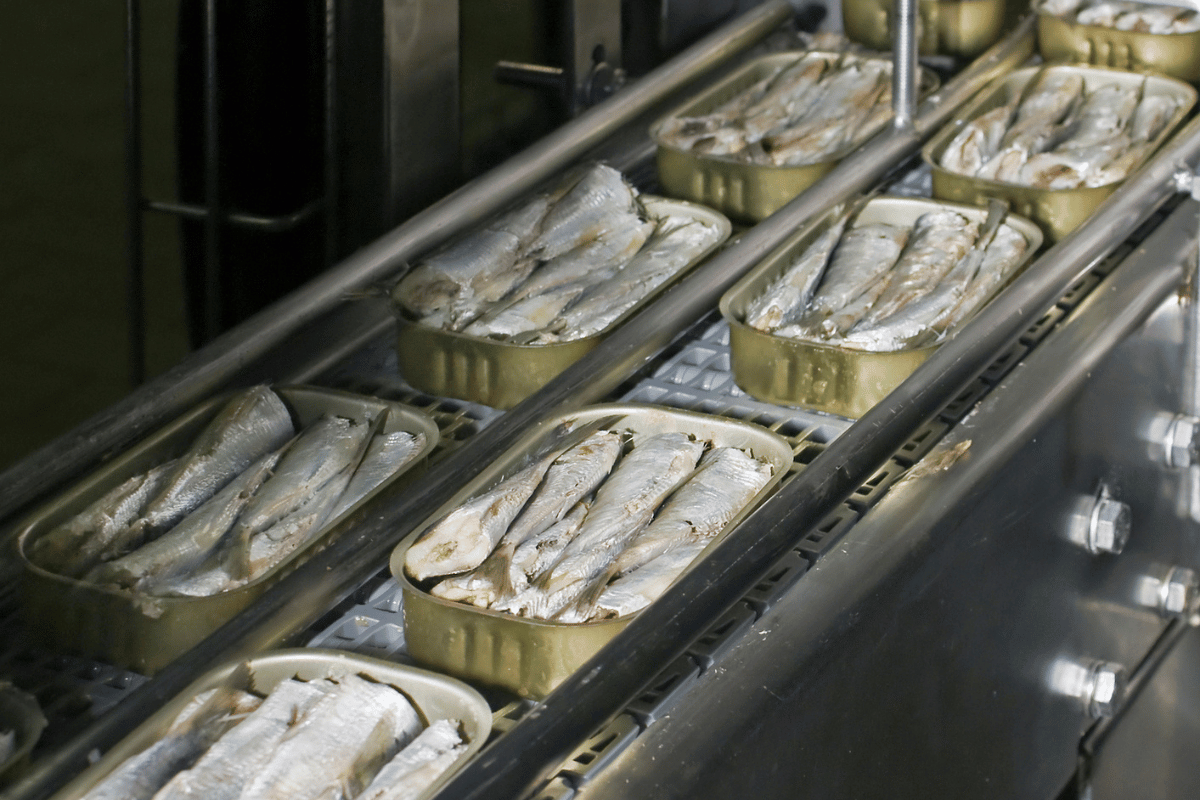
The impact on Spain’s canning sector has been immediate and severe. Morocco supplies 90% of the frozen sardine used by Galician canneries. Between January and October 2025 alone, Spain imported 27,400 tons of frozen sardine from Morocco, which accounts for between 64% and 94% of all Spanish imports of the product.
Introduced by the PPdeG and backed by the PSdeG, the Galician parliament’s motion calls on Spain’s central government to launch immediate diplomatic talks with Rabat.
It also urges Madrid to escalate the matter to the European Commission to defend European processors and ensure compliance with existing international agreements. The Galician Nationalist Bloc, or BNG, abstained from the vote.
In a usual move from nationalist circles in Spain, the BNG instead seized the occasion to recycle familiar anti-Morocco rhetoric. The party invoked the October 2024 EU Court of Justice ruling that has been widely criticized as a politically motivated verdict lacking jurisdiction over disputes between the EU and a non-EU state – a prerogative reserved exclusively for the International Court of Justice.
The ruling granted legal standing to the Polisario Front despite the separatist group having no recognized legal personality under international law, and was dismissed by Morocco’s Foreign Ministry as irrelevant given that Rabat took no part in the proceedings.
Even the European Commission and the majority of EU member states rushed to reaffirm their strategic partnership with Morocco in the hours following the verdict, indicating the ruling’s disconnect from both diplomatic reality and established international jurisprudence.
The party went further, baselessly suggesting that Rabat is weaponizing the export ban as leverage to extract a new trade deal from Brussels following the expiration of the previous agreement. The bloc’s abstention from the vote reflected less a principled stance than a calculated attempt to politicize a commercial dispute at Morocco’s expense.
‘Profound disappointment’
On January 29, 2026, all 27 EU member states adopted a unified position at the EU-Morocco Association Council in Brussels, aligning with UN Security Council Resolution 2797 and recognizing that genuine autonomy could represent the most feasible outcome for Western Sahara.
Spain’s Department of Customs and Special Taxes issued an official notice on February 9, extending full preferential treatment to products originating from Western Sahara under Moroccan customs authority.
The step followed the Exchange of Notes signed on October 3, 2025, through which the EU and Morocco updated trade protocols under the 1996 EU-Morocco Association Agreement – the most far-reaching partnership the EU has forged in North Africa.
The measure anchors a €21-billion bilateral trade relationship and reinforces, through concrete commercial practice, Morocco’s administrative sovereignty over its southern provinces.
According to Spanish media reports, Morocco’s strategy appears to extend beyond conservation. While Rabat shut the door on sardine exports to Europe, it simultaneously signed agreements with Russia’s fishing fleet to allow sardine harvesting in Moroccan waters.
The PPdeG flagged this contradiction, arguing the ban clashes with the opening of Moroccan fisheries to Russian vessels.
The timing compounds the damage. Spain’s total authorized sardine quota for 2026 stands at 16,848,490 kilograms, a 2.8% reduction from the previous year. Industry groups, including Acerga, Anfaco, ARVI, and the Galician Federation of Fishermen’s Guilds expressed what they called “profound disappointment” with the allocation.
These organizations noted that the cut contradicts the available scientific margin. The International Council for the Exploration of the Sea had estimated that up to 50,294 joint tons could have been permitted without jeopardizing the biological sustainability of sardine stocks.
The internal distribution of Spain’s quota drew further criticism. After deductions for 2025 overages, the Cantabrian-Northwest zone received 9,419,958 kilograms, a 4.4% decline. The xeito fishery was allocated 423,106 kilograms, down 2.3%. Only the Gulf of Cadiz saw an increase of 3.7%, receiving 7,005,426 kilograms.
The industry coalition had proposed an exceptional and temporary increase in catch limits to offset the Moroccan ban. That request was sent to Spain’s secretary general of fisheries on February 23, yet was ignored in the final agreement.
Morocco’s export ban effectively tightens the grip on a resource that sustains not only its own processing industry but also a significant share of Europe’s canned fish production. With lower production costs in fuel and electricity, Moroccan canneries maintain a competitive edge over their European counterparts, a gap the export restriction only widens.
Read also: Spain Anticipates New Fishing Deal with Morocco Despite Opposition