 Join on WhatsApp
 Join on Telegram
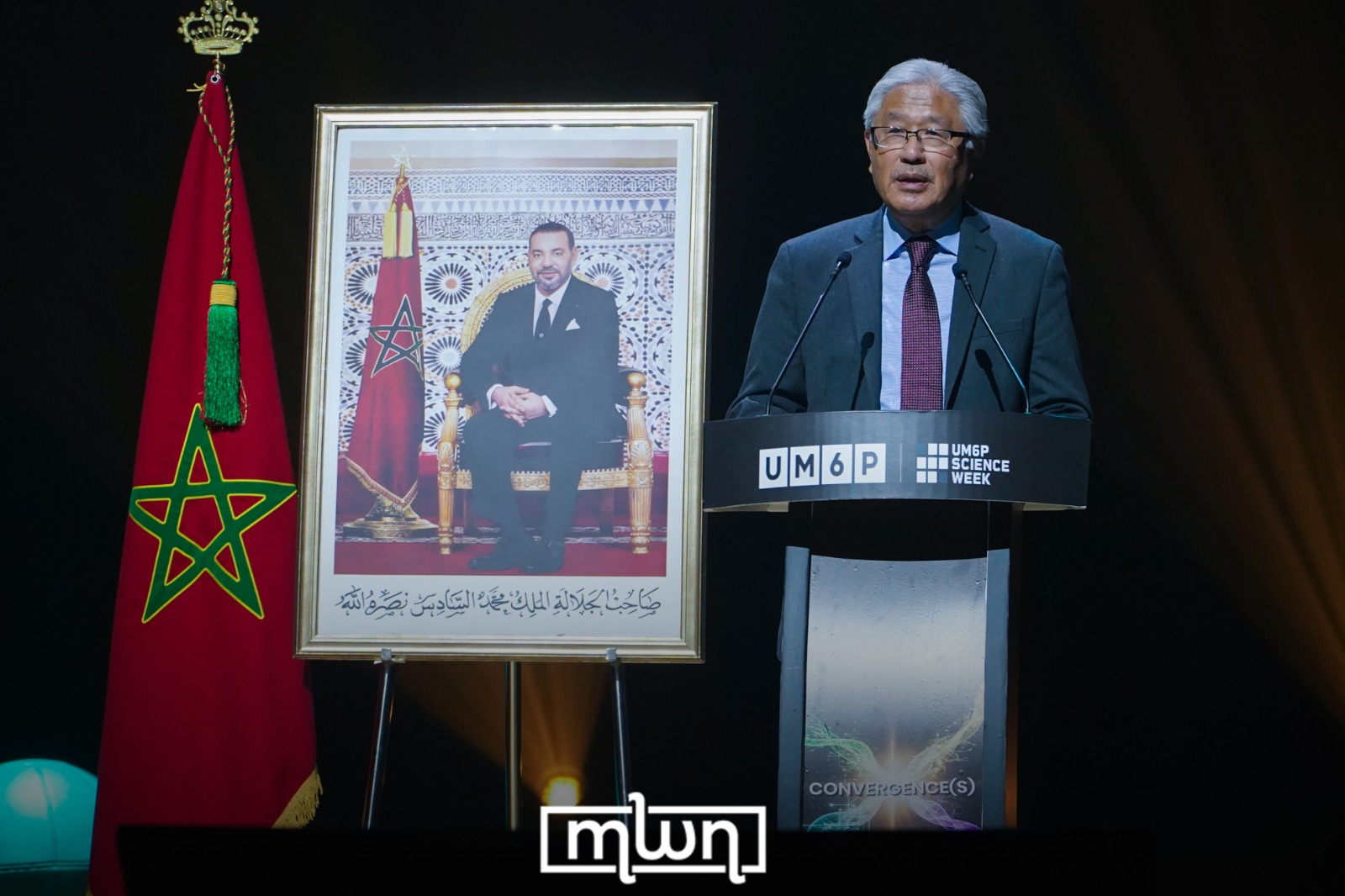
Benguerir – Victor Dzau, President of the US National Academy of Medicine, called on Morocco to anchor its ongoing healthcare reform in prevention and early detection, warning that hospital-centered systems alone cannot meet the health challenges ahead.
Speaking to Morocco World News (MWN) at UM6P’s 6th Science Week, Dzau said reform must span from social, preventive, all the way to care for people in the hospital, stressing that primary healthcare and community-integrated hospitals are essential to building a resilient health system.
“Prevention and early detection of illnesses are really, really important,” he told MWN. “You want to be sure that the hospitals are providing the right care, and they are integrated with the community as well.”
View this post on Instagram
Dzau, a Chinese-American physician and academic, has served as NAM president since 2014 – the first person of color and the first immigrant to lead any of the three academies that make up the US National Academies of Sciences, Engineering, and Medicine.
A cardiovascular medicine pioneer whose research laid the foundation for the development of ACE inhibitors, he also co-founded the non-governmental organization Innovations in Healthcare in partnership with the World Economic Forum and McKinsey & Company. He will hand the NAM presidency to Monica Bertagnolli, former director of the National Institutes of Health, on July 1.
His remarks land at a pivotal moment for Morocco. The country has expanded mandatory health insurance coverage 88% of the population in under five years, integrating over 22 million new beneficiaries under the National Social Security Fund (CNSS).
The Ministry of Health and Social Protection’s budget has more than quadrupled from 2010 to 2026, reaching MAD 42.4 billion – 8.8% of the state’s general budget. Yet out-of-pocket spending remains high, and significant geographic concentration of services persists between urban and rural areas.
Dzau framed the discussion through the lens of “Convergence(s)” – this year’s Science Week theme – arguing that complex problems like climate change demand the integration of multiple disciplines rather than siloed approaches.
“Five million people die a year from extreme weather – heat, fire, flood,” he explained. “Another five million die from air pollution, with heart disease, respiratory disease, and many others. So it is really a significant problem already.”
He said convergent approaches could generate breakthroughs in crop science, energy, and healthcare systems simultaneously, but insisted that none of it would matter without policy leadership. “The government has to see this as really important, and to work with health and other sciences to address the problem,” he told MWN.
Dzau pushed back firmly against the notion that Africa and the Global South are merely recipients of solutions designed elsewhere. “Africa and the Middle East and Latin America all have great potential,” he asserted, citing Brazil’s Belem Action Plan at COP30 as a model that simultaneously addresses climate change, health, indigenous populations, and workforce training.
“Africa is already addressing many of these issues,” he added. “We just need to make sure that we elevate this to an even higher level.”
The 6th Science Week, running from March 30 through April 5, has gathered more than 100 international scientists and experts. The event is open to participants beyond the university community, forming part of UM6P’s broader ambition to strengthen Morocco’s position in the international scientific landscape.
Read also: Science Week: UM6P Launches New Center for Systems-Based Agriculture