
 Join on WhatsApp
 Join on Telegram
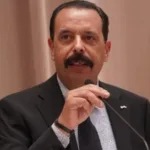
In an article published on March 25, 2026, on the Middle East Forum website, American analyst Michael Rubin, a researcher at the American Enterprise Institute and former official at the U.S. Department of Defense, once again drew attention to the issue of the Tindouf camps. He questioned the population figures put forward (40,000 compared to 173,000 according to Algerian authorities), criticized the expansion of the notion of “refugee” beyond the framework set by the 1951 Geneva Convention, and highlighted the existence of restrictions on freedom of movement within these camps. He also mentioned practices involving the use of family ties as a means of indirect pressure, whereby certain family members are kept in the camps as a guarantee of the return of those allowed to leave temporarily. Maintaining this abnormal situation is no longer justified, Rubin concluded. This assessment is reinforced by the fact that the Security Council itself, in its successive resolutions—from Resolution 2252 (2015) to the most recent in 2025—has insisted on the need to register the populations in the camps and clarify their legal status.
The region needs an independent census
However, this requirement is often reduced in public discourse to a simple “census.” This is a legally incorrect simplification. In accordance with the standards of the United Nations High Commissioner for Refugees (UNHCR), the census requested by the Security Council is not a mere statistical operation but a comprehensive individual legal process aimed at determining each person’s identity, origin, nationality, displacement history, grounds for asylum, and the verification of a “well-founded fear of persecution.” It also determines each individual’s future options: return, local integration, or resettlement. In international law, refugee status is not granted to undefined groups but to individuals whose situations are precisely established.
In this context, distinguishing between the collective and individual approaches is crucial. The norm in international law is the “individual determination of refugee status,” which requires assessing each case individually. Conversely, a limited exception known as “prima facie recognition” may be applied during mass displacement situations, allowing collective recognition based on apparent elements. However, this mechanism is inherently temporary and cannot replace a definitive individual determination. The continued reliance on a permanent collective approach to managing the Tindouf camp populations is therefore a clear deviation from established legal norms.
In light of these factors, the situation in Tindouf goes far beyond a technical issue and reveals a structural dysfunction. Article 1A(2) of the 1951 Geneva Convention defines a refugee as any person who is outside their country due to a well-founded fear of persecution and is unable or unwilling to return for that reason. This definition is strictly individual and cannot be collectively extended outside its legal conditions. Likewise, UNHCR’s “Handbook on Procedures and Criteria for Determining Refugee Status” (1979) and registration guidelines have long reaffirmed individual determination as a fundamental principle. In practice, this requires individual registration to establish each person’s identity and legal status.
The return to Morocco myth
Yet the reality in Tindouf contradicts these principles. The possibility of returning to Morocco has always remained open, including for senior members and founders of the Polisario Front, some of whom have joined Moroccan state institutions and reached high-ranking positions. This severely weakens the argument of a “fear preventing return” and suggests that the issue lies more in the absence of freedom of choice than in any risk of persecution.
The first legal violation therefore concerns restrictions on freedom of movement. Article 26 of the 1951 Convention guarantees refugees the right to choose their place of residence and move freely within the host country. In the Tindouf camps, however, movement requires authorization, turning a right into a conditional privilege. This is compounded by practices such as the confiscation of passports upon entry into Algerian territory, which prevents individuals from effectively exercising their freedom of movement. These restrictions, documented by human rights organizations, form a system of control incompatible with international standards and amount, in effect, to a form of de facto detention.
The second violation concerns the absence of individual registration. Despite repeated calls from the Security Council (Resolutions 2252 of 2015, 2602 of 2021, 2756 of 2024, and the 2025 resolution), no complete and transparent individual census has been carried out. As a result, individuals’ legal identities remain undefined, and refugee status continues to be applied collectively, contrary to legal requirements.
This situation is particularly concerning given that the populations in question receive extensive international assistance, notably from the World Food Programme and the European Union. Serious concerns persist regarding the reliability of population figures, with suspicions of inflation that directly impact aid allocation.
Another major issue involves questions of identity and nationality. Uncertainty concerns not only the number of people but also their identity and nationality. Without individual registration, and given indications that a significant portion of those living in the camps may belong to other nationalities, determining who actually qualifies as a “refugee” remains impossible. When precise criteria are lacking, the entire system loses its legal basis and shifts from a system based on evidence to one based on assumptions.
A third violation concerns Algeria’s responsibility as the host state. Article 35 of the 1951 Convention obliges states to cooperate with UNHCR, while Article 34 requires them to facilitate the integration and naturalization of refugees. Yet the effective management of the camps is delegated to the Polisario Front, which does not absolve Algeria of its responsibilities as international law holds states accountable for situations occurring on their territory.
The instrumentalization of the ‘refugee’ status
Furthermore, refugee status is by nature temporary and must lead to one of three durable solutions: voluntary return, local integration, or resettlement. This logic is entirely absent in Tindouf, and the situation has remained frozen for decades.
Over the years, reliable reports have highlighted the diversion of humanitarian aid meant for distressed and undernourished Tindouf residents. Of these series of reports, perhaps the most damning and comprehensive denunciation of Polisario systemic embezzlement is the 2015 study by the European Anti-Fraud Office (OLAF). A common denominator in these independent reports and studies is that Tindouf’s epidemics of aid embezzlement or diversion is, in essence, facilitated by the absence of a precise census.
The situation of minors is also a major source of concern, with information indicating military-related activities involving children, in violation of international standards, including the Optional Protocol to the Convention on the Rights of the Child (2000).
All these elements lead to a clear conclusion: the situation in the Tindouf camps does not comply with the legal requirements of the international refugee regime. The absence of individual determination, combined with restrictions on fundamental rights, creates an exceptional system operating outside the framework of international law.
Consequently, Algeria’s legal responsibility is directly engaged. Under the 1951 Convention (notably Articles 26 and 35) and the International Covenant on Civil and Political Rights (Article 9 on the prohibition of arbitrary detention), the state is obligated to guarantee the rights of those concerned. Maintaining a system characterized by restrictions on freedom, the absence of individual legal status, and the delegation of authority to a non-state actor constitutes a clear violation of these obligations.
Both in nature and effect, the alarming situation in Tindouf ultimately amounts to a form of collective detention disguised as refugee protection, fully engaging Algeria’s international responsibility.