
 Join on WhatsApp
 Join on Telegram
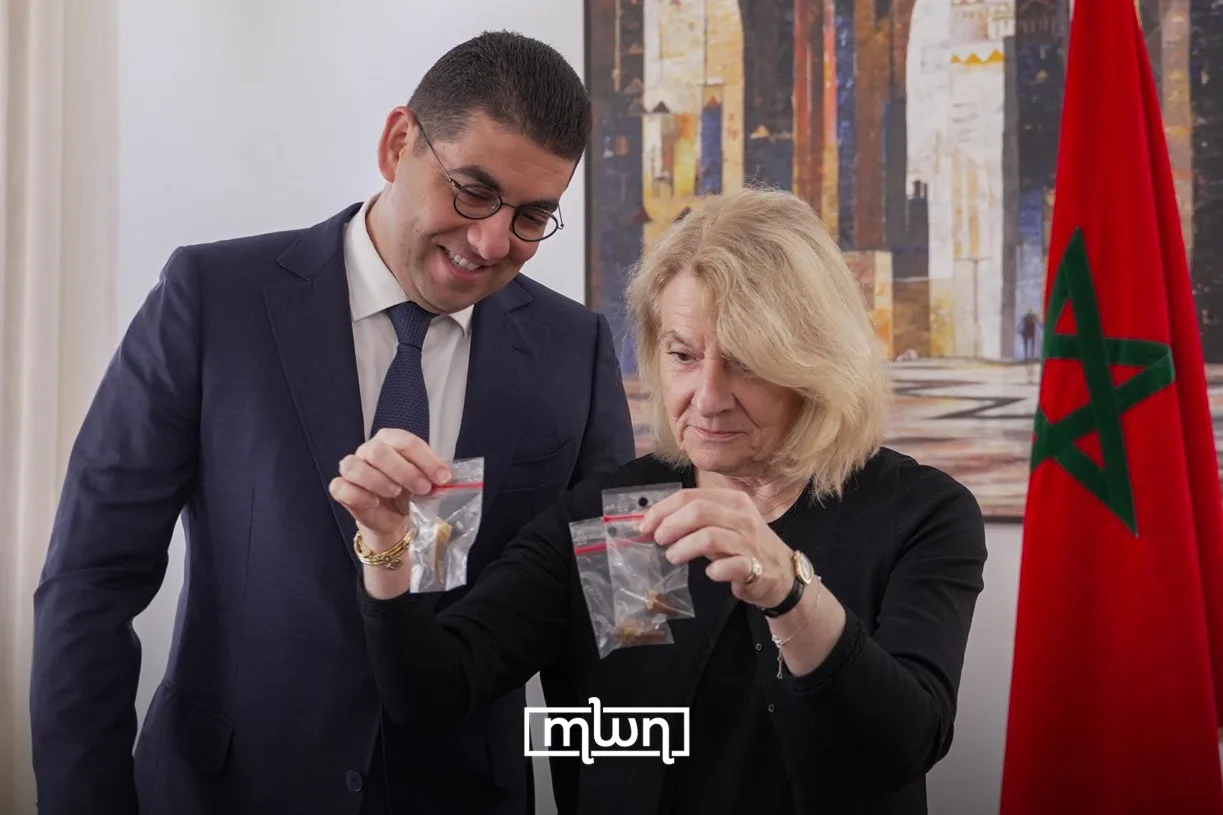
Rabat – Morocco has recovered nine rare fossilized reptile teeth dating back between 66 and 72 million years after French authorities seized them during an attempted illegal transfer in 2025.
The fossils were returned as part of cooperation between Morocco and France to protect cultural and natural heritage and combat the illegal trafficking of historical artifacts.
According to a statement from Morocco’s Ministry of Youth, Culture, and Communication, French customs officers in the city of Menton confiscated the fossils in February 2025. They were discovered aboard an express freight truck traveling between Spain and Italy.
The recovered collection consists of nine fossilized teeth originating from Morocco’s geological basin and dating to the Upper Cretaceous period, the final chapter of the age of dinosaurs.
French authorities identified the fossils as one tooth belonging to Zarafasaura oceanis, a long-necked marine reptile known as a plesiosaur; three teeth from a mosasaur, a large marine reptile that lived in prehistoric oceans; and five fossilized teeth believed to belong to Dyrosaurus phosphaticus, an ancient relative of modern crocodiles.
The fossils were returned through close cooperation between French Customs, France’s Ministry of Culture, the French Embassy in Morocco, and Morocco’s Ministry of Youth, Culture, and Communication.
The Moroccan ministry said the recovery reflects the strong coordination between the two countries in protecting cultural property and fighting the illicit trade in heritage objects.
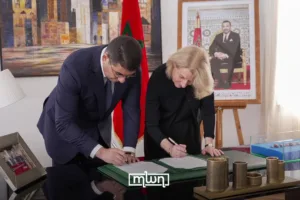
The ministry added that the operation also shows the shared commitment of Morocco and France to preserving the country’s natural and geological heritage for future generations.
The recovery of the fossils also comes as Morocco and France continue to deepen their cultural cooperation. During the 15th Morocco-France High-Level Meeting held in Rabat on Thursday, Bensaid and French Minister of Culture Catherine Pégard discussed expanding collaboration in several areas, including archaeology, cinema, gaming, and cultural industries.
The two countries also discussed the importance of joint efforts to protect cultural heritage and strengthen exchanges between Moroccan and French institutions.
Morocco is internationally known for its rich fossil deposits, particularly in phosphate basins that have yielded important discoveries from the Late Cretaceous period. These fossils provide valuable evidence about the marine reptiles and other prehistoric species that lived in the region millions of years before the extinction of the dinosaurs.