
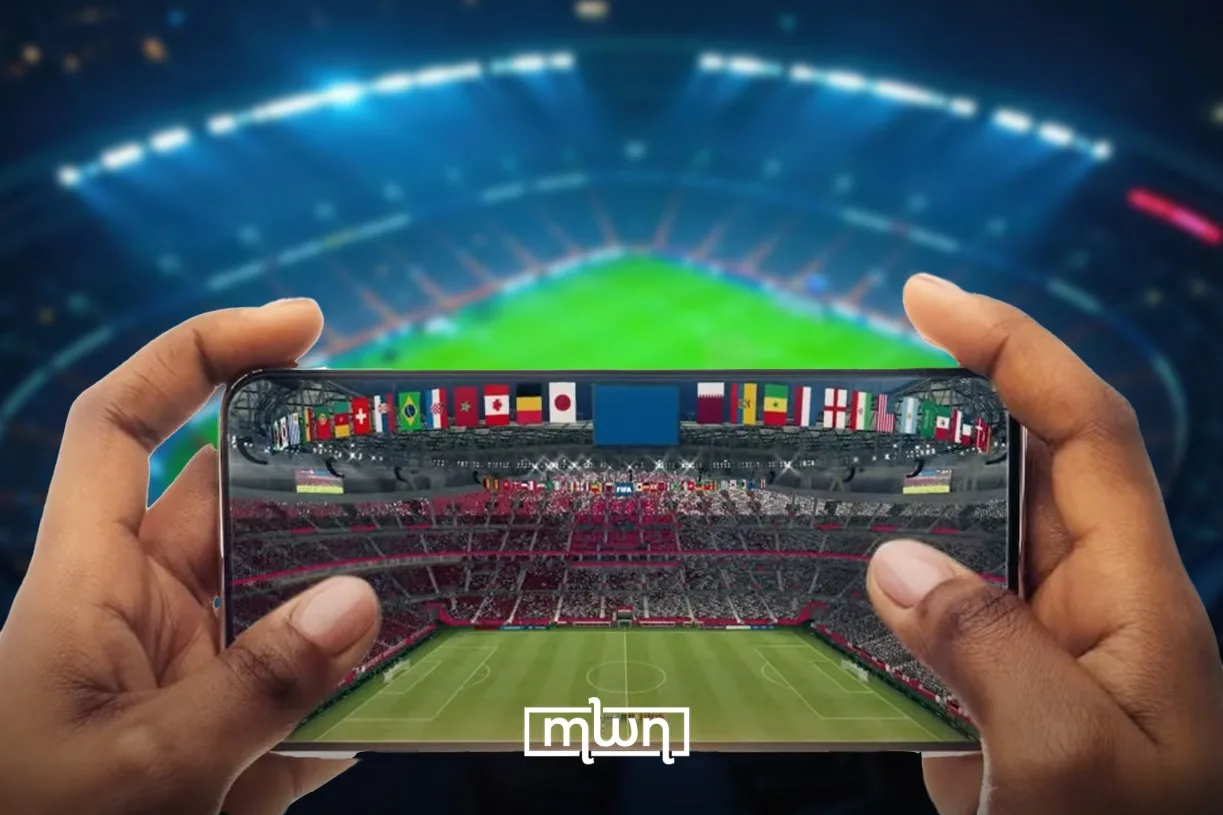
I watched the 2026 World Cup without watching most of it.
I saw goals before I saw the matches that produced them. I met controversies as fifteen-second clips before I understood the incidents behind them. I learned what the internet had decided was important long before I had decided anything for myself. By the time I sat down to watch a full ninety minutes, I often already knew the score, the flashpoint, and the meme. The match was no longer where the tournament happened. It was just the raw material the tournament was made from.
If my first concern about this World Cup was who could afford to be inside the stadium, my second is stranger and harder to shake: even those of us watching from the outside were no longer watching the same tournament at all.
Football is now experienced beyond the physical pitch
Consider one number, because it points to a shift, not just a scale. According to TikTok, the official @fifaworldcup account alone generated 24.1 billion views during the tournament. That was not the World Cup’s total digital audience. It was one account, on one platform.
Set against the millions who passed through the stadiums, the figure does not offer a clean comparison — a view is not a person, and one person can produce dozens. It offers something more revealing: the tournament was no longer being experienced mainly in one physical place, or even through one dominant screen. Its moments were being clipped, remixed, and redistributed across billions of separate encounters.
That is the part worth sitting with. A traditional broadcast at least offered the illusion of a shared edit. A director chose which goal to replay, which face to hold on, which player was the story, and most of the country saw the same version. In 2026, the authority to decide what counted as the story was increasingly shared with the algorithm — and the algorithm does not build one World Cup. It builds a different one for every viewer, stitched from whatever it has learned each person will stay to watch.
So the versions multiplied. One person watched the full match. Another saw only the goals. A third followed a creator’s stream instead of the traditional broadcast. In Brazil, CazéTV, a YouTube channel built around streamer Casimiro Miguel, offered free coverage of all 104 matches, while the country’s traditional broadcast giant, Globo, carried only part of the tournament.
When Brazil opened against Morocco, CazéTV drew more than 12 million simultaneous viewers, setting a YouTube live-stream record at the time. The channel would break its own mark repeatedly as the tournament continued.
A fourth person never watched a minute and still knew everything, because thirty clips had told them what mattered. There was no single 2026 World Cup. There were countless algorithmically assembled versions of it, and most of us only ever saw our own.
Fans with large following have become arbiters for what or who matters
Once you notice that, the tournament’s real celebrities start to make a different kind of sense.
New Zealand’s Tim Payne arrived at the World Cup as an established but low-profile international defender, with fewer than five thousand Instagram followers. An Argentine influencer, hunting for the least-followed man at the tournament, told his audience to make Payne famous.
Within three weeks the defender had gone from those few thousand followers to more than five million, complete with a chant of his own. His football had not changed. The internet had simply decided he was a character worth having, and rewrote, for a few weeks, the hierarchy of who mattered.
A Brazilian referee’s attempt to explain a VAR decision over the stadium speakers — part of FIFA’s new push to have officials explain calls to the crowd — became, within hours, the tournament’s first great meme, parodied as an airline announcement and a game-show intro until the clip had outlived the match it came from. FIFA’s own most-viewed video on TikTok, at 174 million views, was not a winning goal. It was a fan celebration: Norway’s “Viking Row.”
Here is what that pattern tells us. The most important moment of a match is no longer necessarily the one that decided it. It may simply be the one that travelled furthest.
Customized virality has dissolved collective simultaneity
I don’t think this is a story about decline, and I want to be careful not to pretend the old way was purer. Football has always been retold — in newspaper reports, in radio commentary, in the arguments of the café the morning after. Clips and reactions are only the newest layer of that retelling, and they have pulled millions of people toward the game who might never have sat through a full match. Reach is not nothing. A sport that lives across millions of screens is a sport that is very much alive.
But something is traded for that reach, and it is worth naming. When the match becomes raw material, the shared experience thins out. A central part of the World Cup experience used to be the fact that, for ninety minutes, an enormous number of people were watching the same thing at the same time and feeling it together. That collective simultaneity is what the feed quietly dissolves. You are closer to the tournament than ever, and less likely than ever to be experiencing it alongside anyone else in quite the same way.
There is a question underneath all of this that football has not really answered yet. If everyone is watching a different version of the same match — some the full game, some the goals, some only the meme — what does it still mean to say that the world watched the World Cup together?
The 2026 tournament made the fragmentation of the World Cup impossible to ignore. The tournament was still shared in name, but increasingly private in experience. Both of those things are true, and the tension between them is not going to resolve on its own.
The next time someone says, “We all watched the game,” the question may no longer be whether that is true. It may be: which game?