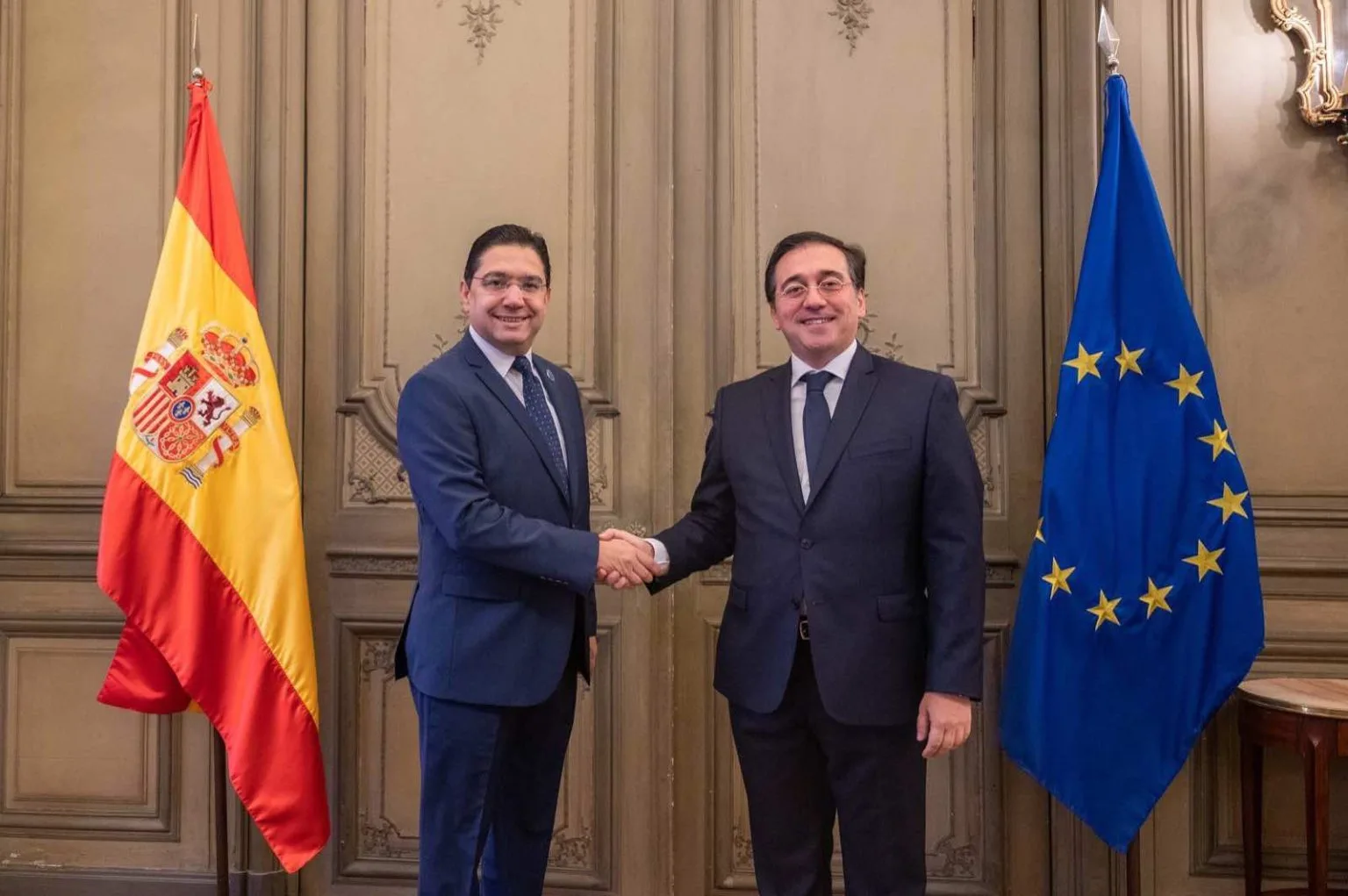
Rabat – Spain has reiterated the importance of Morocco’s cooperation, pushing back against claims and criticism from far-right parties and commentators using the Ceuta mass migration to spread anti-Moroccan rhetoric.
Spanish Foreign Affairs Minister José Manuel Albares commended Morocco’s cooperation, which Rabat demonstrated from the outset of the unprecedented Ceuta mass crossing that peaked on July 30.
In an interview with Spanish public broadcaster RTVE, Albares said that from the “very beginning,” Morocco offered its cooperation to stop the flow and ensure migrants returned immediately.
“The vast majority of those who entered have already returned to Morocco, and Morocco continues to cooperate so that every last person who entered returns,” Albares said.
He clarified that the situation in Ceuta unfolded between Thursday and Friday, noting that at least 50,000 people entered the enclave by sea from Morocco.
Describing the situation as “unprecedented,” Albares said that the return of thousands of migrants happened within 48 hours, with Morocco’s full cooperation.
He reiterated Spain’s position, describing Morocco as a reliable partner.
“I rely on the facts. And the facts are that from the very beginning, Morocco offered its cooperation to try to stop that flow of people and, above all, to ensure they returned immediately,” he said.
Albares emphasized that Morocco showed willingness from the very beginning to deploy security forces to help stop the migratory flow, blaming social media and digital platforms for the surge of migrants crossing.
He said there had been “unusual activity” on social media, which amplified and distorted the recent ruling by the Spanish Supreme Court that barred the immediate return of migrants arriving by sea.
Albares emphasized that there was a “synchronization of the reactionary international” that amplified the mass crossings in Ceuta.
He said that online campaigns also spread lies and false information about the Schengen Area, its integrity, and Spain’s actions.
Morocco’s Interior Ministry also released official data on Sunday, stating that around 40,000 people headed toward Ceuta and approximately 1,135 headed toward Melilla during the recent mass migration attempts, compared with higher figures circulating in some media reports.
The ministry’s spokesperson, Rachid El Khalfi, said authorities recorded one accidental death caused by a fall from a rocky area near Ceuta, in addition to 10 deaths by drowning.
He added that Moroccan authorities are maintaining contact through official channels with their Spanish counterparts to verify reports of additional deaths in Ceuta, including the identities and nationalities of those concerned.
Spanish authorities have said that 72 bodies have been recovered, while Ceuta authorities put the death toll at 88, noting that some of the recovered bodies were in advanced stages of decomposition, indicating that some victims may have died during attempted crossings weeks earlier.
Morocco also reiterated its commitment to cooperation, emphasizing the country’s role as a reliable partner recognized internationally for its commitment to combating irregular migration.
“Morocco will spare no effort in taking all necessary measures to protect public order, safeguard border security, and ensure the safety of people and property,” the spokesperson said.
The spokesperson added that the crossings were the result of several interconnected factors, including the malicious exploitation of digital platforms, the spread of misleading information, the activities of human trafficking networks, and the misinterpretation of legal and administrative developments that falsely suggested migrants could reach Europe easily and without legal consequences.