
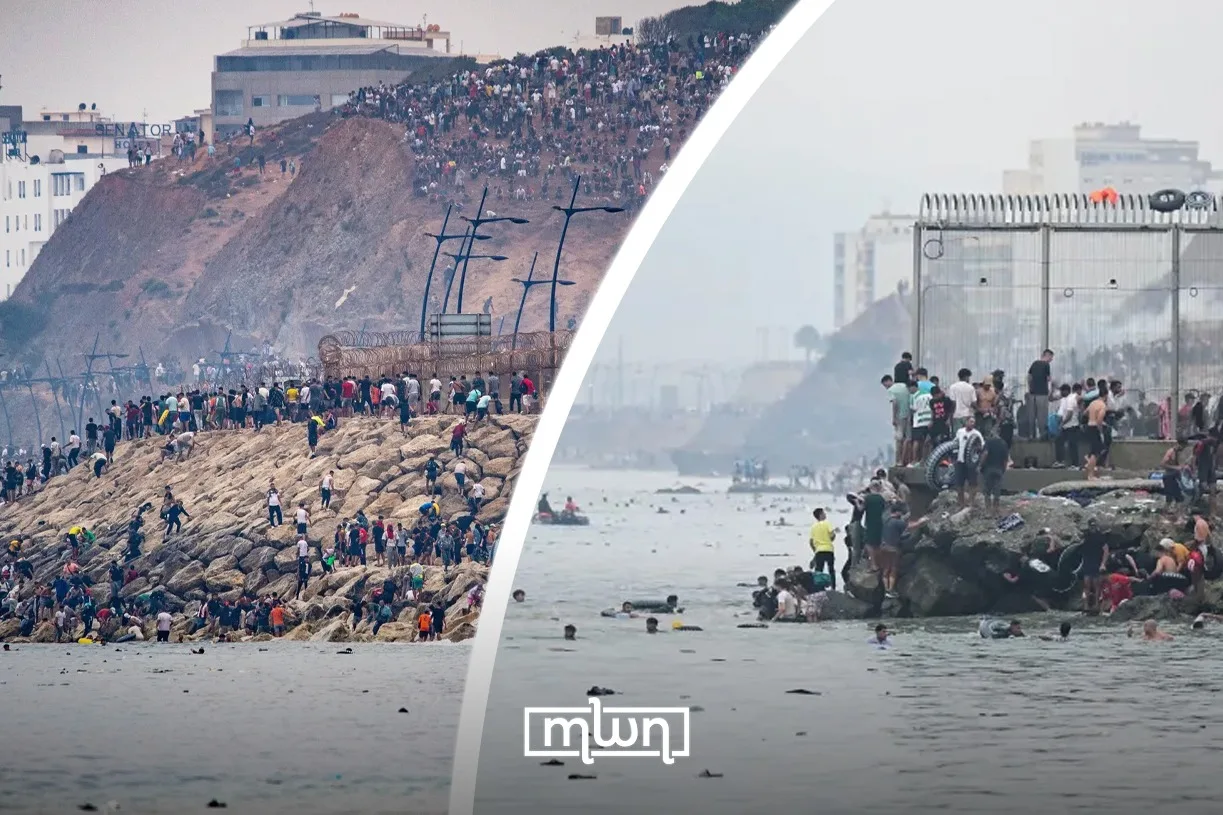
Rabat – Spain’s government has abruptly dismissed the communications chief of its National Security Directorate after an official alert revealed the scale of a sudden migrant influx into Ceuta, a disclosure that authorities quickly walked back.
The alert, published briefly on the Directorate’s website, stated that more than 49,000 migrants had entered the Spanish enclave within 24 hours through the maritime border and the Tarajal beach. It marked the first time Spanish authorities publicly acknowledged the magnitude of the crossings. Within hours, the message disappeared. Later estimates placed the number above 60,000.
The official behind the Directorate’s communications learned of her dismissal by phone while on leave, according to Spanish media. The decision took effect immediately, an unusual move in a system that often returns civil servants to their original posts rather than removes them outright. She had worked for years on the Directorate’s digital platform after her secondment from the Ministry of Defense.
The alert described the situation as the most serious migration crisis since May 2021. It pointed to a continuous flow of people through the night toward the Moroccan city of Fnideq, where large crowds gathered with the aim of reaching Ceuta. Spanish Interior Ministry sources confirmed that more than 40,000 people had already crossed into the enclave by that morning.
Reports in Spanish media also cited the presence of Moroccan security forces equipped for crowd control near the border area, as authorities on both sides struggled to contain the surge.
Ceuta sees lull after mass crossing
The situation around Ceuta has entered a quieter phase after last week’s unprecedented surge, with no new large-scale attempts to enter the Spanish enclave reported, according to Spanish news agency EFE.
Citing police sources, EFE said that crossings from the Moroccan side have dropped sharply and now occur only on a “sporadic” basis. These attempts involve small numbers, often fewer than ten people at a time, mostly young individuals who still try to reach the city by swimming along the coast.
Despite the slowdown, authorities have maintained a strong security presence in and around the enclave, reflecting ongoing concerns that pressure at the border could quickly return.
Inside Ceuta, local officials estimate that between 3,000 and 5,000 migrants remain following the mass arrival. While voluntary returns to Morocco continue, thousands of those who crossed have declined to go back, according to the same sources.
The scale of the crossings remains contested. Moroccan authorities have pushed back against higher figures cited in Spain, placing the number of arrivals at around 40,000. Spanish reports, however, have suggested that the total could have reached as high as 80,000 during the peak of the crisis.
The situation has also extended beyond Ceuta. Morocco’s Interior Ministry reported that more than 1,000 people entered Melilla during the same period and confirmed 11 deaths. Spanish estimates have put the death toll significantly higher, at 88; Rabat says it is still reviewing these figures.
Amid criticism directed at Morocco in parts of the Spanish debate, Rabat has defended its response, pointing to its mobilization on the ground and its long-standing cooperation with Spain. Moroccan officials have reiterated that the country remains a reliable partner in efforts to manage irregular migration, while calling for a more balanced reading of the events.