
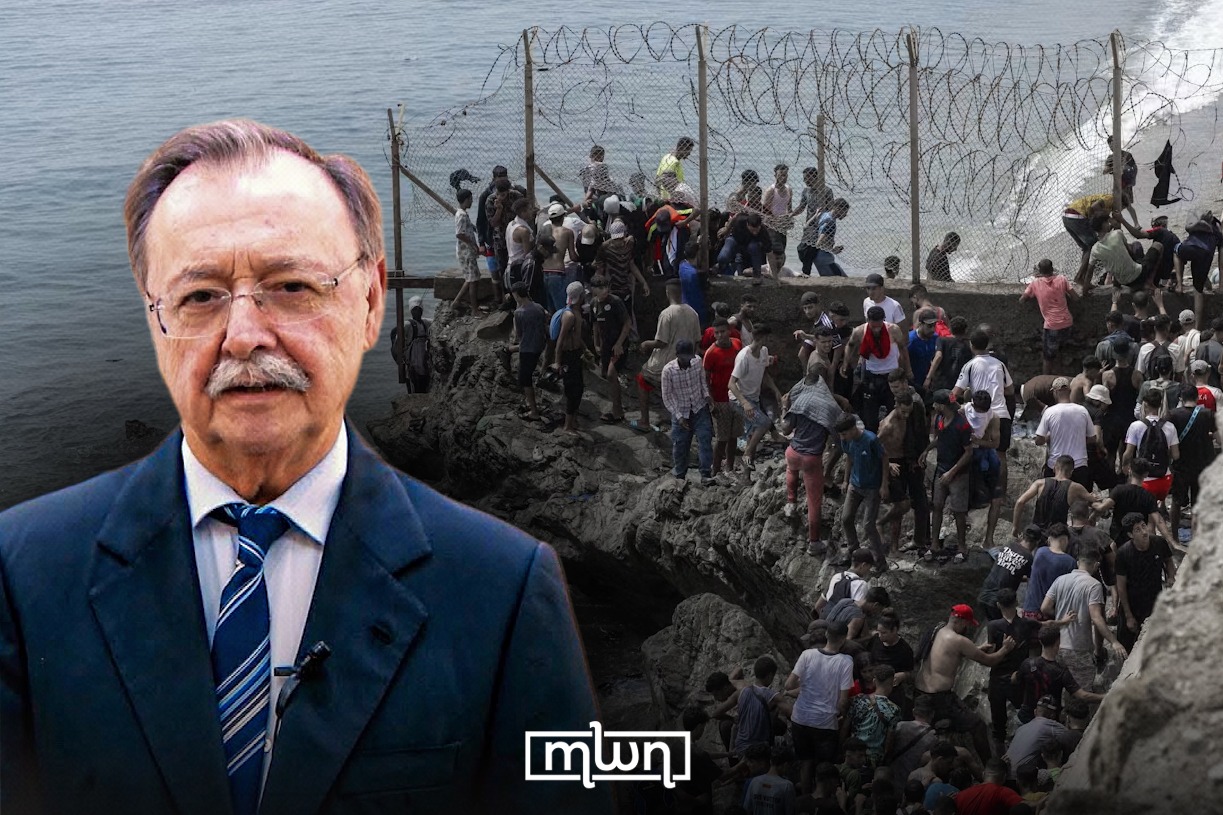
Agadir – The president of Ceuta, Juan Jesús Vivas, has announced plans to bring the Spanish enclave’s ongoing migration crisis before Spain’s Judiciary, warning that “Ceuta is in danger” following the mass arrival of migrants from Morocco on July 30 and 31.
Speaking after a council meeting of the Ceuta government today, Vivas said he intends to request meetings with the presidents of Spain’s Supreme Court and Constitutional Court to inform them about the situation.
He stressed that the move would not seek to interfere with judicial independence, but rather to ensure that the country’s highest judicial authorities are aware of the circumstances facing the city.
Vivas also maintained that Ceuta “will not surrender,” saying his administration would continue pressing Prime Minister Pedro Sánchez’s government to “fulfill its obligations” and act with “firm determination.”
The Ceuta president said the regional government would also seek support from Spain’s Parliament, autonomous communities, the Spanish Federation of Municipalities and Provinces, business organizations, trade unions and other state institutions.
“The Government is a very important part of the State, but it is not the whole State,” Vivas said, arguing that the executive, legislative and judicial branches all have a role in addressing the situation.
Vivas calls for returns to Morocco
Vivas said the Spanish government has sufficient resources and capabilities to restore normality in Ceuta within a maximum of 30 days.
He specifically called for all adults who entered the city on July 30 and 31 to be returned to Morocco, arguing that their return is necessary to restore normality.
The Ceuta president has criticized Madrid’s handling of the crisis, questioning the assessment that the city returned to normal shortly after the mass arrivals. He said the situation continues to affect public security, essential services, coexistence and national security.
On the other hand, Morocco continues to push for the return of Moroccan minors to the country, a position reiterated by Justice Minister Abdellatif Ouahbi. Rabat has called on Spain to facilitate their repatriation and has said it remains committed to bringing the minors back to their families.
“We are demanding their return,” Ouahbi previously expressed, adding that Spain is delaying the process and refusing to apply international law and return the migrants to their families.
The minister further argued that such a decision is enabling the human-trafficking networks and criminal groups to benefit from the situation and exploit vulnerable minors, especially girls.