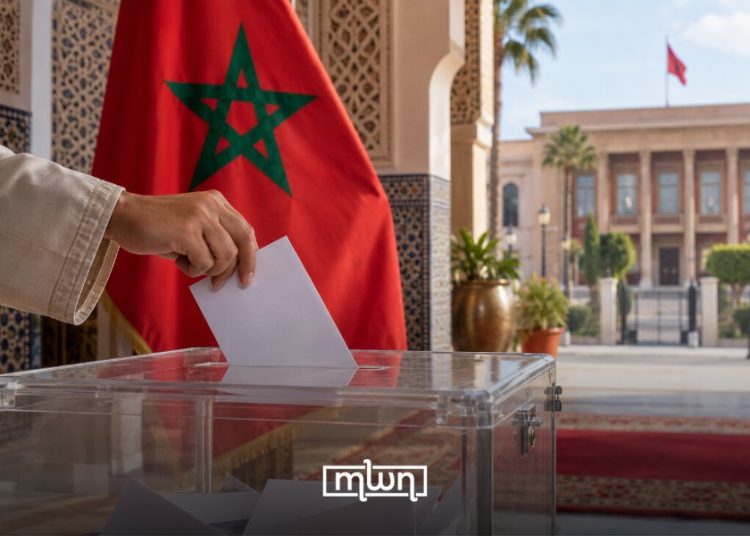
Rabat – Morocco’s Ministry of Interior has issued a reminder informing voters of the resources available to locate their assigned polling stations ahead of tomorrow’s legislative elections.
The ministry said the mechanism is set to facilitate participation in the vote.
Voters can identify their polling station by sending a free SMS to 2727, containing their national ID number. Upon sending the message, they will receive their number on the electoral roll and the name of the municipality or electoral district where they are registered.
The information will also include the number and address of their polling station. Voters can also access the dedicated website for the general electoral list, where they can verify their information.
By entering their national ID number and date of birth, voters can obtain their number on the electoral roll, the name of the municipality or electoral district where they are registered, and the number and address of their polling station.
Voters can also download the MonBV mobile application and enter their ID and date of birth to obtain, in addition to their number on the electoral roll, the municipality or district where they are registered and the number and address of their polling station.
Political parties are promising reforms, with their focus covering purchasing power, healthcare, and education. The PJD is vowing to tackle what it describes as the government’s “disasters,” while government coalition parties are defending their “success” and alleging that the next phase will focus on what they vowed in their 2021 electoral campaign.
Aziz Akhannouch, head of the National Rally of Independents (RNI), stated that he would not seek reelection in Morocco’s legislative elections.
In his capacity as the current Head of Government and member of the political bureau of the RNI, Akhannouch defended his cabinet’s legacy, alleging that it has seen the implementation of a number of major social and economic reforms and projects.
Akhannouch said the government worked to “strengthen the foundations” of the social state and improve services provided to citizens, citing jobs, education, and healthcare reforms.
Abdelilah Benkirane, however, accused the Akhannouch cabinet of causing “disasters” and alleged that the head of government is involved in the misuse of public funds.
While some observers believe the elections’ outcome is predictable, with some seeing those who are forming the coalition, especially the Authenticity and Modernity Party (PAM), taking the lead, others suggest that there could be a surprise, with the PJD potentially making an unexpected breakthrough.
A recent assessment by the Italian Institute for International Political Studies (ISPI) suggests that the PJD could win the vote, but not necessarily make it into the government coalition.
This assessment references a deadlock the PJD experienced in 2016, when Benkirane failed to form a government.