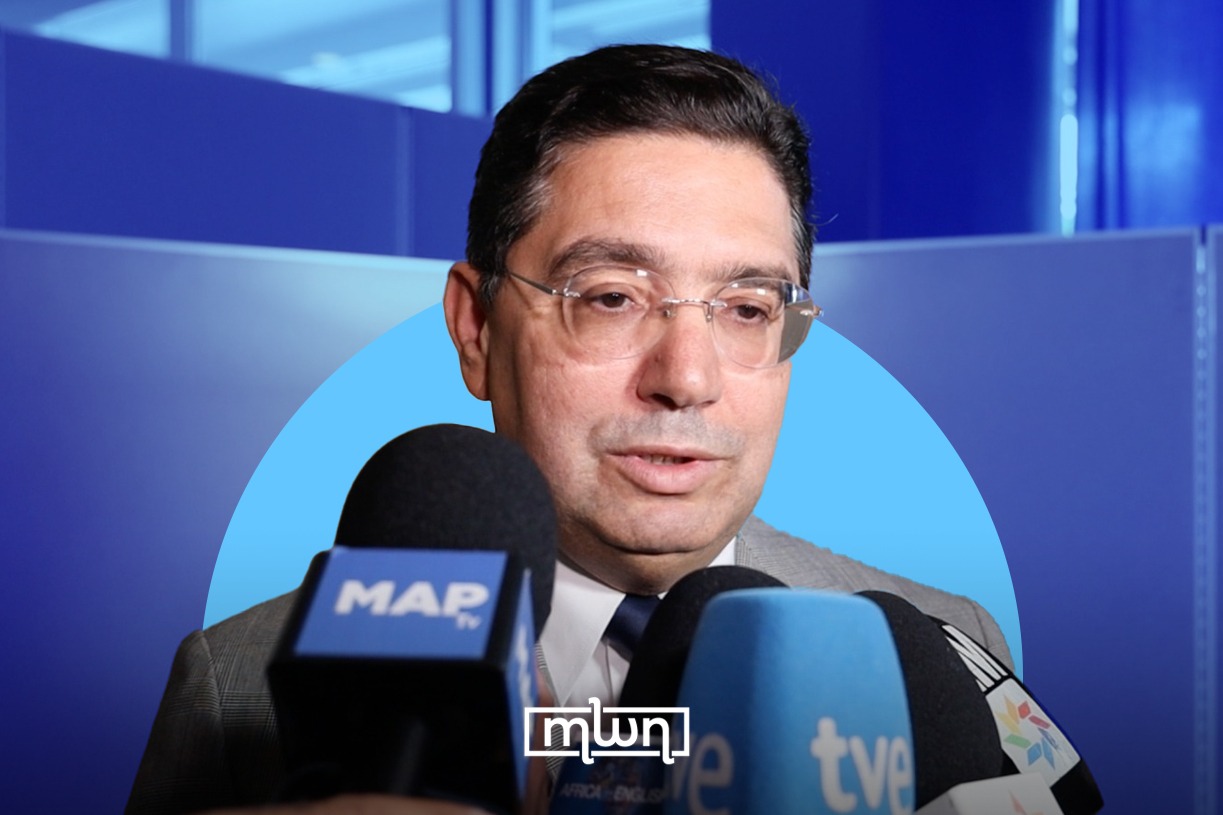
Agadir – Morocco’s candidacy for a non-permanent seat on the United Nations Security Council for the 2028-2029 term reflects the country’s standing as an active and credible regional and international actor, Foreign Minister Nasser Bourita said Friday in New York.
Speaking to reporters on the sidelines of the 81st session of the UN General Assembly, Bourita said Morocco’s candidacy builds on its diplomatic experience and its approach to major global challenges.
The candidacy is rooted in “a diplomatic approach grounded in a centuries-old tradition, guided by the far-sighted vision of King Mohammed VI on major global issues, as well as the experience accumulated by the Kingdom over the centuries,” Bourita explained.
Elections for the Security Council’s non-permanent seats will take place in June 2027.
Bourita said Morocco would address issues including climate change, development, the fight against terrorism, and major regional challenges through what he described as a clear diplomatic approach.
Whether it is climate change, development, the fight against terrorism or major regional issues, “Morocco will address these challenges with a clear and well-defined vision,” the minister said.
Morocco advances African initiatives
Bourita also pointed to several initiatives that Morocco has launched at the regional and multilateral levels.
He cited the opening this week of the signing process for the African Convention on the Disarmament, Demobilization and Reintegration of Child Soldiers, an initiative spearheaded by Morocco.
Several African countries signed the legal instrument during the week, according to the minister.
Bourita also highlighted the Atlantic African States Process (AASP), saying its eighth ministerial meeting, held Friday in New York, demonstrated the initiative’s growing maturity and support among participating countries.
The process has increasingly become a reference framework for cooperation among Atlantic African states.
Gabon has committed to hosting an AASP meeting focused on fisheries in the African Atlantic region, while Cabo Verde will host a workshop bringing together maritime security experts and other stakeholders.
Morocco will host the ninth ministerial meeting of the AASP.
The initiative, which continues to gain momentum, is helping turn maritime routes into a “structured space for cooperation” at a time when the world continues to face geopolitical tensions and conflicts affecting maritime trade and navigation, Bourita said.
Focus on development and dialogue
Morocco also used the UN General Assembly session to present an initiative on public-private partnerships for development.
The initiative featured at a meeting co-hosted by Morocco and the United Nations Development Program under the theme “Financing the Future: Public-Private Partnerships to Invest in Development.”
Bourita also recalled Morocco’s co-chairing, alongside the UN Secretary-General and the President of the UN General Assembly, of the Global Conference on Combating Hate Speech through the Promotion of Interreligious and Intercultural Dialogue and Tolerance.
Morocco co-organized the conference with the UN Office on Genocide Prevention and the Responsibility to Protect and the United Nations Alliance of Civilizations.
The conference focused on the role of dialogue and tolerance in preventing hate speech and strengthening social cohesion.
Bourita said the initiatives presented during the 81st UN General Assembly demonstrate Morocco’s efforts to offer practical responses while creating platforms for dialogue on issues affecting countries participating in the UN’s work.
Morocco is putting forward “constructive responses and solutions” while providing platforms for dialogue on issues of interest to countries participating in the work of the UN General Assembly, the minister concluded.