
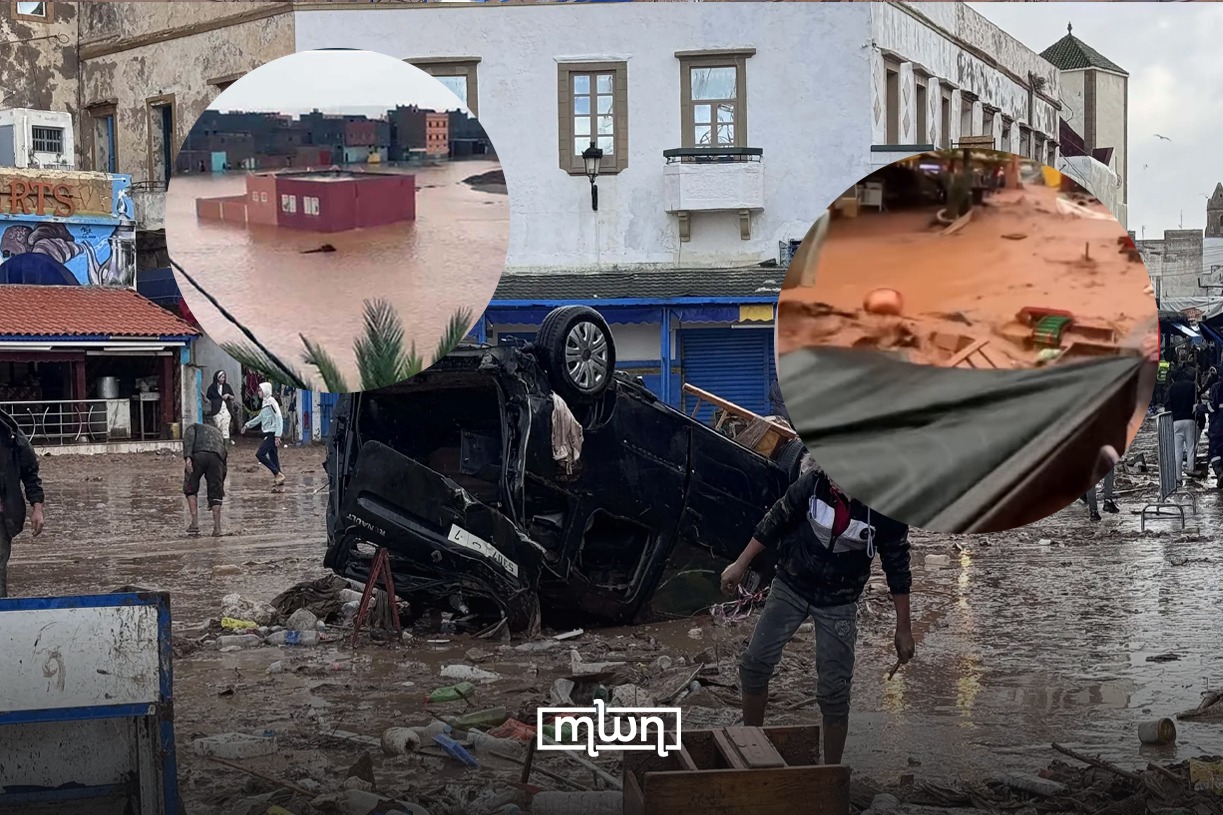
Agadir – Flash floods swept through parts of Morocco’s High Atlas Mountains this week, carrying away vehicles and damaging roads and other infrastructure in Al Haouz Province, an area still recovering from the devastating 2023 earthquake.
Heavy rainfall triggered floodwaters and mud across several areas of Morocco’s High Atlas, with videos showing the force of the flooding as it swept through roads, markets, and nearby infrastructure.
In Al Haouz Province, the floods disrupted traffic and damaged roads, while powerful currents carried away vehicles caught in their path. The footage also shows the extent of the water runoff as it moved through inhabited areas, raising concerns about the risks facing residents and road users during periods of intense rainfall.
View this post on Instagram
The flooding followed severe weather warnings issued by Morocco’s General Directorate of Meteorology (DGM), which forecast thunderstorms and heavy rainfall across several provinces.
Local reports also pointed to disruption in areas around Asni and Moulay Brahim, where torrents and falling rocks affected road access. Authorities deployed intervention teams and heavy machinery to clear debris and restore traffic on affected routes.
Al Haouz faces another challenge after the 2023 earthquake
The latest floods have brought renewed attention to the vulnerability of communities in Al Haouz, which suffered extensive destruction in the September 2023 earthquake.
View this post on Instagram
The earthquake, which struck the High Atlas region, killed nearly 3,000 people and damaged or destroyed homes, schools, and other infrastructure across affected provinces. Reconstruction and recovery efforts have continued since the disaster.
Although the earthquake and the recent floods are separate disasters, the latest weather event has created additional challenges for communities in the mountainous province, where difficult terrain can complicate access to villages and emergency response operations.
Damage to roads and other infrastructure can also disrupt residents’ daily activities and access to essential services, particularly in remote areas that depend on a limited number of routes.
Authorities have urged residents and motorists to exercise caution as heavy rainfall can cause water levels to rise rapidly in riverbeds and ravines. Flash floods can carry vehicles, rocks, and debris over short distances, leaving little time for people to react.
Residents are advised to avoid crossing flooded roads and wadis and to follow safety instructions issued by local authorities and emergency services.