
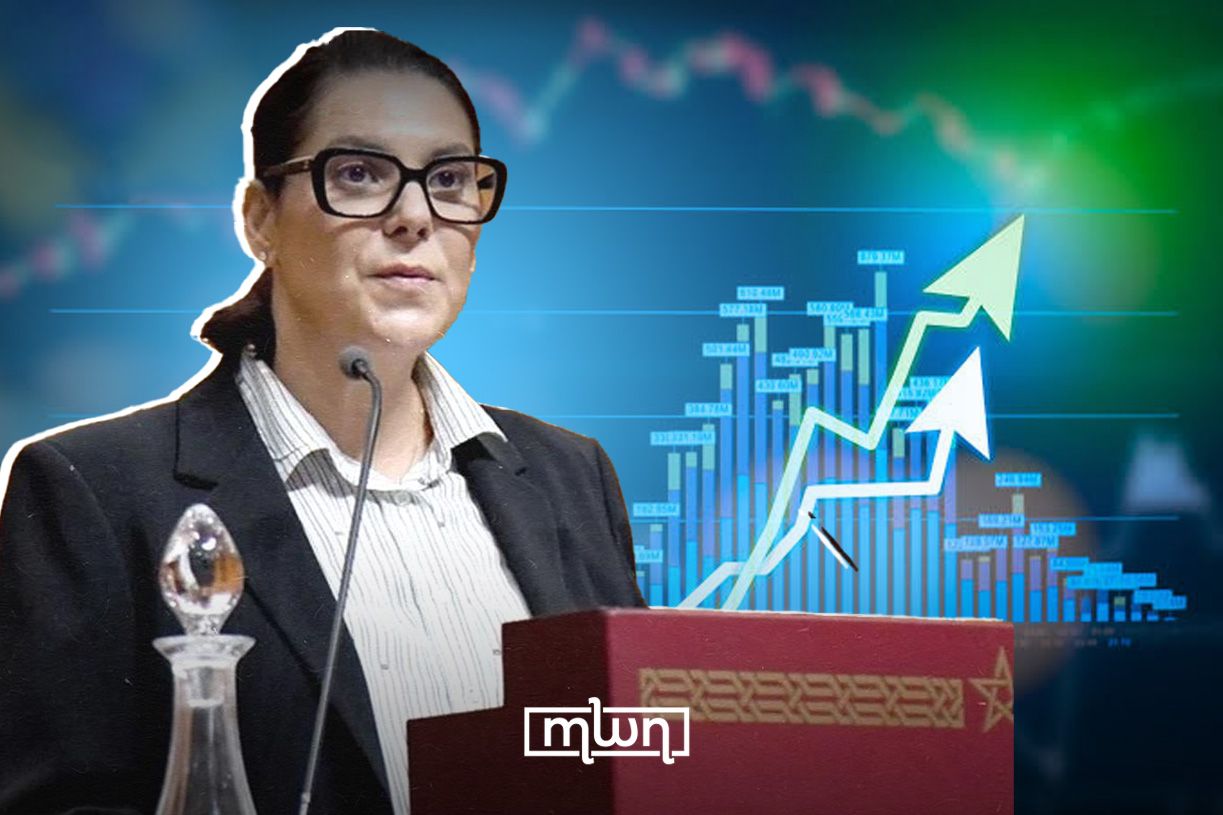
Agadir – Morocco’s government aims to achieve average annual economic growth of 5% between 2027 and 2031, increase private investment, and reduce public debt to around 62% of gross domestic product (GDP) by 2031, Head of Government Fatima Ezzahra El Mansouri announced during her address to Parliament today.
Under the seventh priority of the government’s program, titled “Building a Strong Economy to Finance Our Social and Sovereign Ambitions,” El Mansouri presented a strategy that links economic growth with job creation, social development, and national sovereignty.
The government plans to pursue growth that generates higher added value and creates jobs. It will seek a better balance between production and services, diversify the economy, develop technological capabilities, advance the energy transition, and strengthen Morocco’s digital and scientific sovereignty.
The program also places greater emphasis on domestic production and industrial development. The government aims to strengthen industry and local manufacturing to reduce reliance on imports, particularly finished products.
Government sets investment and tourism targets
The government plans to increase investment in infrastructure and productive sectors, continue modernizing agriculture, and introduce a tourism roadmap for 2027-2030. The roadmap aims to attract 26 million tourists by 2030.
It will also support cooperatives and the social and solidarity economy while developing the sports economy as another source of economic activity.
To encourage private investment, the government strives to raise the private sector’s share of national investment to two-thirds. It plans to pursue this target by strengthening support under the Investment Charter, accelerating projects already under contract, and continuing reforms at Regional Investment Centers.
The government also intends to support very small, small, and medium-sized enterprises (VSMEs) by improving their access to financing, guarantees, and public contracts.
Government seeks more financing for productive investment
The program calls for closer cooperation with the financial sector to expand bank and non-bank financing for productive investment, major projects, innovation, industrialization, and exports.
The government will also seek to mobilize domestic savings, particularly institutional savings, and revitalize financial markets.
At the same time, it plans to accelerate the restructuring of the public portfolio. El Mansouri said the government recognizes the public sector’s central role in implementing economic and social priorities and intends to address the financial situation of public institutions and state-owned enterprises.
Fiscal policy targets lower deficit and public debt
Alongside its investment and growth objectives, the government has set targets for inflation, the budget deficit, and public debt.
It aims to keep annual inflation at around 2% to protect purchasing power and maintain economic stability. The government also plans to maintain the budget deficit at around 3% of GDP throughout 2026-2031.
To achieve this target, it will broaden the tax base, improve public spending efficiency through the reform of the Organic Finance Law, benefit from economic growth, and increase the contribution of public institutions and enterprises.
The government also plans to place public debt on a downward path, bringing it to approximately 62% of GDP by 2031.
Read also: Morocco’s El Mansouri Puts Women’s Empowerment at Heart of Government Program