



























































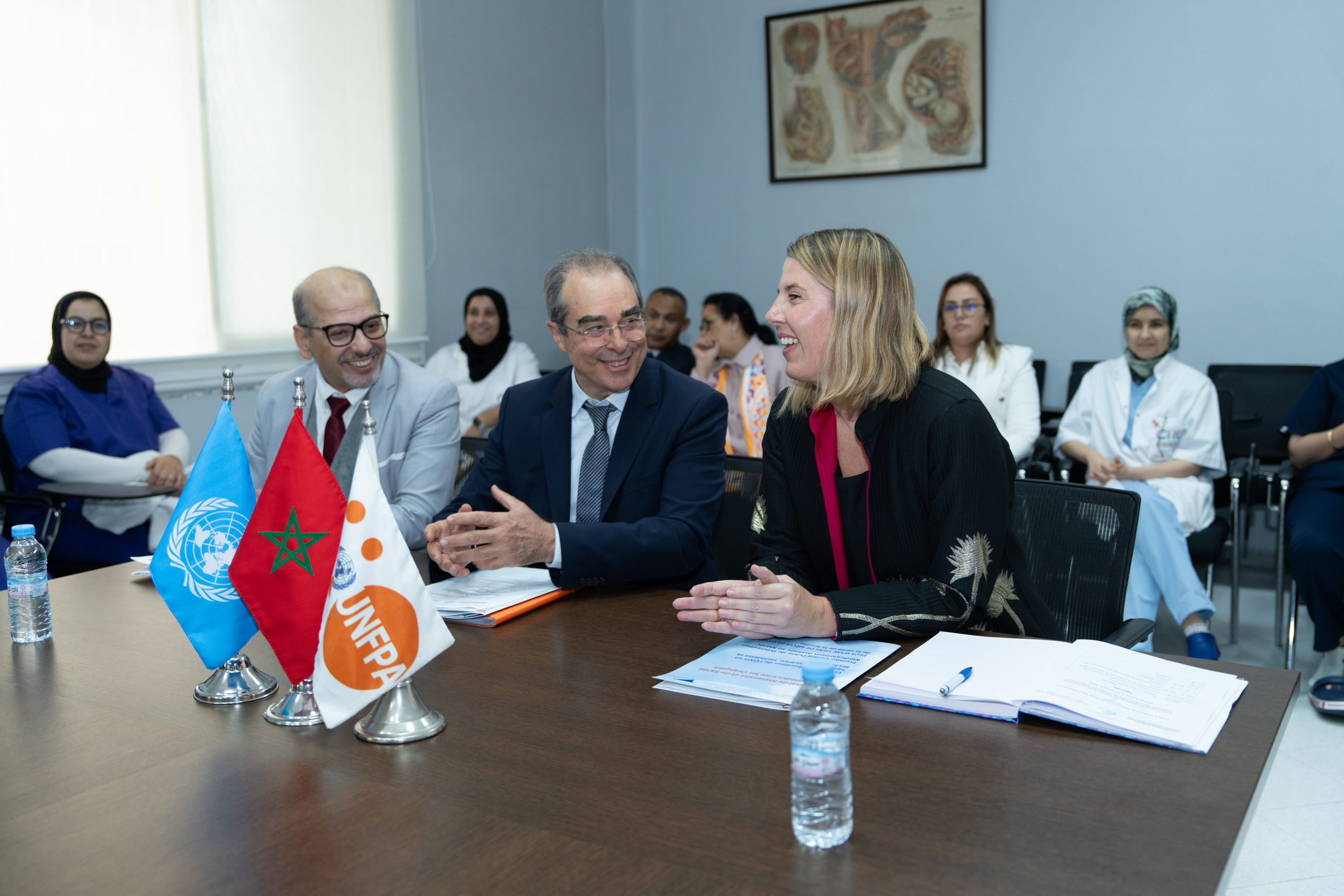
Rabat – Morocco must build on its progress in maternal healthcare, improve access to reproductive health services across its regions, and invest in young people’s health and opportunities as it undergoes major demographic changes, according to Catharina Boehme, Assistant Secretary-General and Deputy Executive Director for Programme at the United Nations Population Fund (UNFPA).
During a visit to Rabat early this month, Boehme met with health professionals and young people to learn about national initiatives addressing maternal and reproductive health, the use of artificial intelligence (AI) in healthcare, and youth empowerment.
Her visit comes as Morocco pursues major reforms to strengthen its healthcare system and expand social protection, while facing persistent inequalities in access to essential services.
One of the central challenges remains maternal mortality. According to the latest internationally comparable estimates, Morocco recorded approximately 70 maternal deaths per 100,000 live births in 2023, down from 271.4 in 2000, according to United Nations data.
Although this represents substantial progress, the figure remains at the threshold of the Sustainable Development Goal (SDG) target of reducing the global maternal mortality ratio to below 70 deaths per 100,000 live births by 2030.
Speaking to Morocco World News, Boehme described the country’s progress as a reflection of decades of investment in healthcare and the expansion of maternal health services.
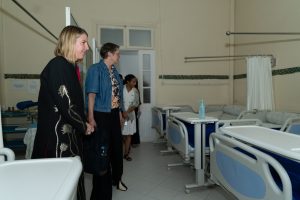
She said Morocco now has an opportunity to accelerate these efforts through continued investment in midwifery, better continuity of care, and wider access to essential health services.
“Investing in maternal health means investing in women, families, future generations and the country’s long-term development,” she said.
However, reaching women before, during, and after pregnancy remains as important as expanding the availability of maternity facilities. Geographical barriers, the distribution of healthcare professionals, and the ability to access timely medical assistance can all affect the quality of care women receive.
Boehme stated the importance of strengthening primary healthcare, supporting health professionals, and using demographic and territorial data to guide public investment.
She also pointed to Morocco’s ongoing health and social protection reforms, saying their success will depend on whether improvements reach communities across the country rather than remain concentrated in certain areas.
AI offers opportunities for maternal healthcare
During her visit, Boehme also learned about an initiative exploring the use of artificial intelligence in midwifery care at a maternity hospital in Rabat. The initiative reflects growing interest in using technology to support healthcare professionals, particularly in areas where access to specialized medical expertise can be limited.
Boehme said AI could help midwives access reliable clinical guidance, strengthen their professional development and improve the quality and continuity of maternal healthcare.
Its potential could be particularly relevant for rural and underserved communities, where healthcare professionals may have fewer opportunities to consult specialists or access additional training.
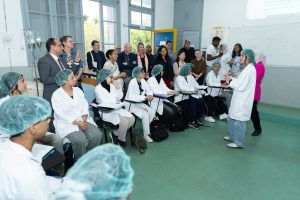
However, she stated that technology must remain a tool supporting medical professionals rather than replacing their expertise. “Technology should complement their expertise, not replace the essential human dimension of healthcare,” she said.
She also identified several conditions for the responsible use of AI in healthcare, including clinical validation, data protection, patient safety, and human oversight.
These safeguards are particularly important in maternal healthcare, where medical decisions can have serious consequences for both mothers and newborns.
Boehme did not outline specific targets or a timeline for expanding the initiative, but said Morocco could develop experience that other countries might learn from through South-South cooperation.
Young people need reliable health information and accessible services
Beyond maternal healthcare, the UNFPA official placed particular emphasis on the needs of adolescents and young people, especially their access to sexual and reproductive health information.
Morocco’s demographic transition makes this issue increasingly important. The country’s fertility rate fell to 1.97 children per woman in 2024, below the replacement level of 2.1, while the population is gradually aging, according to demographic research based on national statistics.
Boehme said Morocco still has an opportunity to benefit from its demographic window, but noted that doing so requires sustained investment in health, education, skills, and opportunities for younger generations.
She identified access to reliable information as one of the challenges facing young people, particularly as social media becomes an increasingly important source of health-related content.
In this environment, distinguishing accurate medical information from unverified advice can be difficult.
Boehme said Morocco should strengthen communication between young people, families, educators, and healthcare professionals while ensuring that health services provide confidential, welcoming, and supportive environments.
She outlined three priorities for addressing these needs. These include strengthening age-appropriate sexuality education, expanding youth-friendly healthcare services, and using digital technology to make reliable information more accessible.

Existing structures, including Youth Health Spaces and university health centers, could play a greater role in providing young people with information and services adapted to their needs.
UNFPA is also supporting digital initiatives in Morocco, including ASK Marwa, which provides information on menstrual health for girls, and the SHAGA application, designed to improve access to sexual and reproductive health information for young people with autism.
The initiatives seek to address different information needs and make health resources more accessible to groups that may face additional barriers.
Boehme also visited a Second Chance Youth Center in Rabat, which helps young people develop skills, build confidence, and improve their employment opportunities.
She described the initiative as an example of how education, skills development, and social inclusion can contribute to young people’s overall well-being.
The visit, she said, reinforced the importance of connecting investments in health with broader efforts to expand opportunities for young people.
UNFPA outlines three priorities for cooperation with Morocco
Boehme said UNFPA’s cooperation with Morocco would continue to focus on three interconnected areas, including sexual and reproductive health and rights, gender equality and the empowerment of women and girls, and youth empowerment alongside stronger demographic data and analysis.
This work will involve partnerships with Moroccan institutions, particularly those working in health and education, as well as the High Commission for Planning (HCP).
The agency also sees opportunities to work with development partners and donors to complement national investments and help promising initiatives achieve a wider and more sustainable impact.
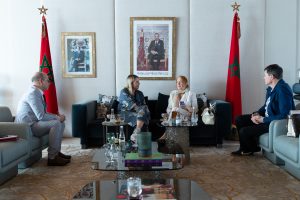
Boehme said Morocco’s changing demographic profile makes forward-looking policies particularly important.
With fertility declining and the population aging, she argued that investments in women’s participation, young people’s skills, and access to healthcare will be essential to sustaining the country’s development over the coming decades.
She also highlighted Morocco’s potential to share its experience with other countries, particularly in maternal health, social protection, demographic planning, and youth empowerment.
“Morocco has significant potential to become an increasingly important reference for other countries,” she said, describing the country as a potential laboratory for developing solutions that could be adapted elsewhere.
Through South-South cooperation, UNFPA hopes to facilitate the exchange of experiences and approaches between Morocco and other countries facing similar demographic and development challenges.