















































Rabat – On the list of national days in Morocco, the Green March stands out for its historical significance as it helped shape the country into what it is today, and it goes a long way in helping the world understand the bond the Moroccan people share with its ruling monarchy.
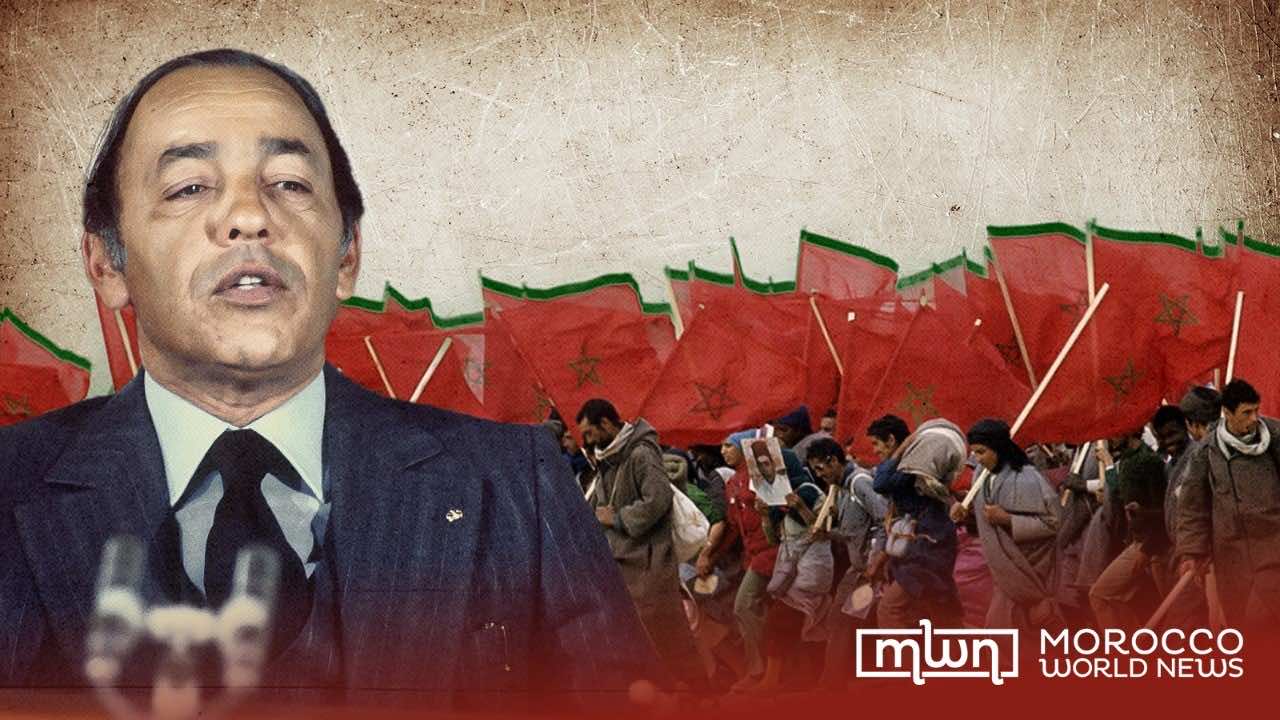
The Green March lives up to its name as it was a peaceful march of 350,000 unarmed Moroccan civilians, women and men who flocked from across Morocco and marched to Tarfaya and across the border into the then Spain-occupied Western Sahara on November 6, 1975.
The call to the Green March
On October 16, 1975, King Hassan II delivered an inspirational speech broadcasted on TV and radio, calling on Moroccans to mobilize to claim their ancestral land. The speech officially marked the launching of the Green March.
“We have to do one thing, dear people, and that is to undertake a peaceful march from the north to the east, and from the west to the south. It behooves us to act as one man in order to join the Sahara,” he said in his speech.
The king called on 306,500 volunteers from the general public, while the remaining 43,500 were from local and provincial officials and other government officials, according to historians.
Quotas for volunteers were determined for each of Morocco’s provinces and prefectures, and the king further specified that each provincial tribe should send a certain number of troops on the Green March.
Armed with Qurans
In one of the largest peaceful marches in modern history, Moroccans in the thousands marched into Western Sahara armed with Moroccan flags, pictures of King Hassan II, green banners, and Qurans.
The Green March derives its name from the color of Islam, recalling the King’s role as the commander of the faithful.
Once the Moroccan demonstrators reached Tarfaya, they came face to face with Spanish forces, according to Moroccan TV journalist Seddik Maaniou.
Maaniou recounts how he was one of the first into the then Spain-occupied Western Sahara on the day of the Green March. He remembers seeing Spanish troops deployed only half a kilometer away from the demonstrators.
“Everyone waited to see what would happen,” Maaniou told the BBC in 2015. “But in the end, each side stayed where they were.”
“We had our tents and we had folk-singing groups,” he continued. “I wondered what the Spanish soldiers were thinking, looking at these people dancing around their fires, eating food, and looking happy. And perhaps they were going to die!”
This year marks the 47th anniversary of the Green March, and with it comes a patriotic proud celebration of Morocco’s successful attempt at reclaiming its southern territories from imperial Spain.
The Green March will be forever engraved in Moroccans’ collective memory as it reminds them of the power of the peaceful will to justice. In addition, the Green March is a statement of the tight-knit link Moroccan monarchs have with their people.
Read Also: Retracing the Steps of Morocco’s Iconic Green March