 Join on WhatsApp
 Join on Telegram
Rabat – The Islamic State (ISIS) suffered deep casualties in 2016 and 2017 because of the international campaign targeting its strongholds in Iraq and Syria. After the liberation of Mosul and Tal Afar in Iraq, and now Al-Raqqa of Syria, the liberation of other pockets is only a matter of days.
ISIS‘s few remaining members live the worst of their circumstances. They have only two options: either continue fighting and die, or escape, though they cannot go anywhere, as they are trapped.
This raises fears that the organization will launch new terrorist attacks in foreign countries as its fighters return to their homelands. Already the last two years has seen a change in ISIS’s tactics as attacks on civilians in foreign lands have multiplied.
North Africa has conventionally been the backyard of major terrorist activity, predominantly Al-Qaida in the Islamic Maghreb (AQIM). ISIS group also poses a significant threat to the region and to Western civilians and interests.
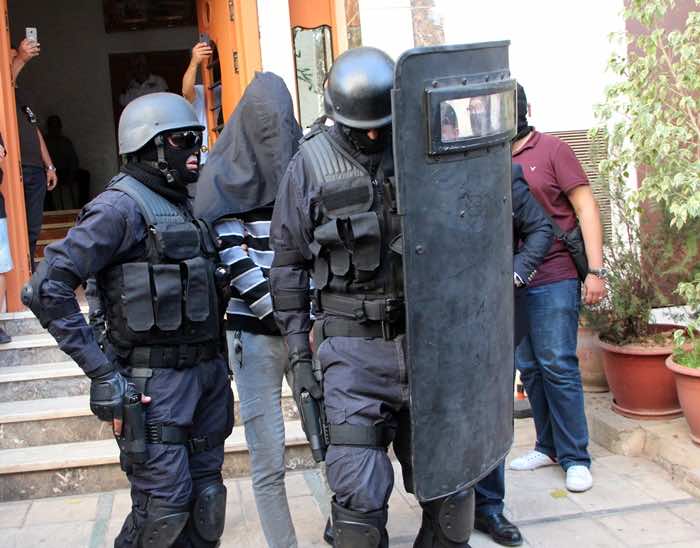
Since 2014, Moroccan authorities dismantled 53 terrorist cells associated with the organization of the “Islamic State”, known as the “Daesh”; while about 1664 Moroccans participated in the Syrian-Iraqi conflict, including 285 Moroccan women and 378 children, 221 of whom returned home, while 596 were killed.
The terror threats have created a sense of insecurity in major parts of the region, and ISIS has been the primary perpetrator. Westerners have been attacked in Algeria, Tunisia, Mali and other countries, further amplifying the sense of insecurity and instability.
This is particularly so in light of its seizure of a major territory in Libya. It has, for some time, played the role of a -de facto- governing body in Libya’s Sirte City. This affords it a comfortable launching pad for attacks across other Libyan cities, and trans-nationally in Algeria and Tunisia – and potentially in Europe.
To face these threats, North African countries have taken security measures and are struggling to deal with youth radicalization and violent extremism. But, what is missing is a comprehensive regional approach, as well as cooperation and information sharing between governments. It is still the exception to see the governments in the region cooperate, combine resources and share intelligence to combat a common adversary.
Some countries have implemented important programs. For instance, Morocco’s training of certified Imams throughout North Africa and the Sahel, as well as for European mosques has proven effective; also some amnesty laws, as well as new anti-terrorist laws in Europe.
Other national programs are worth considering: a community-based approach fostering participative citizenship and encouraging local development; developing career plans for ex-combatants and others; micro-projects for small and medium size businesses; health care assistance; cultural initiatives for the arts and music; and using the media, particularly social media, to promote social cohesion.
Morocco has taken proactive steps in the war against terrorism and extremism with a practical approach that has contributed to a large number of terrorist cells being dismantled. These important measures include: re-training of imams to teach and spread tolerant and peaceful Islam; the formation of religious guides to educate young women and men in schools, prisons and other public spaces about the true principles of Islam; the reform of secular and religious education so that schools become more open and integrated in modernity and more oriented to problem solving; the monitoring of mosques so that they do not become a safe heaven for extremism and hate speech; the fight against social exclusion through the National Initiative for Human Development, launched by the government in 2005; and the rise of enhanced security services.
All these key countermeasures entail that we need a combination of both tough and soft responses to deal with the security threats posed by the radicals, such as anti-terrorism laws, monitoring returnees, imprisonment coupled with reintegration and reeducation, community participation, psychological support, job training, etc.
Recently, European countries have intensified their security measures, allocating huge sums to establish security and serenity. The European Union’s interior and justice ministers officially launched a European anti-terrorism center within the Europol office in The Hague to exchange information between the intelligence services in the EU and North African countries, urging all EU member states to engage in the war against terrorism.
All abhorrent terror attacks must be addressed in various ways in the long and short terms.
First, in the short term, a proactive policy and strategy should be adopted, where national security control must be tightened, with coordination between North African and European countries. The sources and funding of terrorism must be purged all over the world immediately.
Additionally, prison monitoring is to be strengthened and the imams should be re-trained in order to teach median tolerant Islam, its noble morals and values, and contribute to the immunization of Muslim youth against terrorist propaganda, especially in social media. There is an urgent need to produce a moderate and appropriate Islamic discourse of human values in Arabic and European languages
Second, in the long term, all forms of extremism and terrorism must be fought through crucial reforms in the political, economic, social and cultural fields, including educational reform – with a focus on critical and creative thinking – that can lead to employment and integration into society.
Thus, North African governments should focus their efforts on economic, political, and social issues to find concrete solutions to the real problems, and engage with civil society and youth, using a community-based approach to manage the terrorism threat.
The views and opinions expressed in this article are those of the author and do not represent any institution or entity.
© Morocco World News. All Rights Reserved. This material may not be published, rewritten or redistributed without permission.