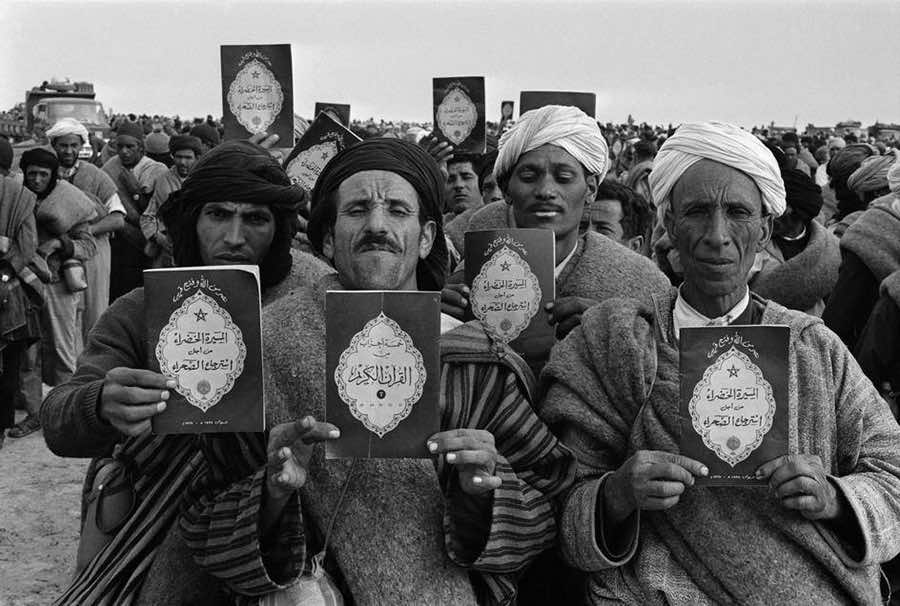
Rabat – Under the leadership of King Hassan II, 350,000 Moroccans took part in the Green March, a peaceful protest against the Spanish occupation of Western Sahara on November 6, 1975. Moroccans celebrate the anniversary of the Green March as a national holiday each year on November 6.
 History of the Spanish occupation
The Spanish presence in Western Sahara began after the Berlin Conference of 1884 regulated European colonization and trade in Africa. At the time, King Hassan I ruled Morocco.
The Berlin Conference, headed by German Chancellor Otto von Bismarck, invited 13 European countries and the United States to establish a joint policy in Africa during the New Imperialism period of colonial expansion.

According to some historians, the Berlin Conference effectively launched the Scramble for Africa: The invasion, occupation, and colonization of African territory by European powers.
Through the Berlin Conference, the Spanish colonial empire established control over northern and southern Morocco, despite resistance from the local population.
Read also: Green March: 43 years Later, Morocco Still Attached to Its Land
Leading up to the Green March
King Hassan II came to power in 1961 after the sudden death of his father, King Mohammed V.
“The Green March in Historical Perspective” by Jerome B. Weiner describes the events leading up to the groundbreaking demonstration against the Spanish occupation of Western Sahara.
During the early years of his rule, King Hassan II relied heavily on the Royal Armed Forces (FAR). He founded and commanded the FAR in the late 1950s and the army was a cornerstone of his leadership.
However, the King’s own right arm turned on him with FAR trying to oust him on at least two occasions, in July 1971 and August 1972. Then, in 1973, there was an outbreak of guerrilla warfare from the Algerian border to Rabat and Casablanca.
These tumultuous years put King Hassan II in an exposed position, Weiner argues, as they “called into question the reliability of the army as a pillar of his legitimacy.”
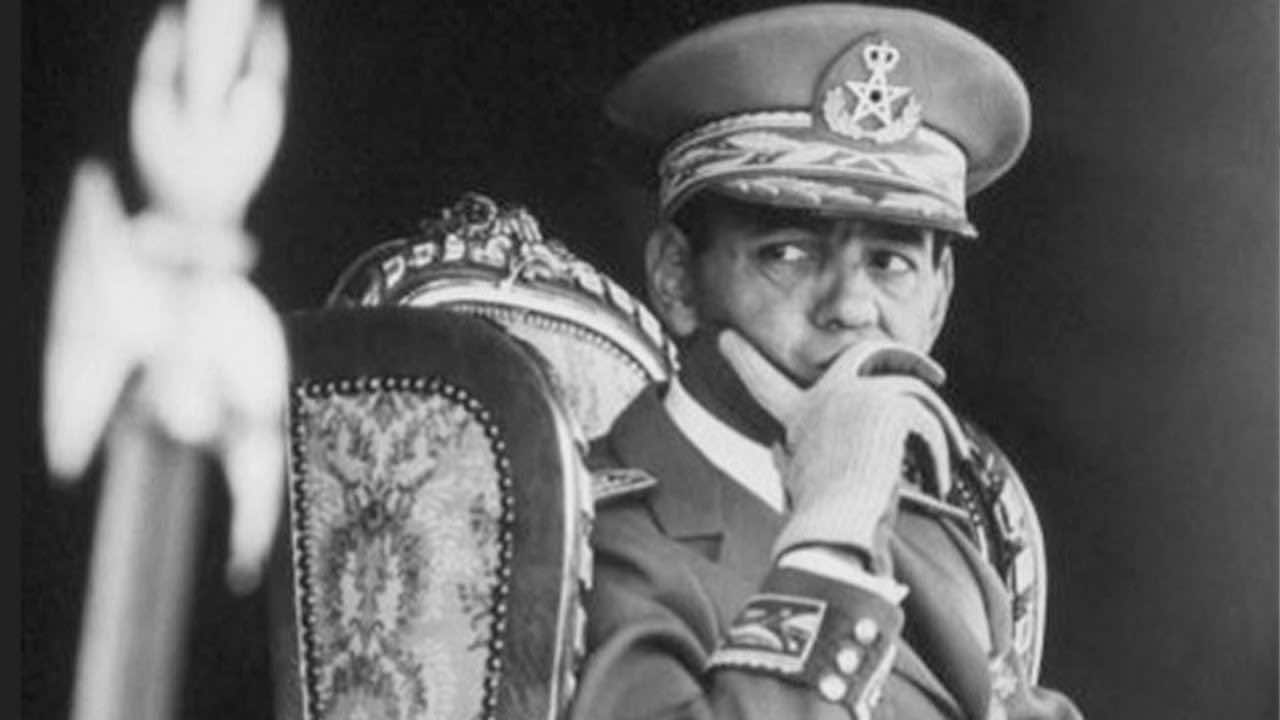
Consequently, in 1973, the King began to more forcefully assert Morocco’s anticolonial position towards Spanish Western Sahara. He also promised to coordinate policy with the leaders of Mauritania and Algeria.
The Moroccan public received this development favorably. Meanwhile, the UN continued to put pressure on Spain to decolonize Western Sahara. A series of liberation movements unfolded with the support of Morocco, Algeria, and Mauritania.
King Hassan II maintained a peaceful anti-colonial strategy towards Spain in the 1970s.
Read also: Morocco-Algeria: The Impossible Obstacles on the Road to Peace
King Hassan II’s call to action
On October 16, 1975, King Hassan II delivered an unprecedented call to action to the Moroccan public on national TV and radio stations, officially launching the Green March.
“We have to do one thing dear people and that is to undertake a peaceful march from the north, the east, the west to the south. It behooves us to act as one man in order to join the Sahara.”

And so began the mass mobilization of 350,000 Moroccans, “a number arrived at because it represents the number of births in Morocco each year” at the time, Weiner wrote.
In his speech, King Hassan II specified that 306,500 of the volunteers were to come from the general public, while the remaining 43,500 were local and provincial officials and other government functionaries.
Quotas for volunteers were set for each of Morocco’s provinces and prefectures, Weiner explains. Additionally, the King specified that each provincial tribe should send a certain number of troops on the Green March.
Read also: 5 Facts You Should Know about the Green March
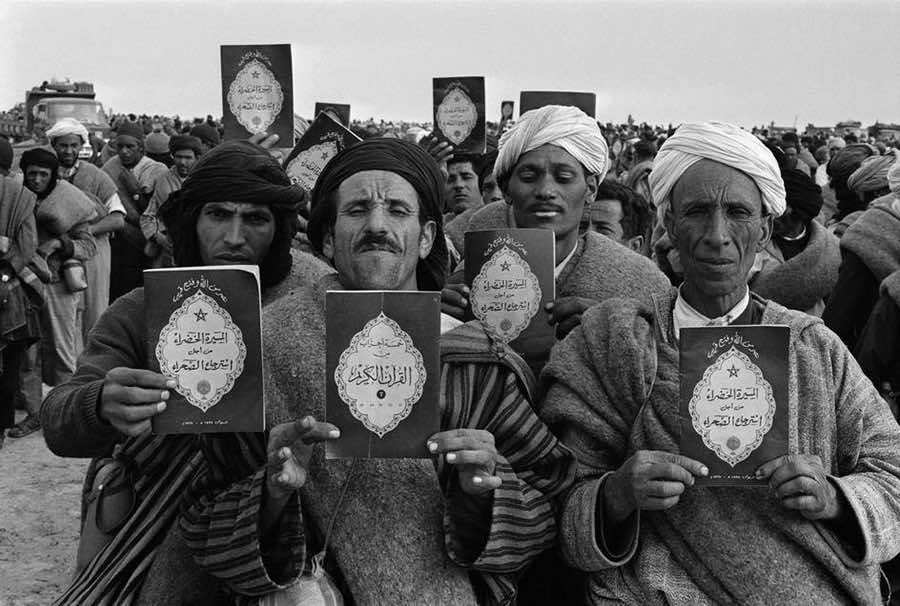
Armed with Qurans
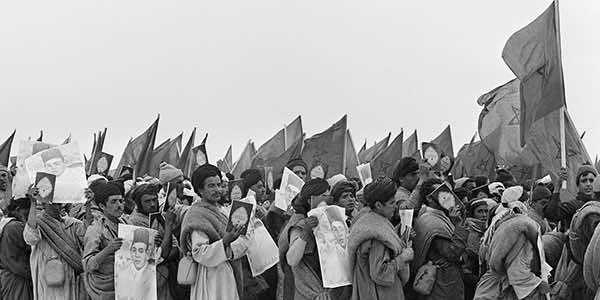
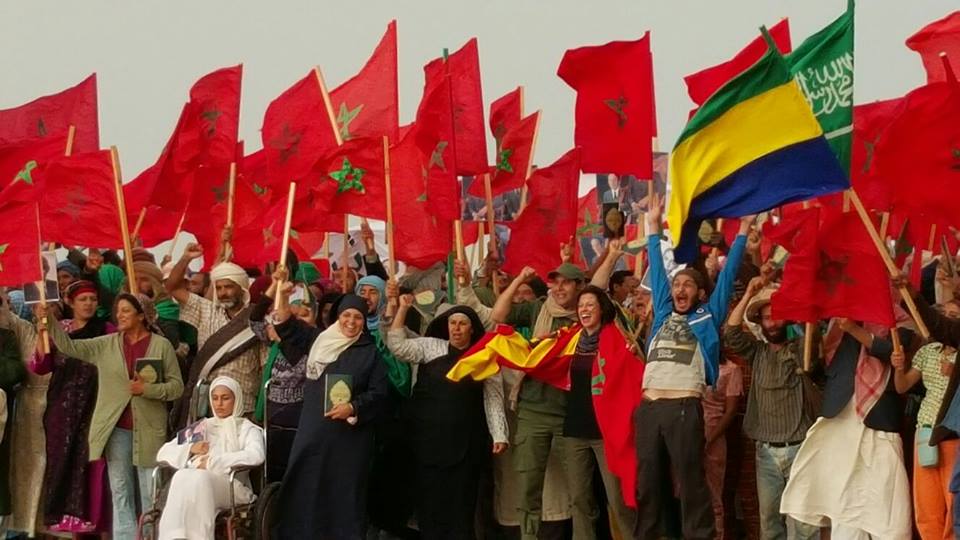
350,000 Moroccans marched into the Sahara Desert on November 6, 1975, armed with Moroccan flags, pictures of King Hassan II, green banners, and Qurans.
The Green March took its name from the color of Islam, a key influence and power behind the Moroccan movement. Brandishing Qurans, the Moroccan demonstrators were reminded of their King’s role as Commander of the Faithful.
After marching to Tarfaya, the Moroccan protesters came face to face with Spanish forces, according to Moroccan TV journalist Seddik Maaniou.
A 30-year-old Maaniou was on the first vehicle to cross the border into Spanish Western Sahara on the day of the Green March. He remembers seeing the Spanish army, stationed just 500 meters away, with his own eyes.
“Everyone waited to see what would happen,” Maaniou narrated to the BBC in 2015. “But in the end, each side stayed where they were.”
“We had our tents and we had folk-singing groups. I wondered what the Spanish soldiers were thinking, looking at these people dancing around their fires, eating food and looking happy. And perhaps they were going to die!”
Read also: King Mohammed VI: Green March Commemorates Western Sahara’s ‘Moroccanness’
The Madrid Accords
Shortly after the King’s October 16 speech, talks between Spanish, Moroccan, and Mauritanian officials began.
When the talks did not appear to make any headway, King Hassan II decided to go ahead with the Green March. The mass protest symbolized Morocco’s unrelenting commitment to liberating Western Sahara.
After nearly a century of occupation, Spain finally bowed to regional and international pressure. On November 14, 1975, Spain signed the Madrid Accords and agreed to leave the territory by May 23.
Read also: New Book Explores ‘Profound, Historical Moroccanness’ of Western Sahara
A patriotic event in Moroccan memory
Every year on November 6, Moroccans celebrate their country’s determination to retake the Spanish provinces in Western Sahara.
The Green March is considered a watershed event in Morocco’s recent history, and Moroccans celebrate the event as a national holiday.
While the Spanish rescinded their imperial claim in Morocco’s south, Spain still controls the enclaves of Ceuta and Melilla along Morocco’s northern Mediterranean coast. The Spanish territories, once highly-coveted port cities, have come to symbolize the strain of the migration crisis in Europe and Morocco.
Read also: Minister: Morocco’s Position on Ceuta and Melilla Is Clear
The Green March has left a lasting impact on contemporary Morocco, where its legacy reflects a patriotic and peaceful people. Remembering the large-scale act of solidarity in 1975 is a celebration of the Moroccan people’s commitment to an independent and strong Morocco.
However, territorial disputes in Western Sahara still persist.
Until the conflict is resolved, Morocco will need to harness the determination and strength of the Green March as it continues to support the UN-led peace process in the region, a process that is based on negotiation and consensus.