Rabat – Celebrated every year toward the end of the holy month of Ramadan, Laylat Al-Qadr holds a deep significance for the Muslim community; it is considered to be the holiest night in the Islamic calendar.
Laylat Al-Qadr derives its names from the belief that it is the night with the greatest, unrivaled potential of bringing believers close to God in Islamic theology and practice. Etymologically, the word Al-Qadr evokes two main meanings: respect and honor. But it also means fate and destiny.
Al-Qadr is interchangeably translated as the Night of Destiny, Night of Power, or Night of Decree. But whichever translation one prefers, the main, unchanging consensus among Muslims is that it is the night when God’s mercy is boundless and His grace is fathomless.
In the Islamic tradition, it is also believed that Laylat Al Qadr is the night when God shows great mercy in decreeing the fate of humans.
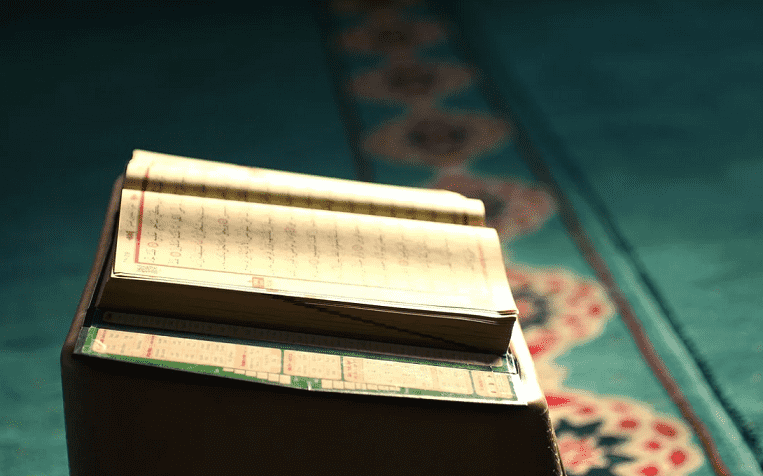
For Muslims, Laylat Al-Qadr is invaluable as it is closely related to the Quran; it is the night during which God revealed the first verses of the Quran to Prophet Muhammad through his angel Djibril (Gabriel). This aspect holds great symbolism for Muslims, especially as the Quran is the sacred book of Islam.
During Laylat Al-Qadr, angels, blessings, and mercy descend on those who believe. God erases all previous sins and answers all invocations on this night. Only on this night, according to Islamic tradition, does God also free as many people from the fire of Hell as He has freed since the beginning of Ramadan.
Read also: Physical, Spiritual Health Benefits of Fasting During Ramadan
Deemed as the night that is worth more than a thousand months, Laylat Al-Qadr promotes tolerance and peace. Every hadith of the prophet related to this night concerns forgiveness and absolution of past sins.
In Islam, a person’s good deeds on this night are better than their good deeds in 1000 months. Verses 3 to 5 of Surah Al-Qadr (the 97th chapter of the Quran) read:“The Night of Power is better than a thousand months. The angels and the Spirit descend therein, by the leave of their Lord, with every command; peace it is until the break of dawn.”
Laylat Al-Qadr occurs on one of the odd-numbered nights of the last ten days of Ramadan. For this year, it should take place on the night of Saturday, May 8. However, if it usually takes place on the eve of the 27th day of Ramadan according to the prophet, this date is likely to change.
As the month of Ramadan represents an essential period for Muslims, Ramadan attributes an important particularity to Laylat Al-Qadr. During the month of Ramadan, Muslims devote themselves to worship and reflect on their religion. Laylat Al-Qadr consolidates this bond.
Muslims stay awake throughout Laylat Al-Qadr as some sort of spiritual retreat with specific practices to say different prayers and connect with God.
Read also: A Latvian’s First Experience Fasting for Ramadan in Morocco
Practically, there are several ways to worship during Laylat Al-Qadr, including praying, meditative reading of the Quran, Dhikr (the intimate remembrance of God), and invocation.
But with the closing of mosques and social distancing, Laylat Al-Qadr will be different for many Muslims this year. Muslims all around the world will celebrate this year’s Laylat Al-Qadr in their homes, following their governments’ measures to prevent the spread of COVID-19.
As a result of the pandemic, religious activities are largely restricted in public and crowded spaces.
However, COVID-19 preventive measures and the resulting ban on religious activities in mosques are not a barrier to the revival of Laylat Al-Qadr. TV channels and websites frequently broadcast Quranic recitations and religious sermons, another tool to revive the spirit of Laylat Al-Qadr in homes with families.
For many, that Ramadan 2021’s Night of Destiny coincides with the coronavirus pandemic is an opportunity to pray in their homes – with great serenity and calmness.
The circumstances may have changed but the spirit remains the same: Laylat Al-Qadr is about devoting and surrendering oneself to God. And so, then as now, it is a time for Muslims to commit themselves to worship privately while contributing to ensuring the safety and the wellbeing of their fellows.