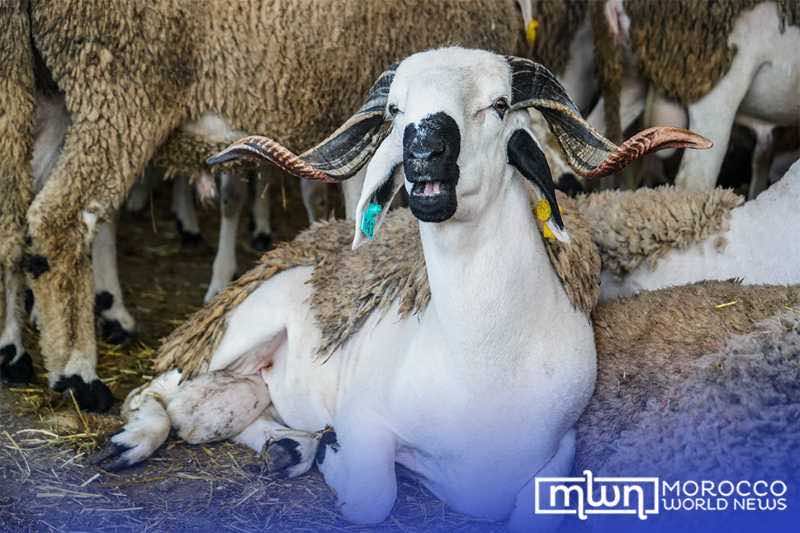
Rabat – As Morocco plans to celebrate Eid al-Adha on Wednesday, July 21, both Moroccans and residents alike have begun to prepare for the annual slaughter of livestock and time with loved ones. The holiday is one of the most important celebrations in Islam and is celebrated on the 10th day of the lunar month of Dhu’l Hijjah, which is the “month of the pilgrimage” to Mecca.
Muslims around the world celebrate the “holiday of sacrifice” by attending a communal morning prayer and feasting with family. As the holiday’s name implies, worshippers must sacrifice a sheep, lamb, goat, or cow as the holiday commemorates Prophet Ibrahim’s willingness to sacrifice his son Ismail.
In Morocco, the tradition of slaughter is still extremely common. While other Muslim countries have banned the informal slaughter of animals at personal residences, Moroccans continue to take part in the tradition yearly.
To my surprise, I learned that the world comes to a standstill in the days leading up to Eid. Restaurants, cafes, and even hanoots (small convenience stores), close a few days prior to the holiday as many Moroccans travel to their hometown to spend the holiday with family.
The atmosphere feels very cheerful and festive, reminiscent of Christmas Eve in America.
Sacred slaughter
My first Eid Al-Adha celebration in Morocco was in August 2019. As an American living with a host family in Meknes, northern Morocco, I was unsure of what to expect and I felt nervous about witnessing my first sacrifice.
At around 8:00 a.m, my host mother Nadia woke me up and told me to hurry to the rooftop so as not to miss the celebration. Without having even washed my face or brushed my teeth, I quickly arrived at the rooftop and was met by the local butcher and the rest of my host family members.
The sheep, lying on its side with its legs tied, laid relatively still as the butcher sharpened the knife and prepared to slaughter it.
After uttering “Bismillah” (in the name of God) and one swift swipe of a large knife, the sheep was in heaven and the butchering of the carcass commenced.
I stood on the rooftop under the morning Meknessi sun in utter amazement. My host father made quick work of the sheep, making sure to preserve every last bit of meat, and had the meat ready for the barbecue in under 30 minutes.
Breaking bread
Each family member has a role to play following the sacrifice of the animal. My younger sisters prepared the table for the large feast that was to come, while my host mom organized the meat and began packing some for storage.
In the spirit of one of Islam’s five pillars, Zakat (charity), it is necessary for capable families to distribute a portion of the meat to local charities or those that are less fortunate.
Once the meat for charity was separated from the family’s meat supply, the host father began to prepare skewers loaded with rib meat, liver, and vegetables. In addition, I noticed a white cloth-like sheet hanging from the clothes line. As mentioned previously, Moroccans make sure to consume the entirety of the animal.
To my surprise, I discovered that the cloth-like substance was in fact a dried, blanket-sized portion of boulfaf. After harvesting the animal’s internal organs, a skilled butcher must delicately cut out the surrounding caul fat. After sun drying for an hour, the caul fat hardens and becomes boulfaf, before being wrapped around the meat skewers and thrown onto the barbecue.
The family gathers together around the table as dishes are loaded with a large assortment of meats and spices. Following Moroccan tradition, everyone eats with their hands and the dish is appropriately washed down with a piping hot Moroccan mint tea.
After the feast, the family heads to the salon to lounge together and sleep off the unavoidable food coma. The celebration compares to the US’ Thanksgiving feast as it reminds you of the importance of family and respecting the meat that we so often take for granted.
Although my only experience of Eid al-Adha is in Morocco, I am extremely grateful to have taken part in such a sacred ceremony and I look forward to spending another Eid with my Moroccan friends and family.