


















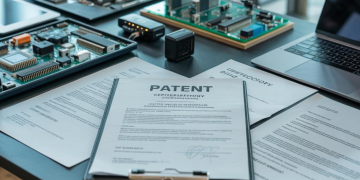











































Rabat – Chinese telecommunication giant Huawei has announced royalty rates for its handsets, Wi-Fi, and IoT patent license programs, reflecting the company’s commitment to promoting innovation and global collaboration, as well as fostering an environment where innovation can thrive for the betterment of all.
Huawei made the announcement during its annual flagship event on innovation and intellectual property protection in Shenzhen, themed “Bridging Horizons of Innovations: Sharing IP, Driving Innovation.”
The company’s Chief Legal Officer Song Liuping expressed Huawei’s readiness to share its latest innovations with the world in the form of patents, stressing that they will “support the common, sustainable development of industries globally.”
Over the past two decades, Huawei has been a key contributor to mainstream Information and Communication Technologies (ICT) standards, playing a crucial role in cellular, Wi-Fi, and multimedia codecs, indicated the company in a press release.
The event showcased technology-sharing sessions by experts from different areas, including 5.5G, audio and video technologies, mobile phone innovations like ten-size adjustable aperture, and intelligent production scheduling algorithms.
‘Fair and reasonable’ rates
At the heart of the event was Huawei’s commitment to licensing its standard essential patents (SEPs) under “fair, reasonable, and non-discriminatory (FRAND) principles.”
Alan Fan, Vice President and Head of the Intellectual Property Rights Department at Huawei, stressed the importance of a “positive cycle” that protects, rewards, and encourages innovators. He underlined that these elements are essential for sustainable innovation.
“Huawei takes a balanced approach to patent licensing. We believe reasonable royalty rates will incentivize both the creation and adoption of innovations,” Fan said.
As part of patent license programs, Huawei has set rate caps for 4G and 5G handsets at $1.5 and $2.5 per unit, respectively.
For Wi-Fi 6 consumer devices, the royalty rate stands at $0.5 per unit. In the Internet of Things (IoT) domain, the rate for IoT-Centric devices is one percent of the net selling price, capped at $0.75, while IoT-Enhanced devices range from $0.3 to $1 per unit.
Read also: Huawei Strengthens Morocco’s Renewable Energy Landscape with New Collaboration
Huawei’s dedication to fostering innovation through collaboration is evident in its numerous bilateral patent licenses and patent pool agreements.
Fan noted that the company has entered into almost 200 bi-lateral patent licenses, and over 350 companies have obtained licenses to Huawei’s patents through patent pools.
Remarkably, Huawei’s total past royalty payment exceeds its total royalty collection by three times. In 2022, the company’s licensing revenue reached $560 million.
Meanwhile, the company’s cumulative Research and Development (R&D) investment over the past decade surpassed $135,8 billion, with its 2022 R&D expenditure standing at $22.4 billion, accounting for 25.1% of its revenue.
This investment led Huawei to secure the fourth position worldwide on the 2022 EU Industrial R&D Investment Scoreboard.
Inclusive innovation
The event’s significance was further elevated by the launch of Huawei’s official licensing website. The platform offers comprehensive details about the company’s bilateral licensing programs, encompassing mobile handsets, Wi-Fi, and cellular IoT.
Huawei’s dedication to openness and collaboration is evident through its extensive licensing agreements with leading tech industry players, such as Samsung and Oppo, and top automakers, including Mercedes-Benz, BMW, Porsche, Renault, Lamborghini, and Bentley.
Fan noted that the company is also an active advocate and supporter of global open-source industry organizations.
As Huawei continues to drive innovation and promote collaboration, Randall R. Rader, former Chief Judge of the United States Court of Appeals for the Federal Circuit, highlighted the role of intellectual property as a “great engine of cooperation in technology,” stressing that it advances technology for everyone to enjoy.”
The event also featured remote addresses from global leaders, acknowledging Huawei’s crucial role in supporting cost-effective and inclusive innovation on a global scale.
“As we continue to tackle global challenges and work towards rescuing the Sustainable Development Goals (SDGs), conducive policies and frameworks are essential to help innovations ecosystems flourish,” said Tomas Lamanauskas, Deputy Secretary-General of the International Telecommunication Union.