


























































Ben Guerir – The number of graduates from African universities is expected to reach 1.5 million by 2023 and 1.9 million annually by 2030, a new study commissioned by Morocco’s Mohammed VI Polytechnic University (UM6P) has established, noting that Africa’s talent pool is increasingly equipped to thrive at the world-leading firms and in other challenging environments.
While African talent has the potential to remedy the alarming global talent shortfall, said the Mohammed VI Polytechnic University (UM6P), multinational corporations continue to overlook the African talent pool.
Despite this growing number and the apparent global skills shortfall, less than half (48%) of business leaders consider African talent to be a solution.
With 62% of senior executives saying that the talent shortage alone is having a negative impact on their companies’ revenues, the report underscores the need for multinational firms to turn to Africa’s vibrant and skilled youth to cope with their talent deficit.
Large companies currently have an average of 381 vacancies. By 2030, this number is expected to rise to 1,312.
Yet global companies are still failing to recognize Africa’s talent pool as a solution to this problem.
“Africa is paving the way for new ways of working and thinking, but many business leaders are still failing to tap the immense potential of African talent,” UM6P President Hicham El Habti said in a press release.
“This study aims to bridge this gap by examining both sides of the equation: the ambitious young people graduating from African universities, and the demand for skilled talent from global companies,” he explained.
With Africa at the forefront of the climate emergency, the report argues, companies should look to the continent for talent to assist them in overcoming the major sustainability challenges of the twenty-first century.
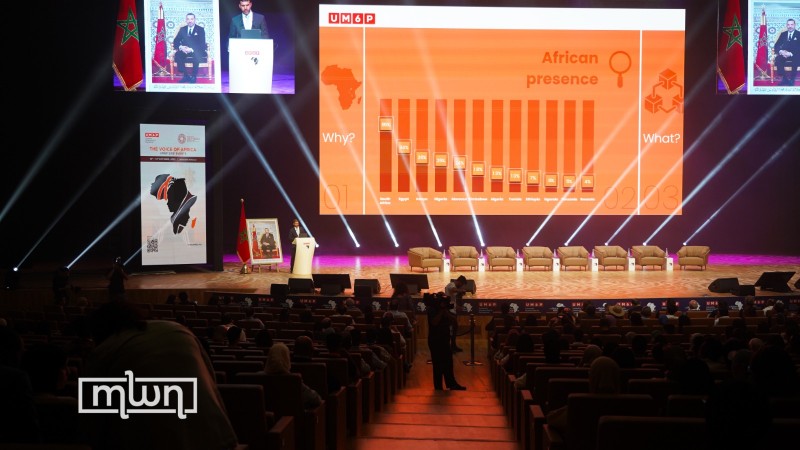
Presentation of the case study
According to the report, African graduates have the essential skills required to support environmental and global goals as well as fill vacant positions at world-leading multinationals.
In fact, estimates suggest that 32% of African university graduates are knowledgeable about environmental regulation and policy, which is of crucial importance to the achievement of UN Sustainable Development Goal 13, namely climate action.
Read also: Morocco UM6P, Inwi Partner to Support Innovation, Research and Development
Meanwhile, African graduates residing overseas are encouraged to pursue careers on the African continent or at least bring their knowledge back home. According to 78% of business leaders, one of the main threats facing foreign companies wanting to establish sustainable business in Africa is local talent leaving to study overseas.
Per the UM6P-commissioned study, encouraging entrepreneurship and effective collaboration is key to meet such challenges.
According to 65% of university representatives, a lack of relationship or coordination with African institutions prevents companies from accessing the continent’s talent pool, representing a missed opportunity to capitalize on the innovative work being done in this market.
Of the new crop of African graduates, the majority are choosing start-ups and entrepreneurship over corporate careers. According to 80% of university representatives, graduates from Africa frequently choose to work with African start-ups.